




























turns out pompeii used self-healing concrete that lasts for thousands of years, research finds
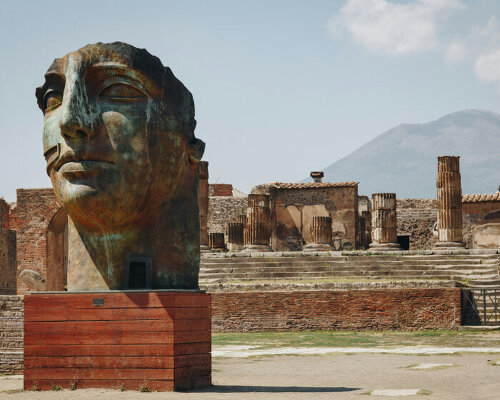
Self-healing concrete used to build pompeii in the past
A new analysis by MIT researchers reveals that Pompeii’s brick structures still stand because the ancient Romans used self-healing concrete that lasts for thousands of years. In 2023, MIT Associate Professor Admir Masic and his team published a paper explaining how Roman concrete was made, describing a method called hot-mixing. In this process, lime fragments are mixed dry with volcanic ash and other materials, and water is added only at the end. When water touches the dry mix, it creates heat, which traps the lime inside the concrete as small white pieces. These pieces can later dissolve and fill cracks, giving the concrete the ability to repair itself.
In the recent discovery, the team found out that the ancient Roman architect Vitruvius wrote a book about architecture, where he said Romans added water to the lime first to make a paste, then mixed it with other materials. This was different from what the MIT professor found in the lab, and because Vitruvius is so important in history, Admir Masic felt unsure about contradicting him. The researchers then found an ancient construction site in Pompeii that was well preserved by the eruption of Mount Vesuvius in the year 79 C.E. and gathered raw material piles, tools, and walls in different stages of construction, giving them a chance to study Roman self-healing concrete exactly as it was made, the same one applied to the then architecture, including in Pompeii.
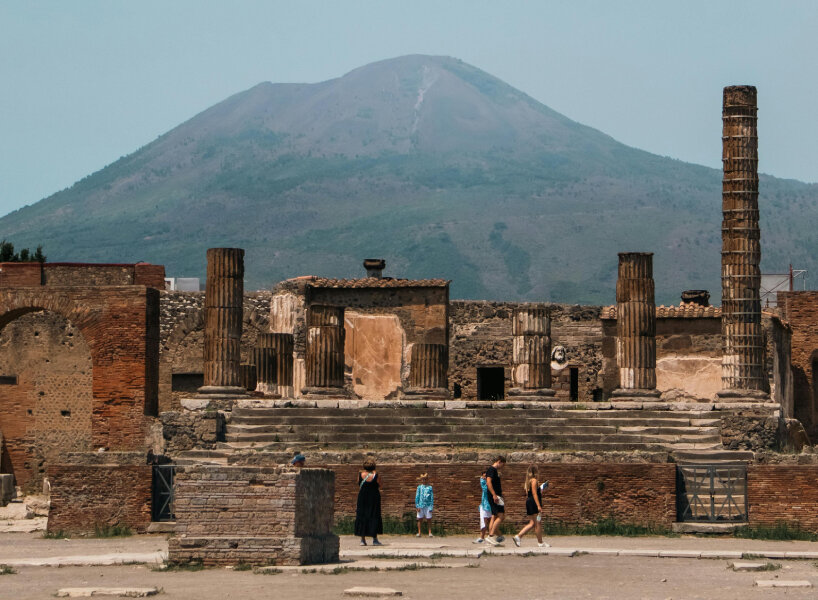
image by Fran Zaina, via Pexels
Romans used quicklime with ash for the binding material
Professor Admir Masic and his university collaborators collected samples from dry material piles, unfinished walls, finished walls, and repair sections during their visit at Pompeii in pursuit of restudying the site’s self-healing concrete. They found lime clasts in the concrete, just like in the earlier study, but they also came across unreacted quicklime fragments inside the dry material pile, showing that the Romans mixed the lime dry and proving that hot-mixing was used. To study the materials, the team used stable isotope tools to track how materials change over time. With this, they could see the difference between lime that was hot-mixed and lime that had been slaked with water first.
The results showed that the Romans used quicklime, ground it, mixed it dry with volcanic ash, and then added water later to make the binding material. The researchers also studied the volcanic ash with pumice, which reacted gradually with water inside the concrete. This reaction created new minerals that helped strengthen the structure over time, and these minerals filled pores and added more stability. This research doesn’t aim to copy the Roman concrete exactly because modern building needs different materials and standards, but the goal is to take small lessons from the past, which can help create modern self-healing concretes that last for years, just like in Pompeii. So far, Professor Admir Masic has started a company named DMAT to apply and realize the recent discovery.
image by Nick Night, via Unsplash
image by Cole Ciarlello, via Unsplash
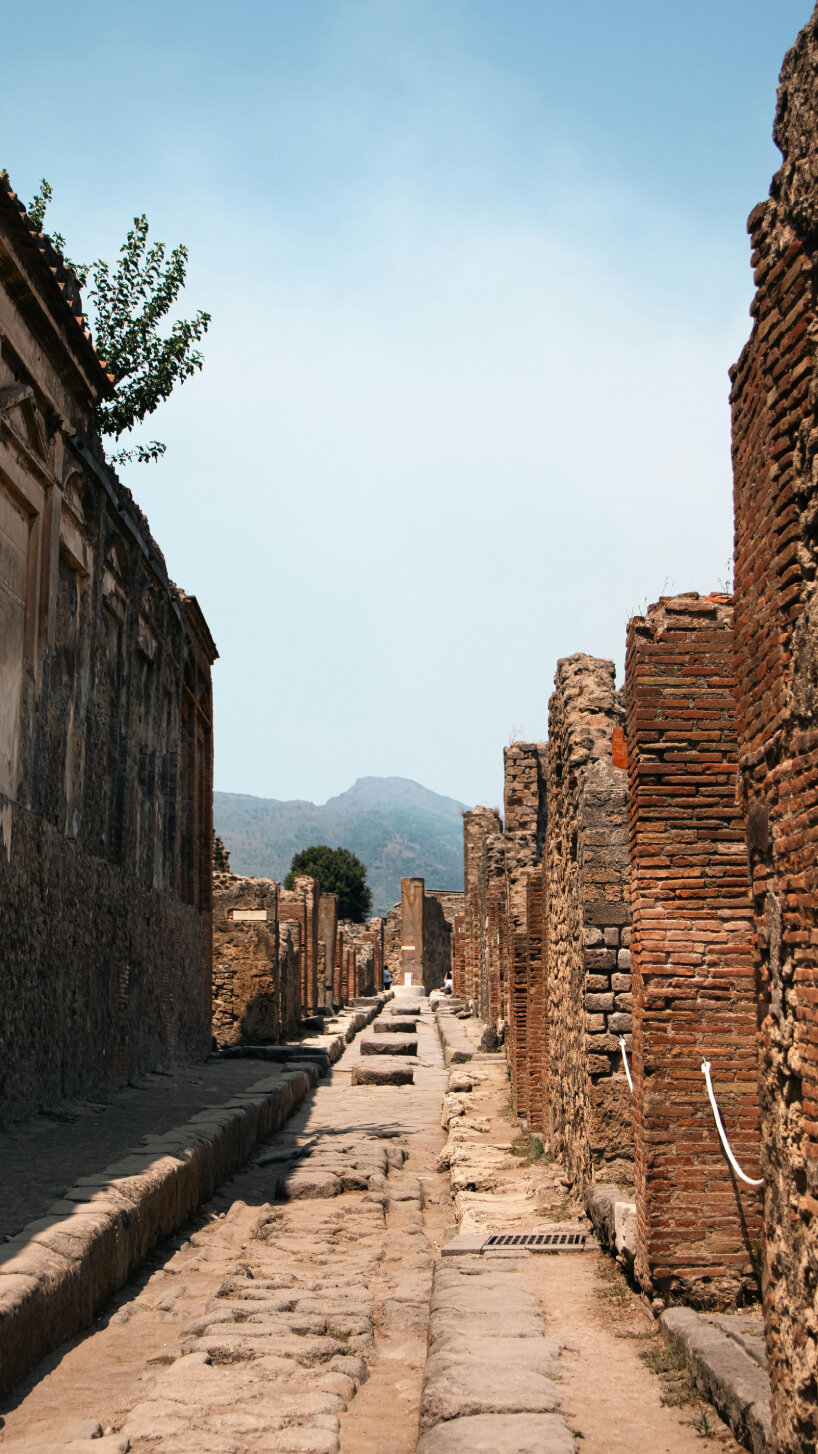
image by Fran Zaina, via Pexels
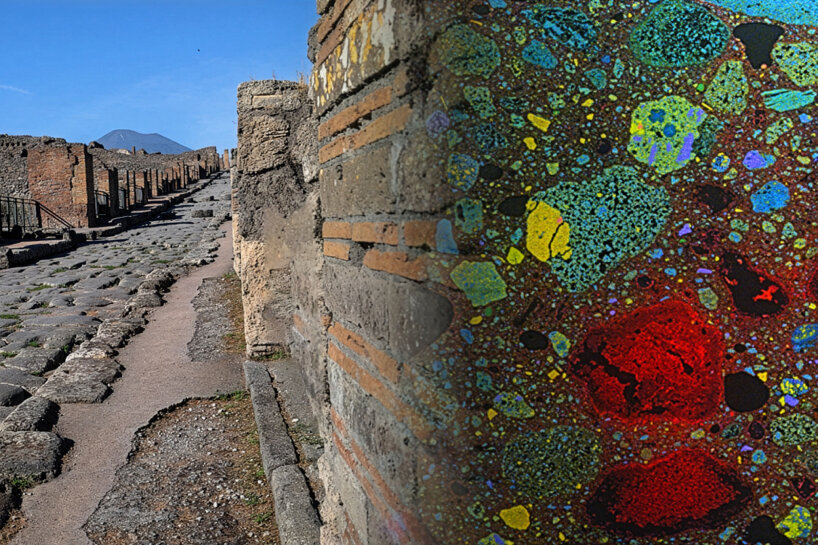
an ancient Pompeii wall studied by the researchers | image courtesy of Archaeological Park of Pompeii, via MIT
project info:
name: An unfinished Pompeian construction site reveals ancient Roman building technology
institutions: MIT, DMAT | @mit
researchers: Admir Masic, Ellie Vaserman, James C. Weaver, Claire Hayhow, Kristin Bergmann, Celestino Grifa, Roberto Scalesse, Valeria Amoretti, Antonino Russo, Gennaro Iovino, Gabriel Zuchtriegel
study: here
The post turns out pompeii used self-healing concrete that lasts for thousands of years, research finds appeared first on designboom | architecture & design magazine.