






Collectible furniture meets cultural critique at Dutch Design Week’s Table of Power
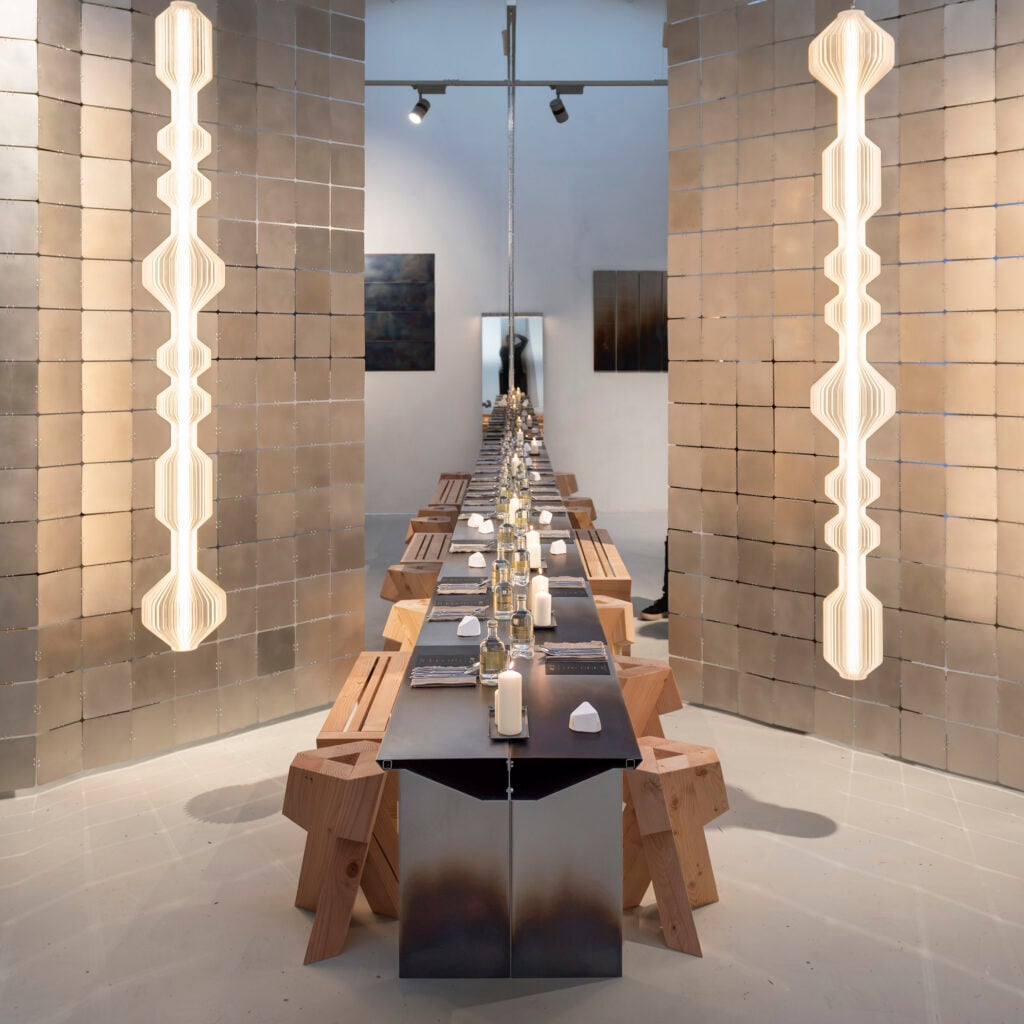

Show Not Show has put a twist on a classic project documenting the echelons of power with an exhibition of the design collective’s furniture at Dutch Design Week.
Held at the Kruisruimte exhibition space in Eindhoven, The Table of Power exhibition takes inspiration from Jacqueline Hassink’s 1990s photo series of the same name.
This saw the photographer document the boardrooms of Fortune 500 companies, empty of people.
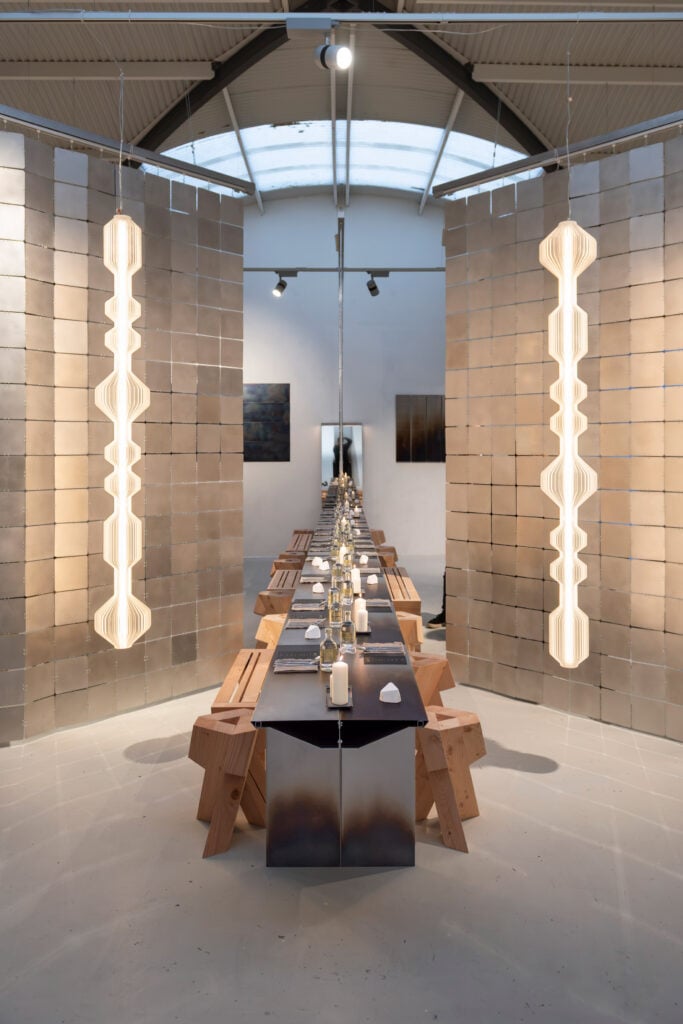
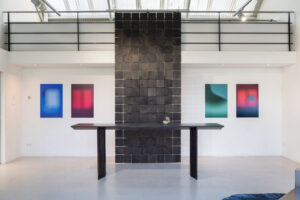
As in those photographs, The Table of Power has a long table at its centre as a symbol of institutional authority.
In this case, the table seems to stretch eternally into the horizon, thanks to the mirror placed at the far end.
Designed especially for the exhibition by collective members Frank Penders and Luuk van Laarhoven, the table is made from sheet metal, cut and bent into a brutalist form, with brushed textures and chromatic gradients adding allure.
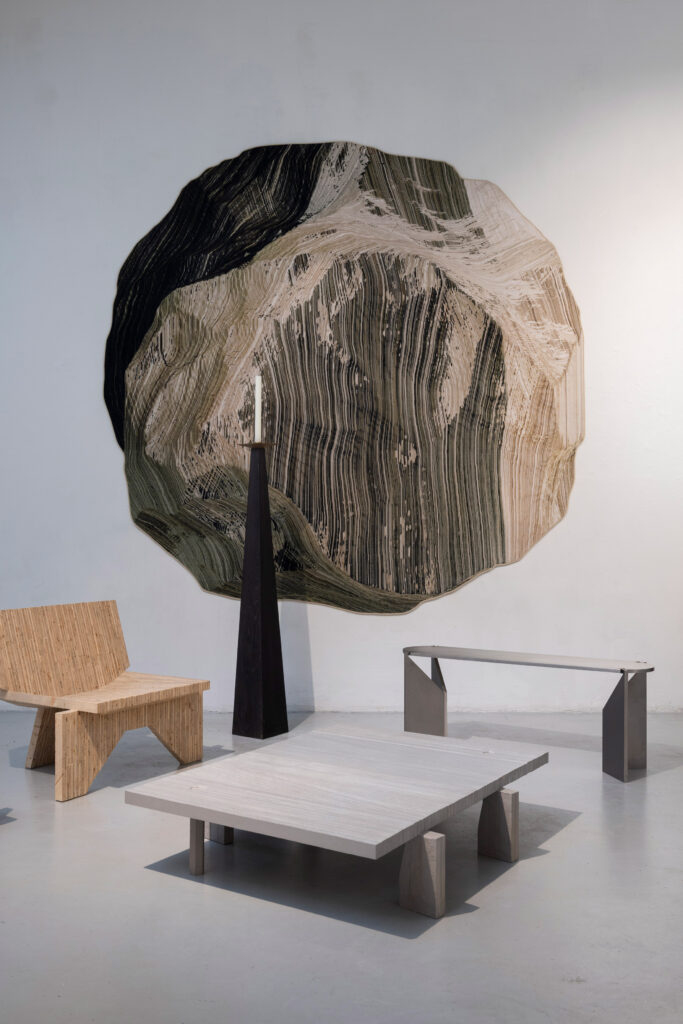
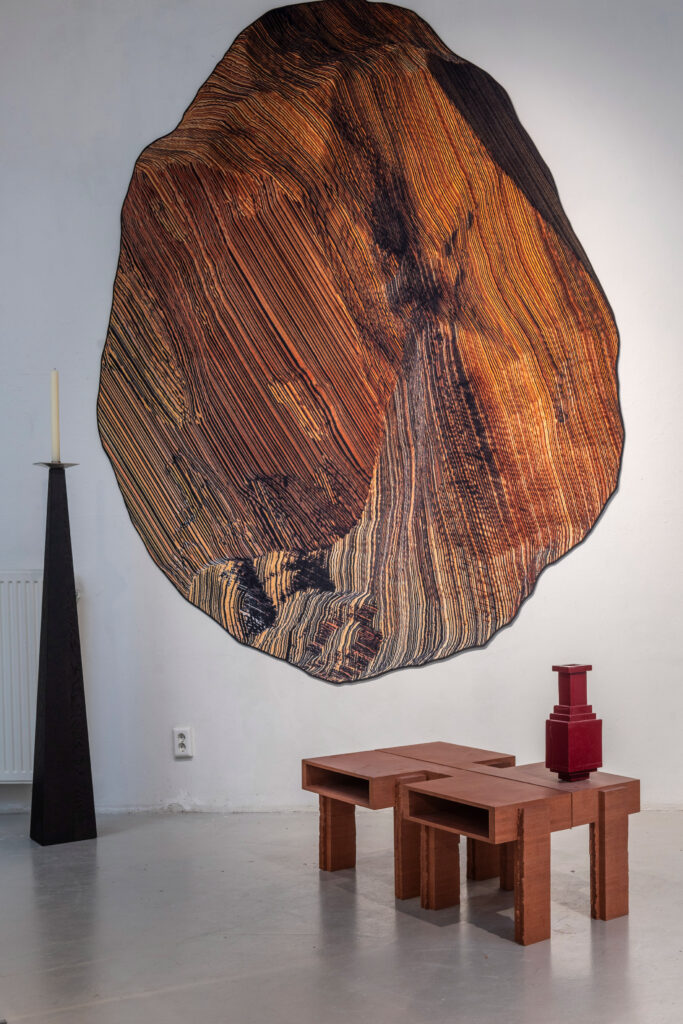
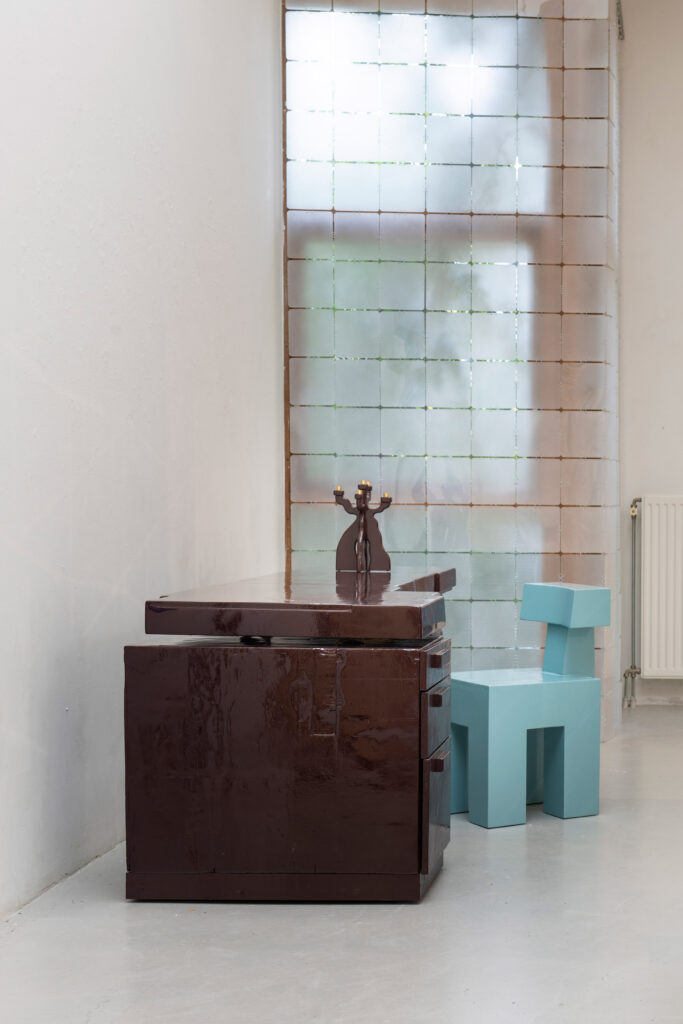
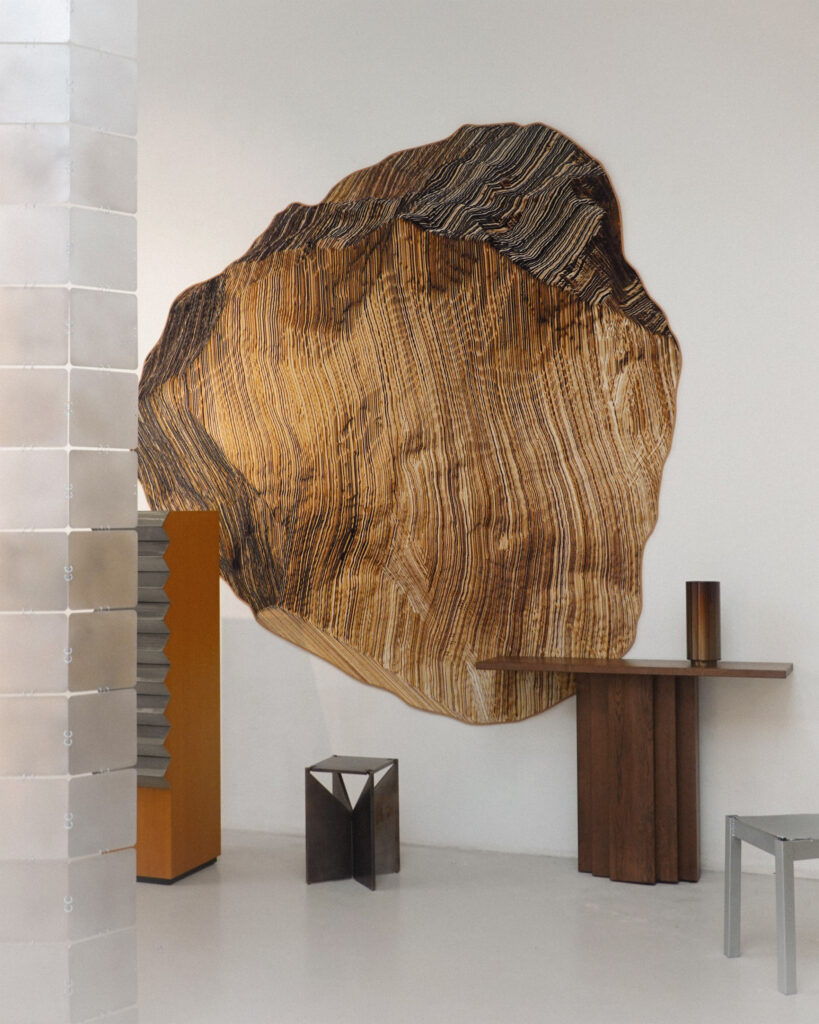
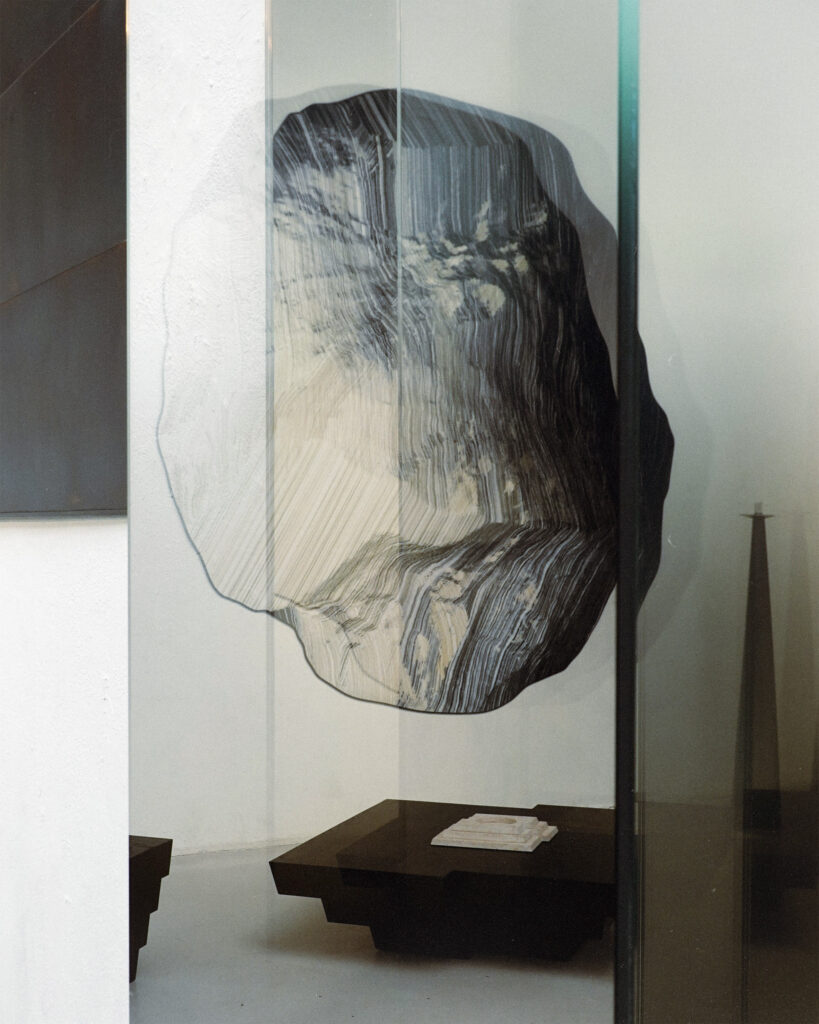
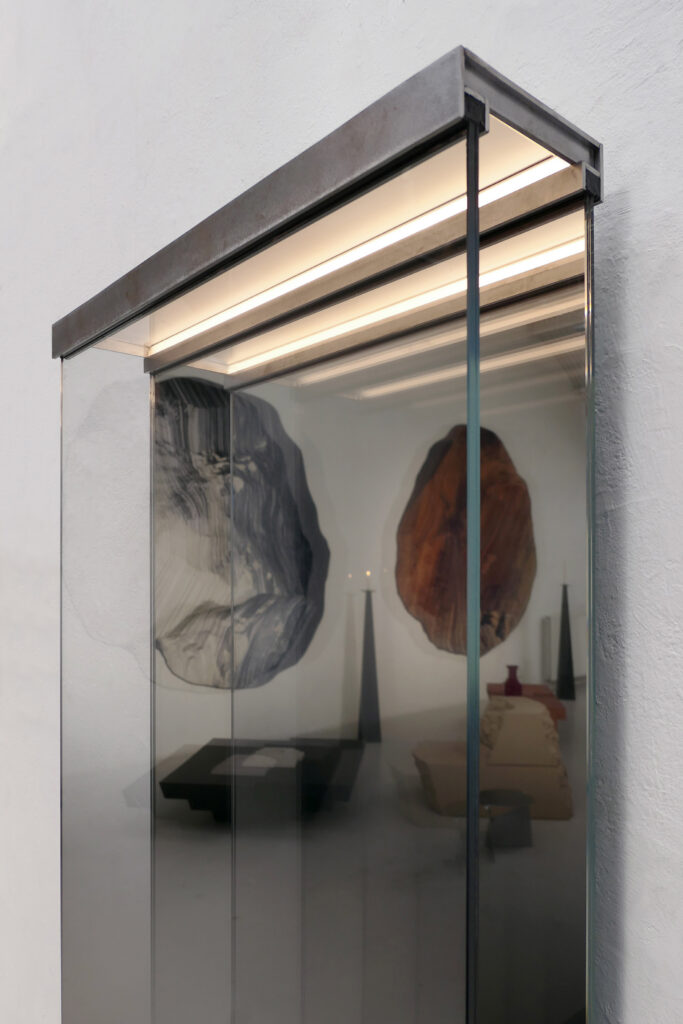
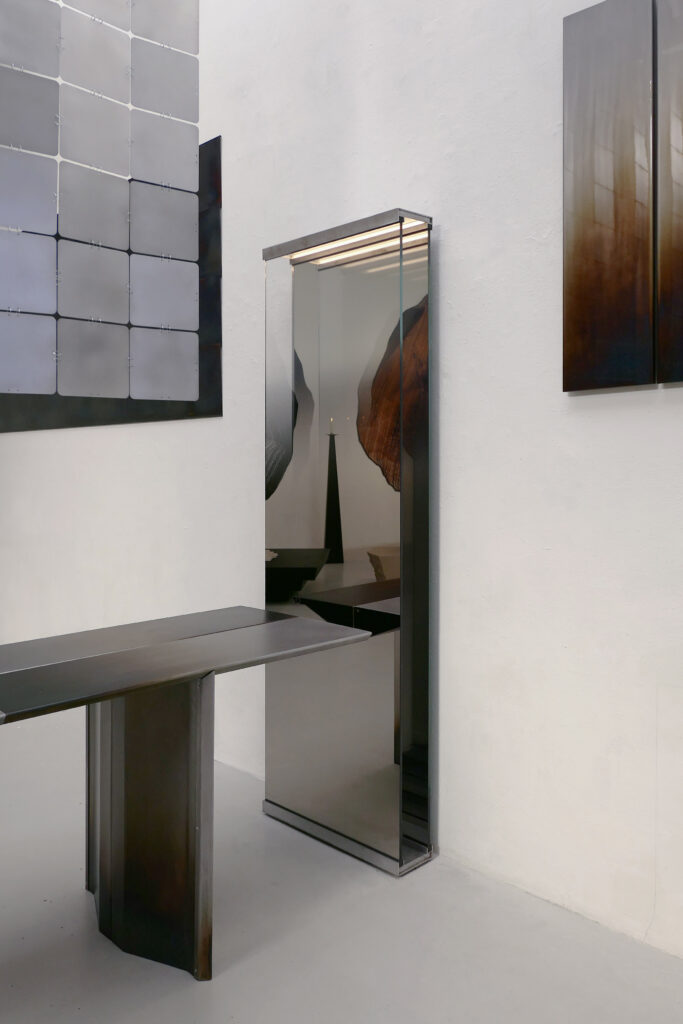
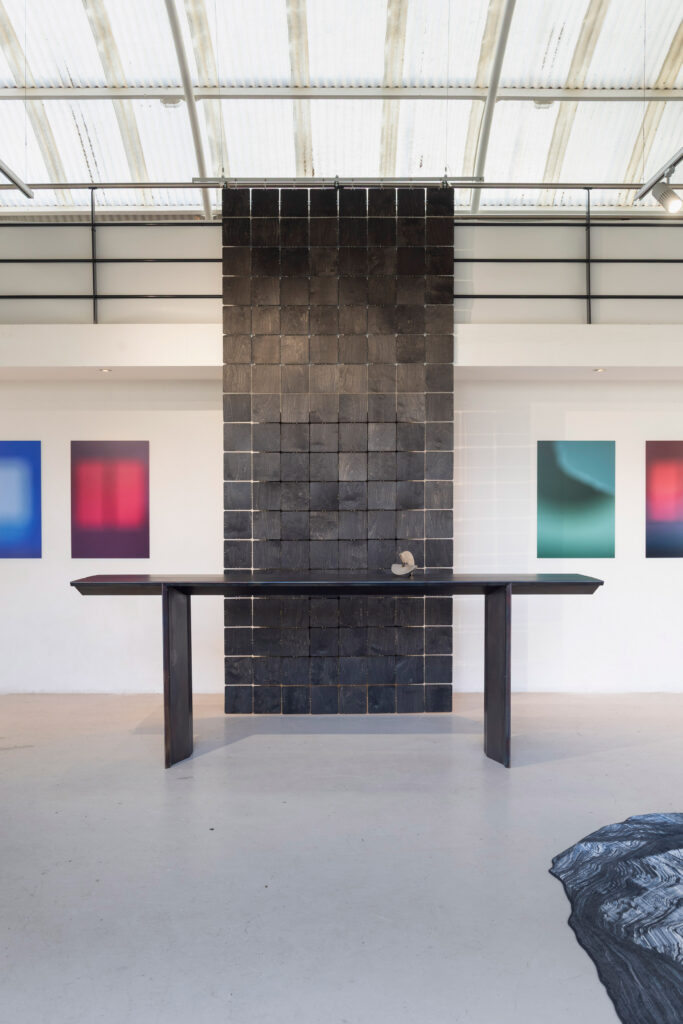
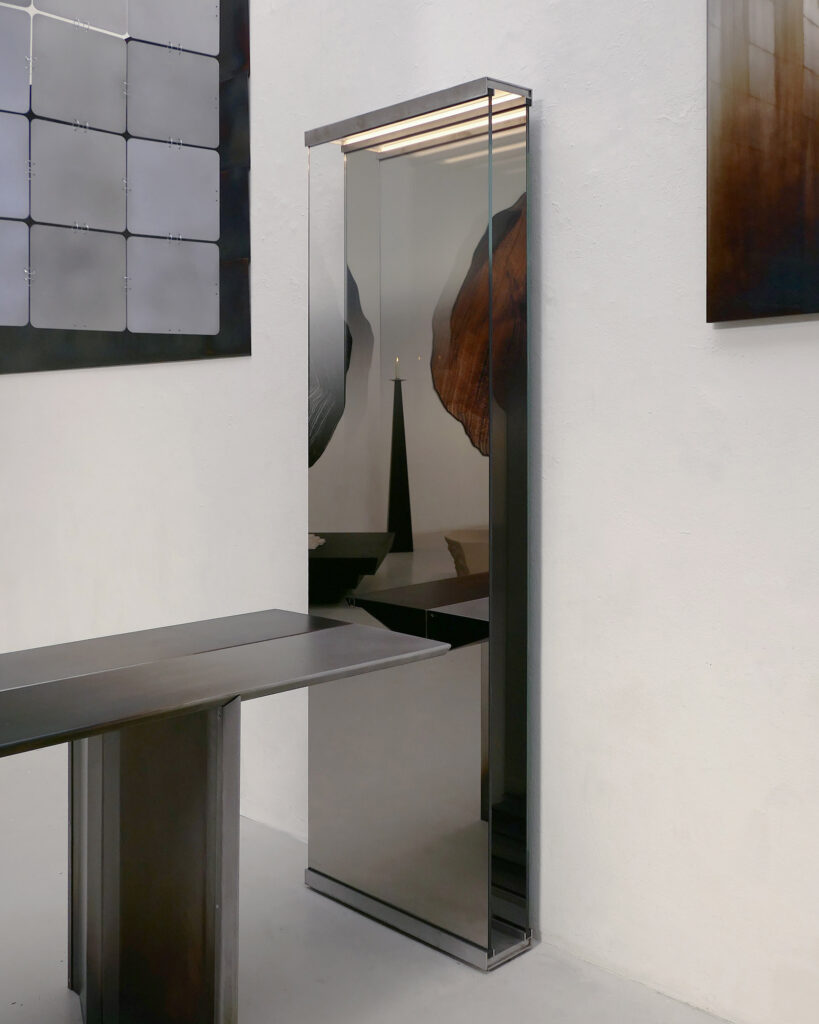
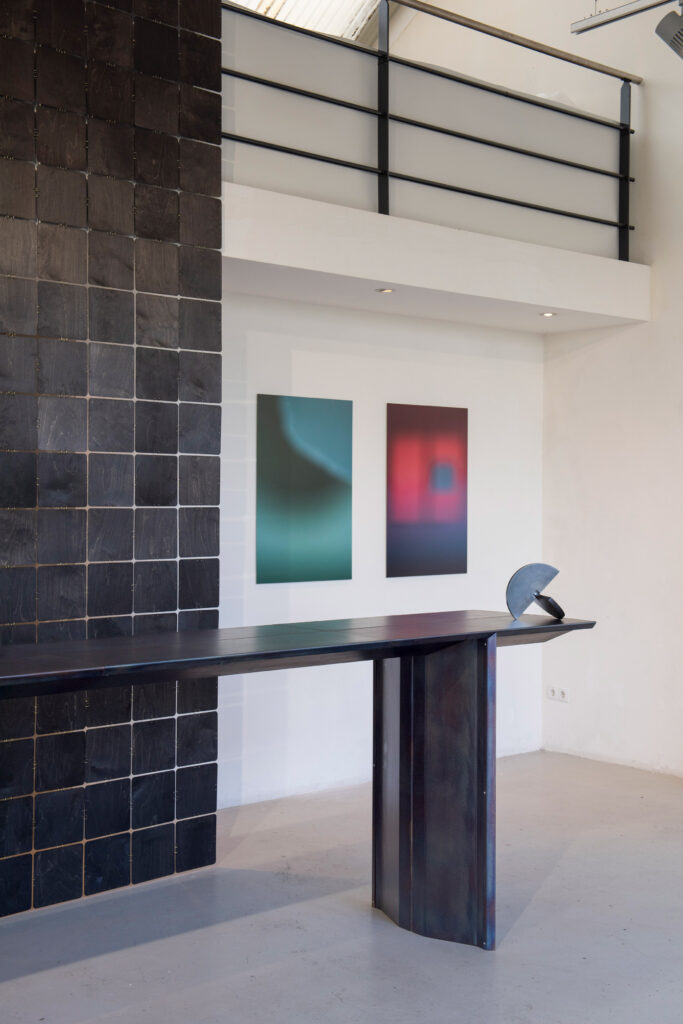
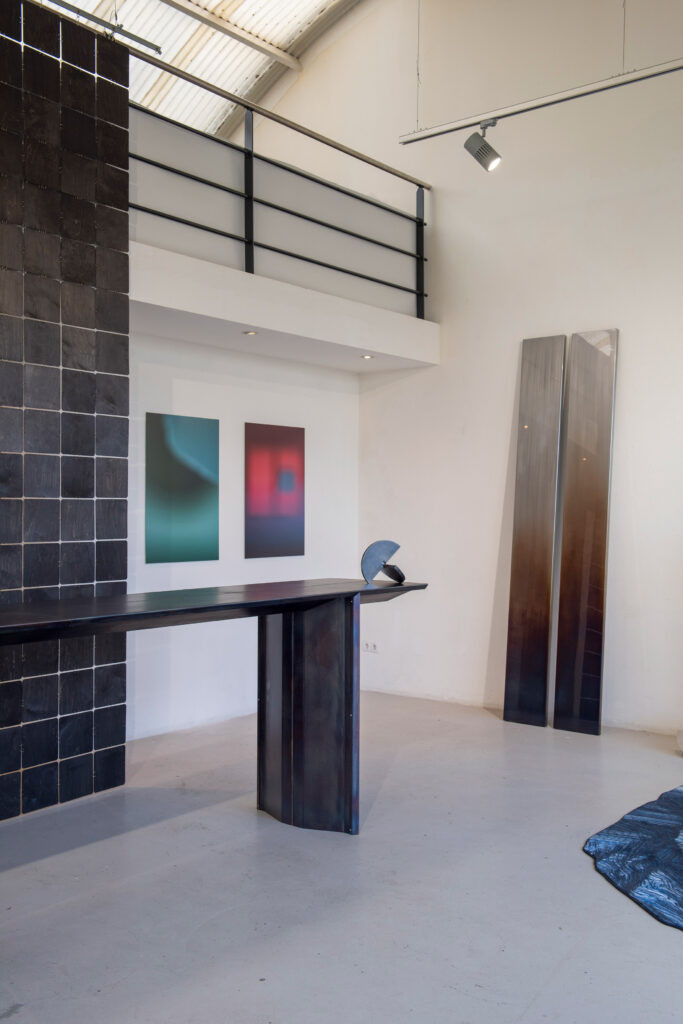
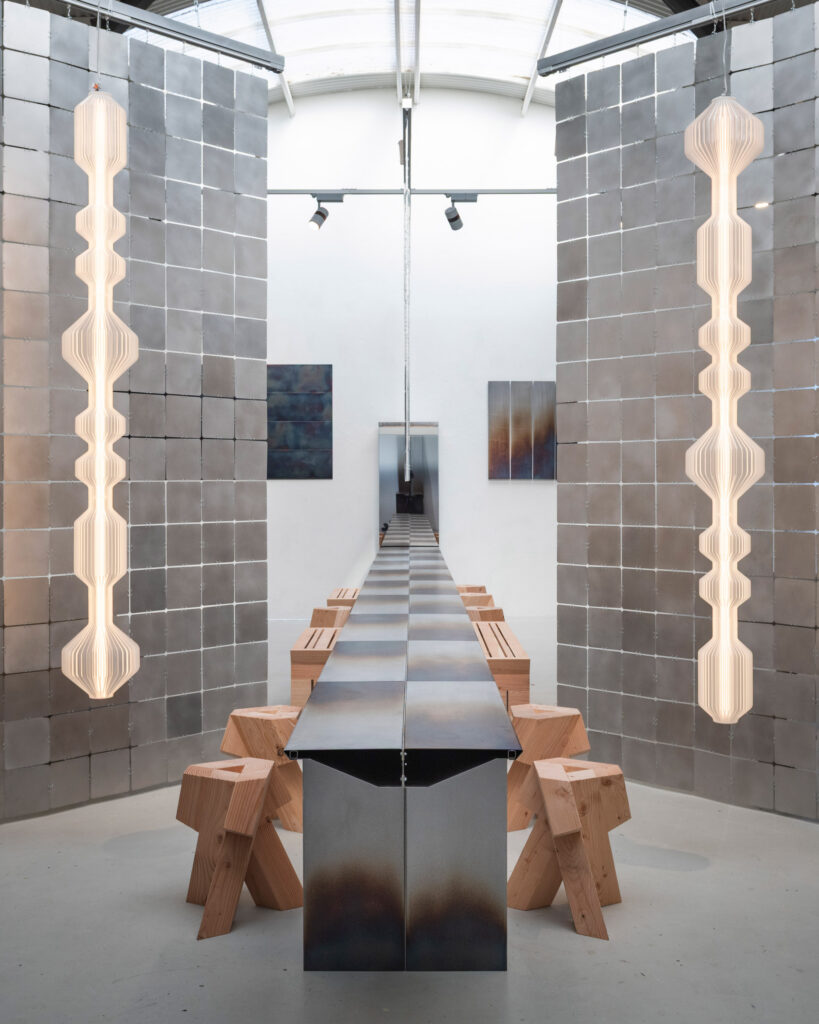
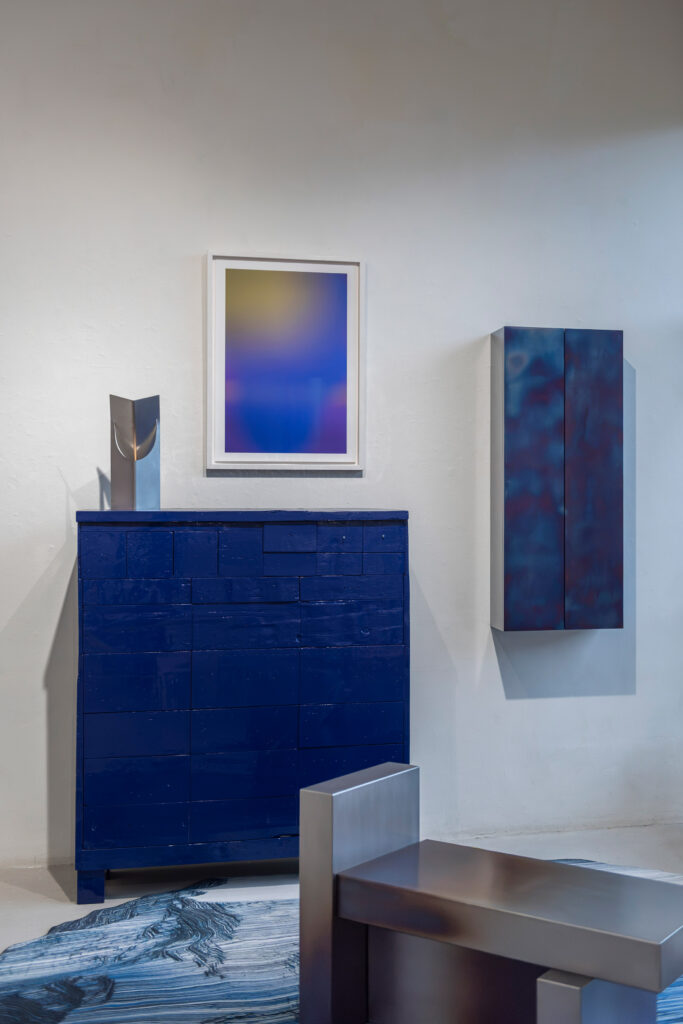
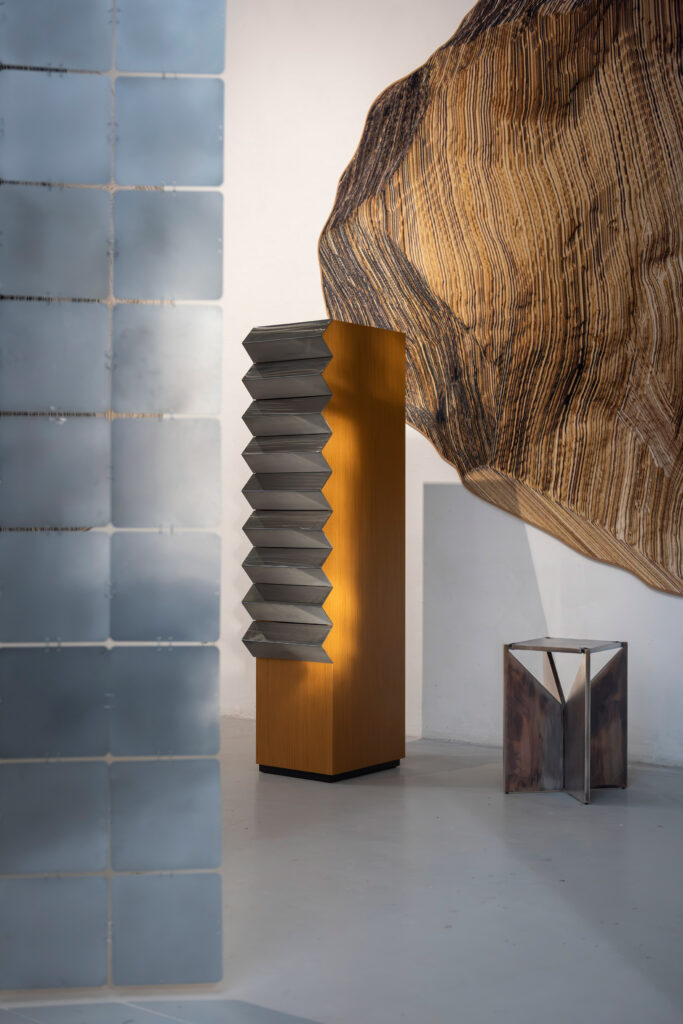
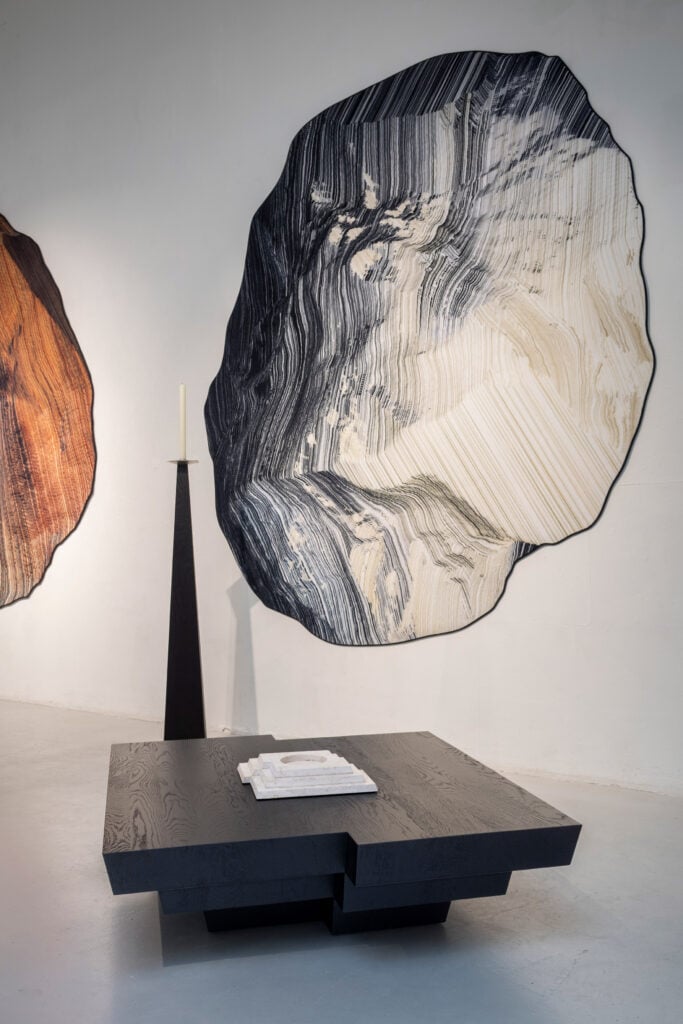
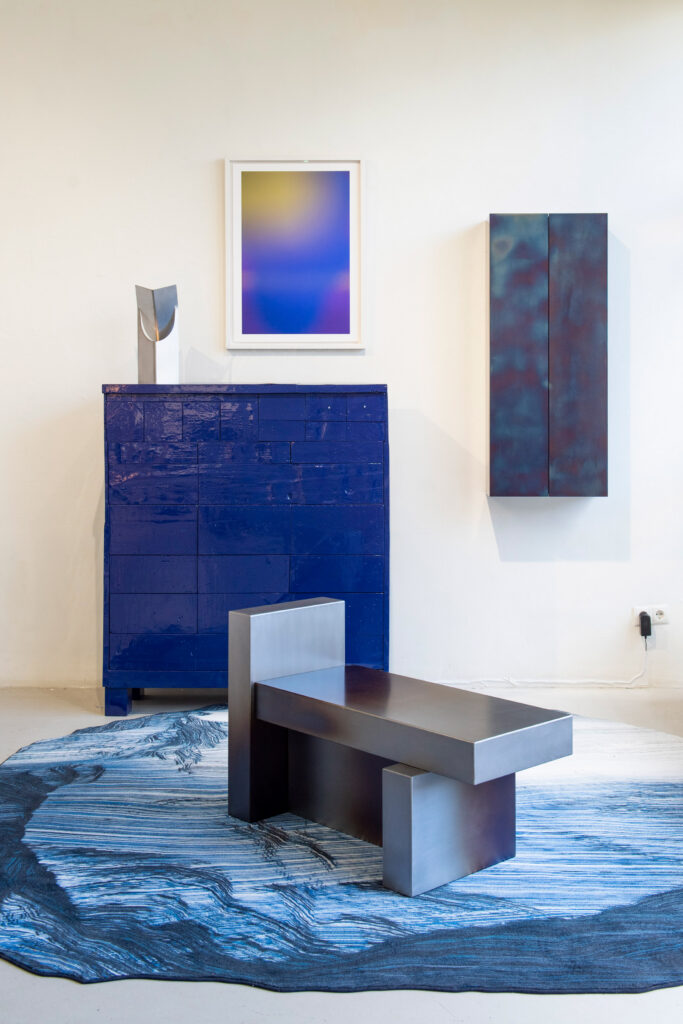
Around it, collectible furniture, lighting and textile pieces from fellow members Lucas Zito, Marc Meeuwissen, Mokko and Studio Fabius Clovis as well as guest exhibitors Aleksandra Adamchyk, Kilian Vos and Pablo Octavio fill the room with a mix of raw wood, glossy lacquer, sculptural metal and translucent glowing bioplastic.
The idea for the exhibition came after Show Not Show were invited to host Dutch Design Week’s official press dinner.
“Our exhibition space isn't that big,” said Penders. “So we decided to do something quite simple: instead of fitting a dinner into our exhibition, we made the dinner the starting point for the exhibition.”
In Show Not Show’s vision, the press represents a site of power in the design industry, influencing what gets seen, discussed and remembered, and their presence completes the exhibition’s concept.
Guests at the dinner were encouraged to get up from the table from time to time to “share the power”, but Dezeen observed that few journalists ever got up.
Penders told Dezeen that The Table of Power continues Show Not Show’s practice of using exhibitions to explore aspects of the design world that are not commonly seen.
“Each exhibition offers a glimpse into our world as designers, revealing something that visitors might not normally see or consider,” Penders told Dezeen. “In 2024, we showed our experiments and prototypes. In 2025, we focused on the ideas and concepts behind our work.”
“This year, the subject is visibility. Being seen, becoming known and finding recognition for what you create. It is about the relationship between designers, their work and the media that bring it to a wider audience.”
In addition to the table, Octavio’s curtain-like brushed aluminium room dividers are given a symbolic role to play in the exhibition. Their height allows those sitting down greater oversight of the room than their standing peers, adding to the sense of power imbalance.
Key pieces in the exhibition include a new series of angular wooden stools called Barricada, designed by Meewissen to match the dining table seating. Like all of his works, they are made with just one tool and one material.
There is also characterful plywood furniture by Studio Fabius Clovis, its uneven surface highlighted with high-gloss lacquer, and totemic pendant lights by Lucas Zito, 3D printed from bioplastic and playing with the spatial effects of unexpected scale.
Guest exhibitors Adamchyk, Vos and Octavio continue the elemental mood, bringing their sculptural zigzagging Waveform drawer, geological Future Fossils rugs and stone-like but squishy Lapis lounge chair respectively.
Show Not Show launched in 2024 and has exhibited at the Kruisruimte each year since. It has also taken its shows abroad with presentations at the Design Biennale Rotterdam, Collectible Brussels and Milan design week.
Elsewhere at Dutch Design Week, Boris Acket and Maison the Faux have staged the moody and maximalist installation Everything Moist Seems Alive at the MU Hybrid Art House, complete with performances from the Dutch National Opera and Ballet.
Dutch Design Week 2026 takes place from 17 to 25 October 2026 at various locations across Eindhoven, the Netherlands. See Dezeen Events Guide for more architecture and design events around the world.
The post Collectible furniture meets cultural critique at Dutch Design Week’s Table of Power appeared first on Dezeen.