


le poisson volant: red-lit restaurant in paris transforms into nightclub after dark
claves designs a restaurant for the late hours
At Le Poisson Volant in Paris, dinner gradually gives way to a nightclub as the evening progresses. Large illuminated ceiling panels cast a soft glow over the dining room before the lighting becomes sharper and the music takes over. The venue opened on October 2nd at 5–7 rue Marguerite-Moret.
Designed by Parisian interior architecture studio Claves, the new restaurant and club occupies the former L’International music venue in the city’s 11th arrondissement. Its interiors bring together Brutalist geometry and decorative references drawn from Chinese restaurants of the 1980s, creating an atmosphere that changes considerably between dinner and the early hours of the morning.
The project was conceived by Bertrand Chauveau and Paul Henri, the founders of nearby restaurant Le Cornichon, in collaboration with chef Yanxin Yin. The team returned to Claves founders Laure Gravier and Soizic Fougeront, who previously designed Le Cornichon, to transform the two-level space. Among their references was New York’s former China Chalet, a Chinese restaurant in the Financial District that became a well-known late-night gathering place.
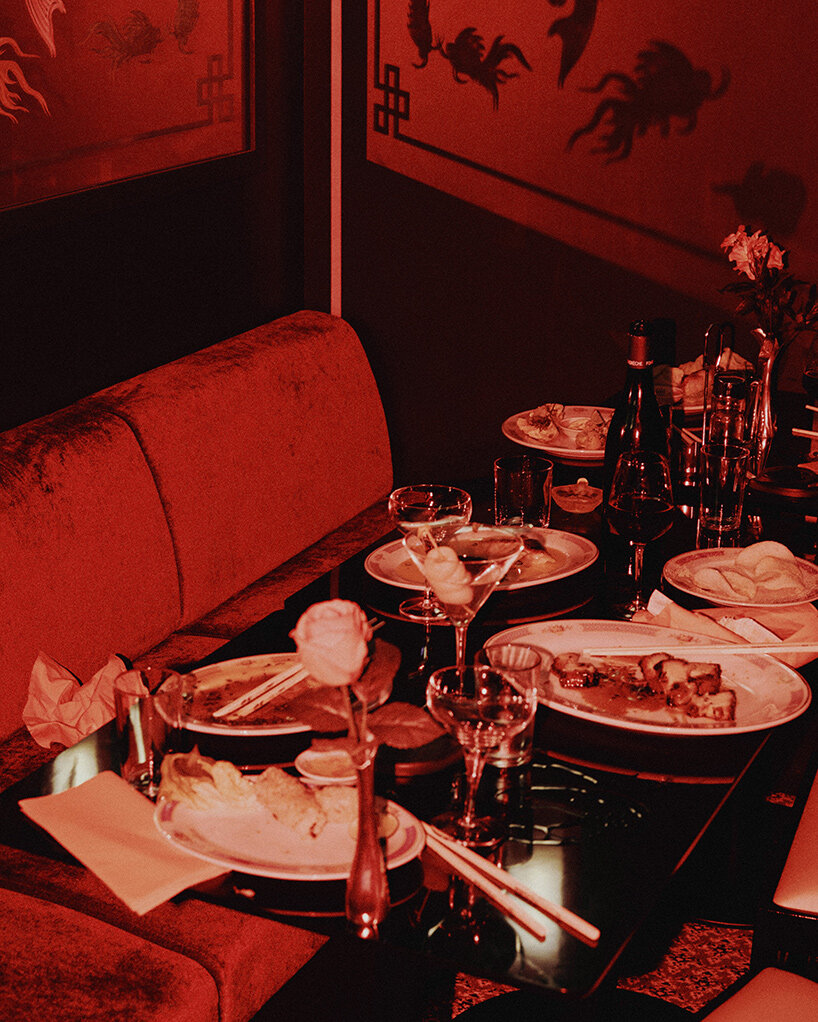
brutalist structure meets decorative details
Claves has reorganized the interior of Le Poisson Volant around a new framework of columns and beams. The team takes cues from Brutalist architecture and the industrial character of the surrounding neighborhood. The structural elements establish a strong geometry across the rooms, interrupted by slender decorative lines and reflective surfaces. Large mirrors follow the architectural grid, extending views through the interior and making the spaces appear to continue beyond their physical boundaries.
On the restaurant‘s ground floor, a large oval bar in patinated steel occupies the center of the room, surrounded by built-in banquettes and dark, purple-brown walls. Patterned carpeting introduces another layer of texture, while high-backed chairs inspired by the furniture of Charles Rennie Mackintosh add an unexpectedly delicate silhouette against the heavier architecture. Silver-painted geometric motifs trace the walls and columns, recalling traditional Chinese decorative patterns alongside Art Deco ornament.
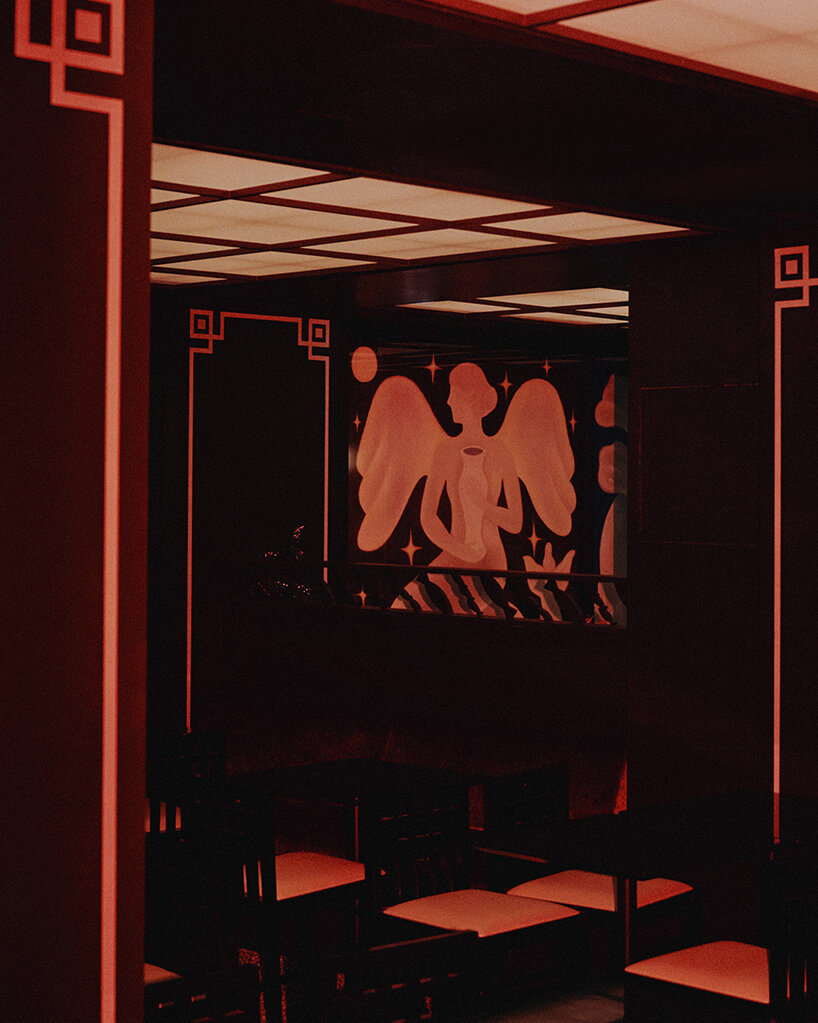
a cinematic interior inspired by wong kar-wai
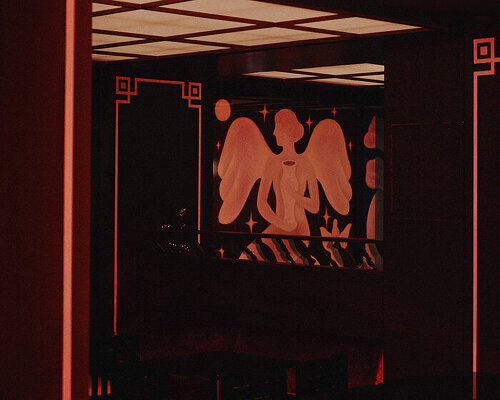
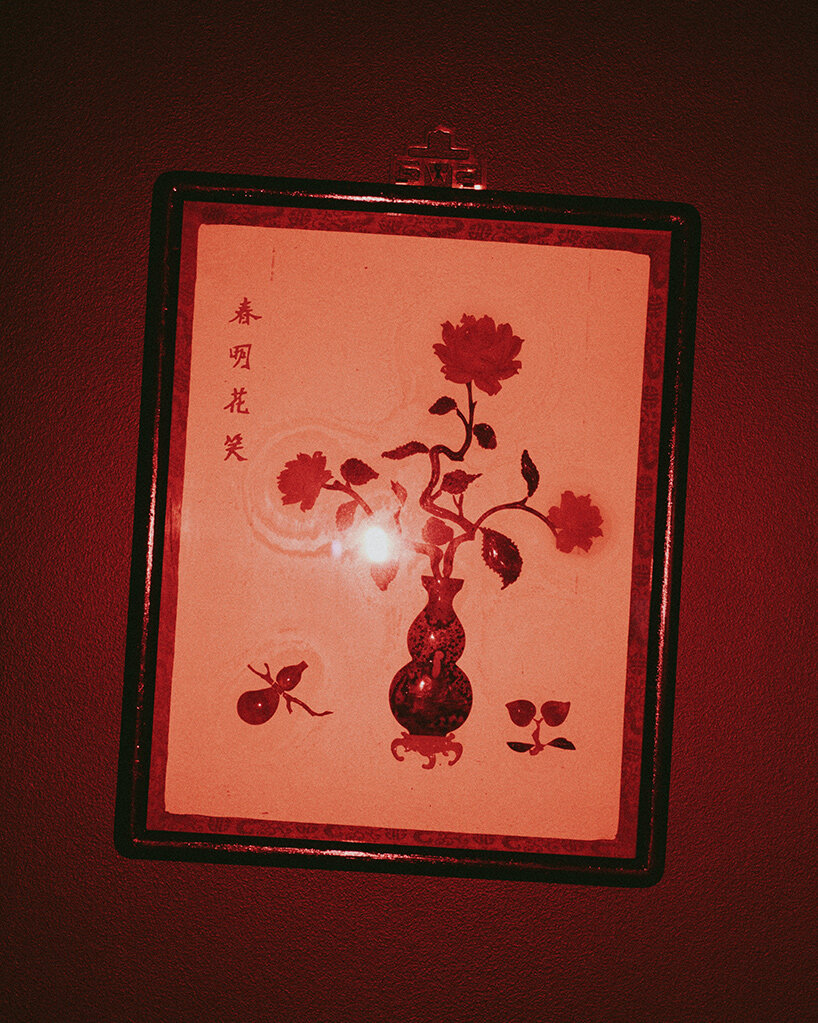
The architects looked to the films of Wong Kar-wai for their saturated colors and atmospheric interiors, particularly the director’s fascination with reflections and confined spaces. Here, dark surfaces absorb the light while mirrors catch fragments of the surrounding rooms. The effect is especially striking under the reddish illumination, which gives the restaurant the slightly mysterious character of a place suspended somewhere between different cities and decades.
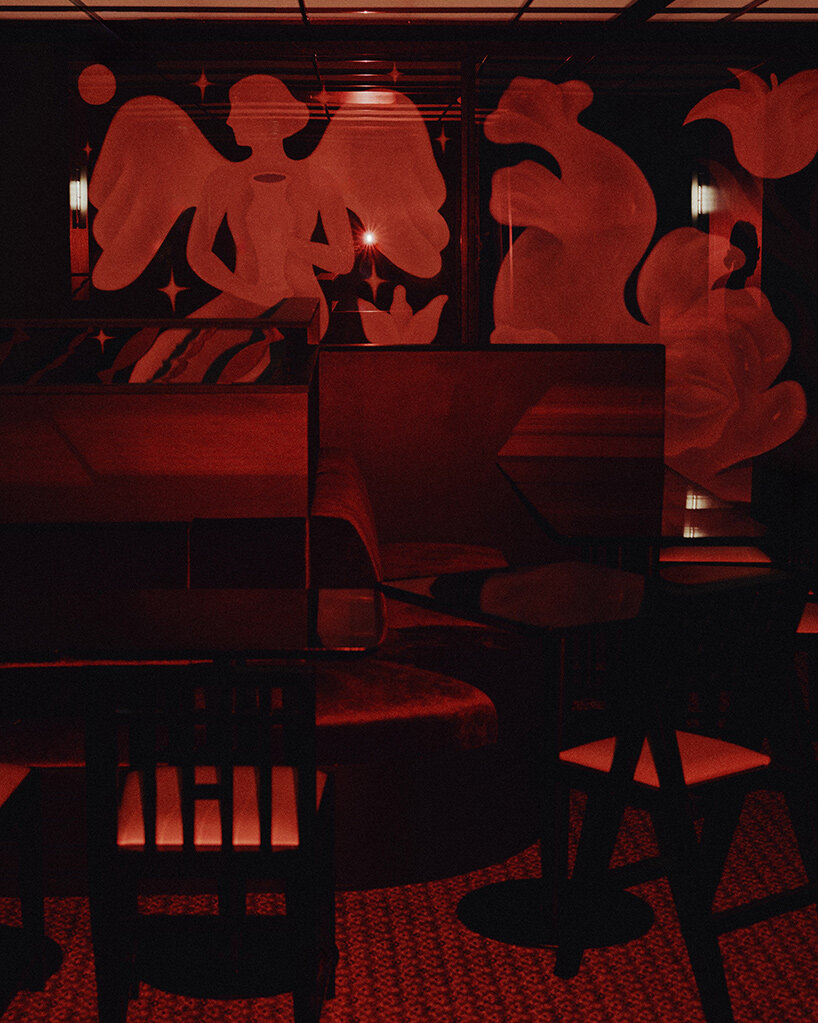
Claves describes the setting as an imaginary Shanghai by night, with references drawn freely from decorative arts and cinema. Even the surfaces contribute to this sense of ambiguity. Hand-painted mirrors introduce illustrated details into the architecture, while the repeating ceiling grid lends a distinctive rhythm to the rooms. The combination feels intentionally theatrical, although the architectural framework remains legible throughout.
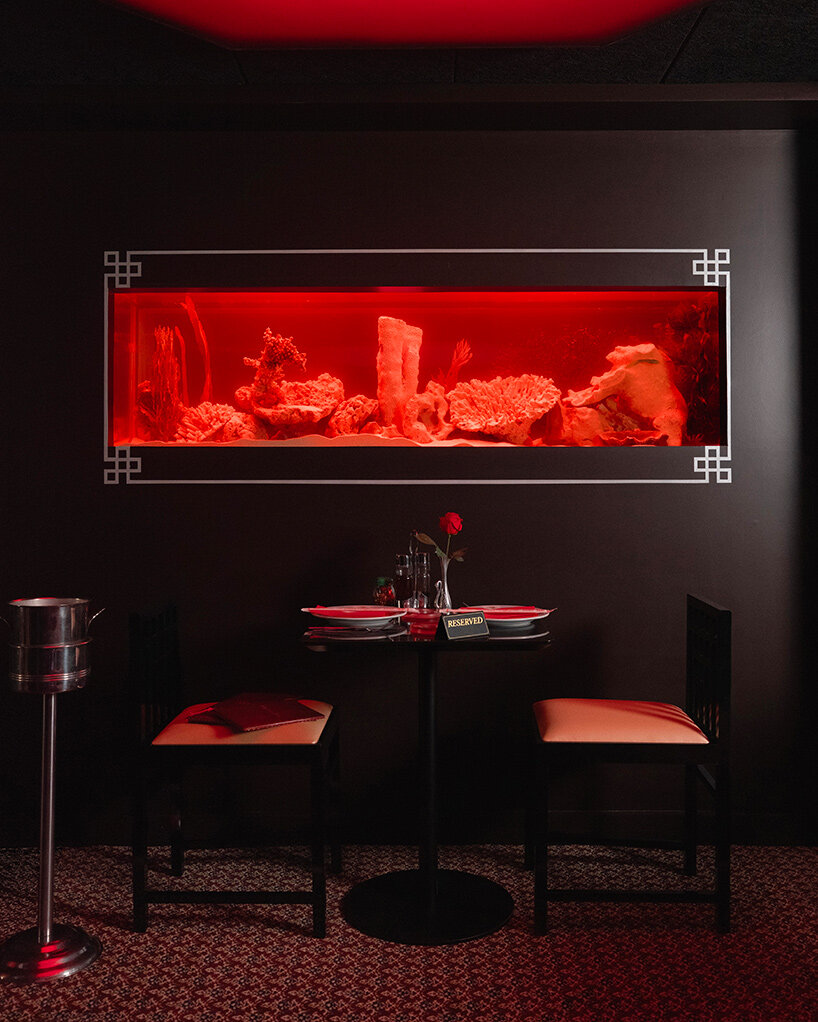
an aquarium conceals a private room downstairs
Connecting the two floors, the staircase becomes an important part of the spatial experience. A monumental diptych by Chinese artist Shuo Hao, commissioned specifically for Le Poisson Volant, accompanies the descent toward the basement. The artwork introduces its own imagery into the interior, marking the passage between the restaurant above and the darker spaces below.
The lower level houses the DJ booth and a private room concealed behind an aquarium filled with mineral compositions. Inspired in part by the aquarium installations of artist Pierre Huyghe, the feature introduces an unusual architectural partition, its illuminated contents visible through the glass. Reflections continue across the surrounding surfaces, while the enclosed basement creates a setting increasingly removed from the street outside.
lighting and sound shape the transition into night
The lighting design, developed with Paris-based studio Matière Noire, plays a central role in the transformation. Large luminous panels are integrated into the ceiling grid, providing diffuse illumination during dinner before shifting toward more concentrated, dramatic lighting as the night progresses. Their geometric arrangement reinforces the architecture, while the changing intensity can alter the atmosphere of the room without requiring a physical reconfiguration.
Sound design by FLEiK works alongside the lighting to support the transition, as music gradually becomes the focus of the venue. From around 11 pm, Le Poisson Volant begins its shift toward club mode, continuing into the early morning on selected nights. The same columns and mirrored walls that define the dining room remain in place, but their appearance changes under the pulsing lights. It is an interesting approach to a hybrid hospitality interior, allowing the architecture to accommodate two very different rhythms within a single evening.
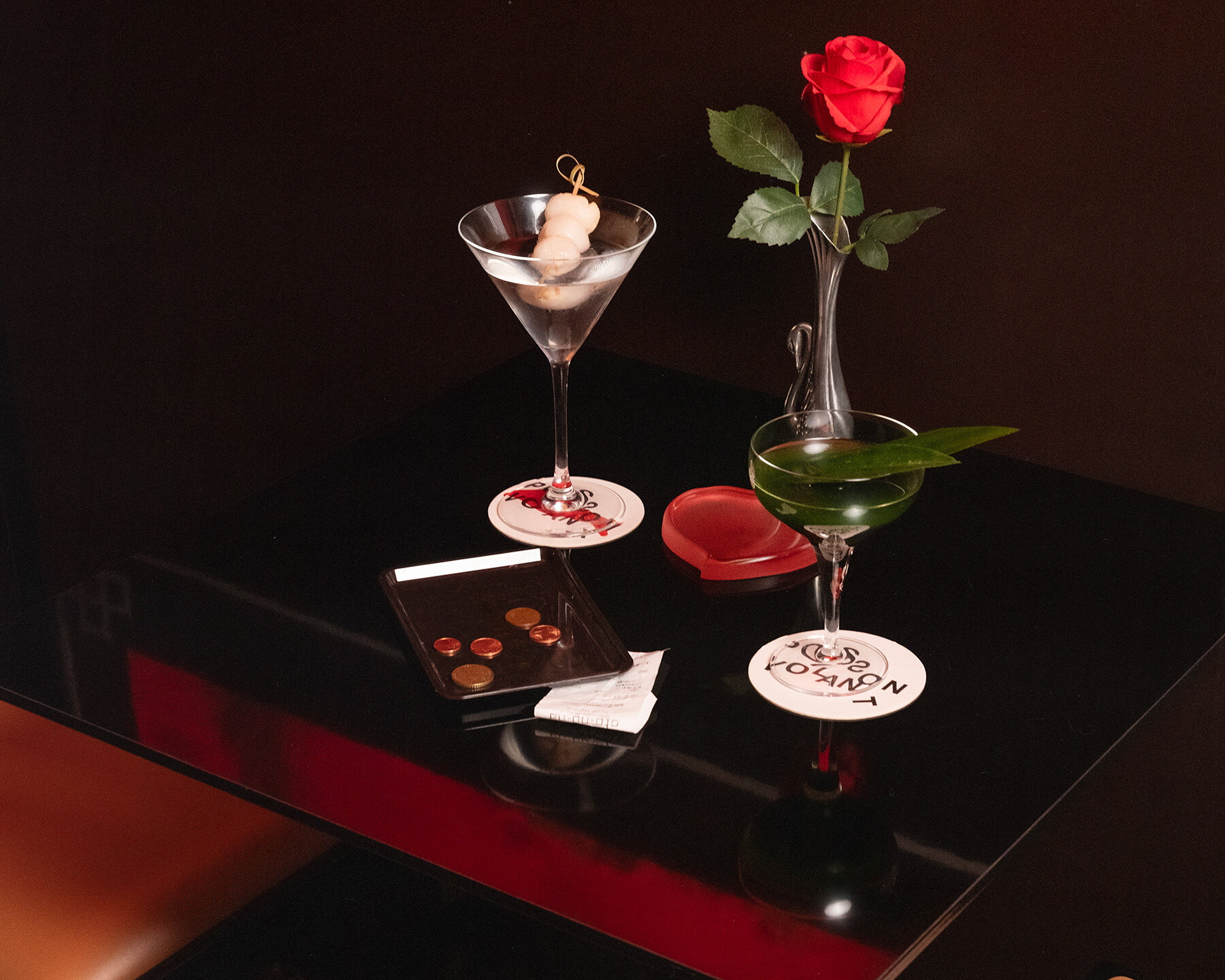
cocktails are served against the glossy black surfaces and deep red accents | images © Camille Mompach
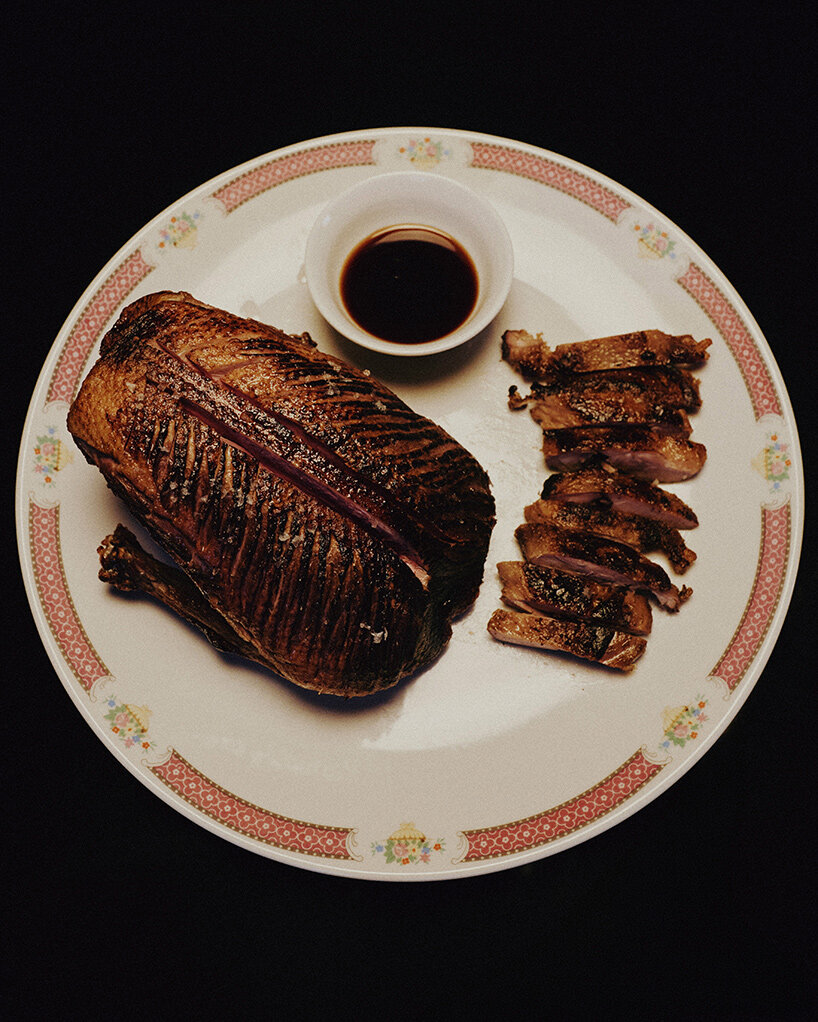
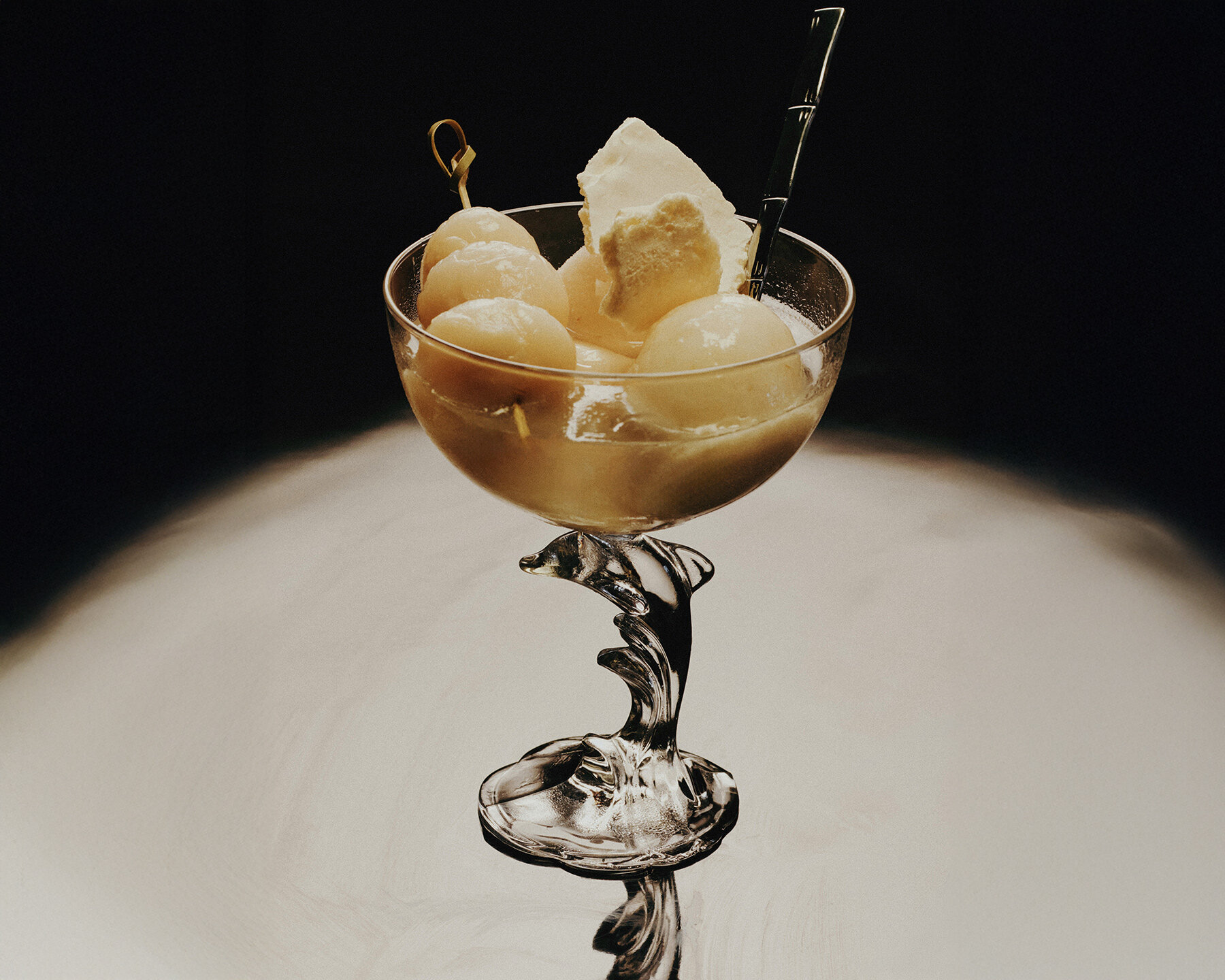
desserts arrive in sculptural glassware to continue the restaurant’s playful approach to presentation
project info:
name: Le Poisson Volant | @lepoissonvolant.paris
interior architecture: Claves Architecture | @clavesarchitecture
location: 5–7 rue Marguerite-Moret, Paris 11th arrondissement, France
lead architects: Laure Gravier, Soizic Fougeront
opening: October 2nd, 2026
photography: © Félix Dol Maillot | @felixdolmaillot
founders: Bertrand Chauveau, Paul Henri
lighting design: Matière Noire
sound design: FLEiK
commissioned artwork: Shuo Hao
chef collaboration: Bertrand Chauveau, Yanxin Yin
The post le poisson volant: red-lit restaurant in paris transforms into nightclub after dark appeared first on designboom | architecture & design magazine.