










‘the body is my canvas, tool, and medium’: lucy mcrae discusses identity and the spaces we carry
Lucy McRae on body futurism
The body is both the starting point and the testing ground for Lucy McRae’s speculative practice. Through sculpture, film, conceptual fashion, and experimental design, the artist explores how technology might change the way we inhabit ourselves and relate to others. Her work treats the human body as a medium through which possible futures can be experienced and questioned.
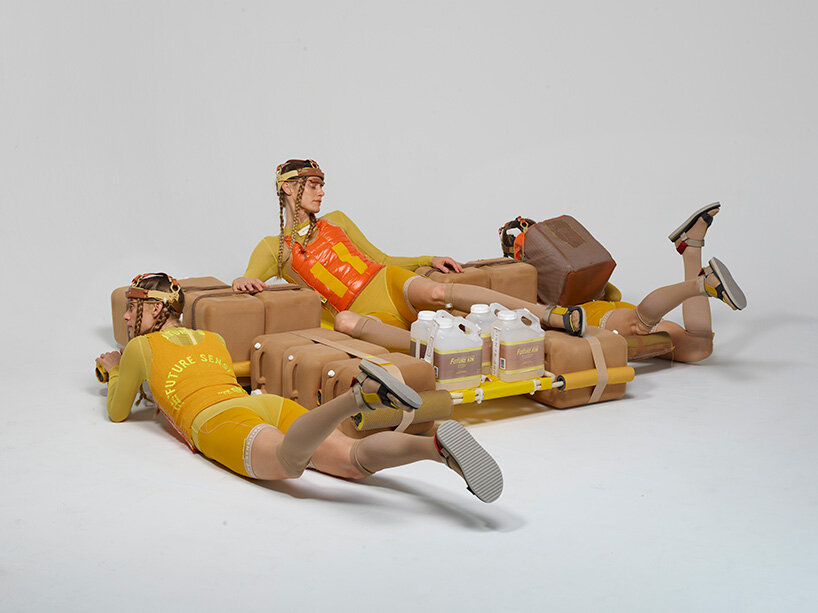
McRae leads Future Sensitive, an art-led speculative lab that brings together scientists, artists, and designers to explore body futurism and post-nature futures. Her interest in the subject developed through a combination of physical training, design research, and technological experimentation. After studying interior design at RMIT, she led a far-future design research lab at Philips from 2006 to 2010, where she worked on wearable technologies, including emotional-sensing dresses and electronic tattoos. The experience established a recurring question in her work: what happens when technology becomes inseparable from the body? ‘I’ve been investigating complex science for two decades. We can’t un-invent technology, and it all lands on the body,’ McRae shares with designboom. ‘The body has been my canvas, tool, and medium.’
from speculative technology to lived experience
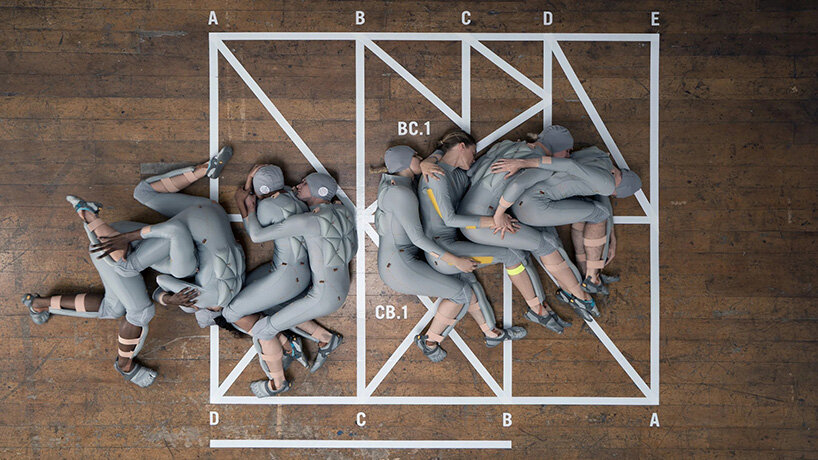
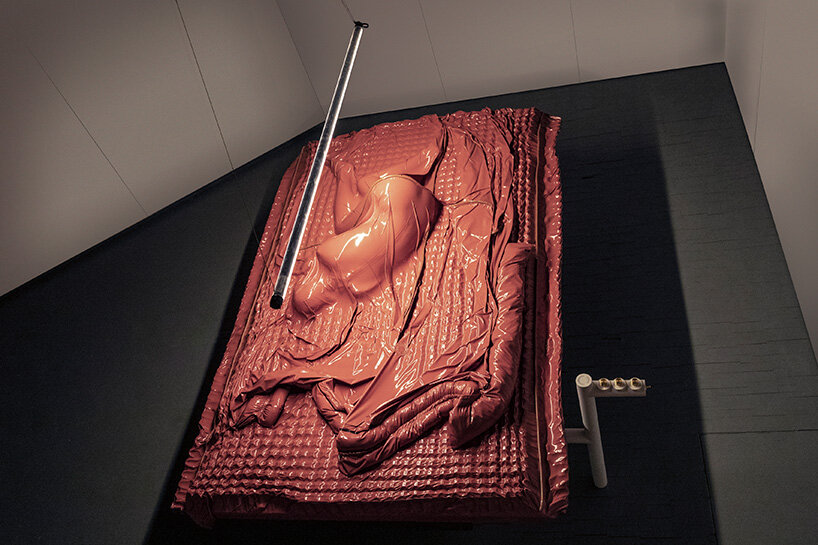
For the British-born Australian artist, the body is a way to make complex technologies easier to understand and imagine. This idea informed Compression Cradle, a project presented at the 2019 Milan Triennale exhibition Broken Nature, curated by Italian author and critic Paola Antonelli. The work later inspired a visual reference in Blade Runner 2099, for which Lucy McRae designed a crèche and birth bags for replicants. It shows how ideas developed through her art can also find their way into the worlds of film. Her work also questions where the body ends and technology begins. In Swallowable Parfum, developed with synthetic biologist Sharef Mansy, McRae imagined a cosmetic pill that would make the body produce its own fragrance. Conceived as a fictional beauty commercial, the project attracted interest from pharmaceutical brands, turning an invented product into a point of contact with the real market. ‘After leaving Philips I kept looking at technology through an art and worldbuilding lens. What happens when technology becomes the size of a blood cell, and we can eat it? I was also exploring pheromone excretion, and how the smell of our immune system is body odor. With Sharef Mansy, a synthetic biologist, we created Swallowable Parfum, a cosmetic pill that makes the body produce its own fragrance from the inside. We made it as a fictional beauty commercial, and it drew real responses from pharmaceutical brands. The fiction became a market signal,’ Lucy McRae tells us. ‘So does the body become tech when we eat it?’ she asks. ‘Maybe the better question is what far greater things could exist if technology is swallowable.’
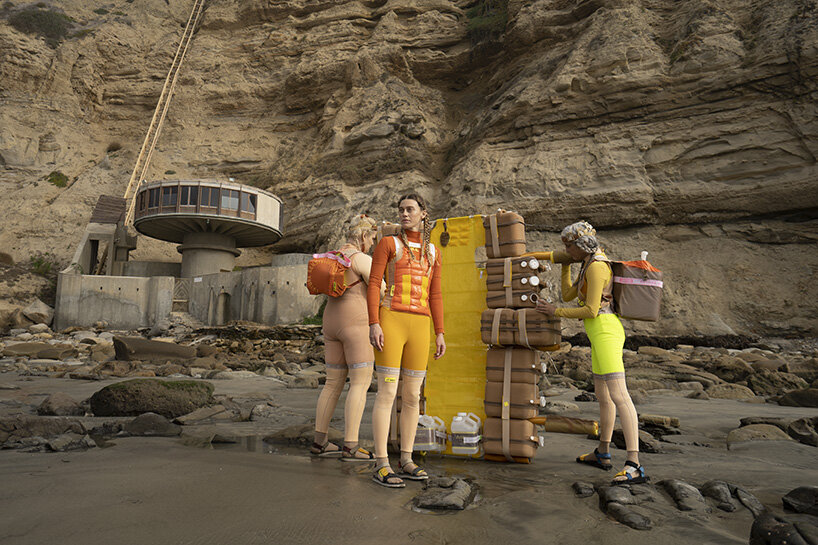
This interest also shapes the artist’s approach to fashion. Lucy McRae has recently completed a collection for Future Sensitive, drawing inspiration from costumes in films and artworks to create clothes for everyday wear. Set to launch in Los Angeles in 2027, the collection explores how clothing can express ideas about the future and change how we feel about ourselves.
clothing as an invisible architecture
McRae’s background in interior design informs her understanding of wearable objects as more than garments. Her interest lies in the relationships between things: a room and a body, a machine and a building, or the person and the space immediately surrounding them. These boundaries become less stable when clothing is understood as something that can alter not only appearance but also perception and behavior.
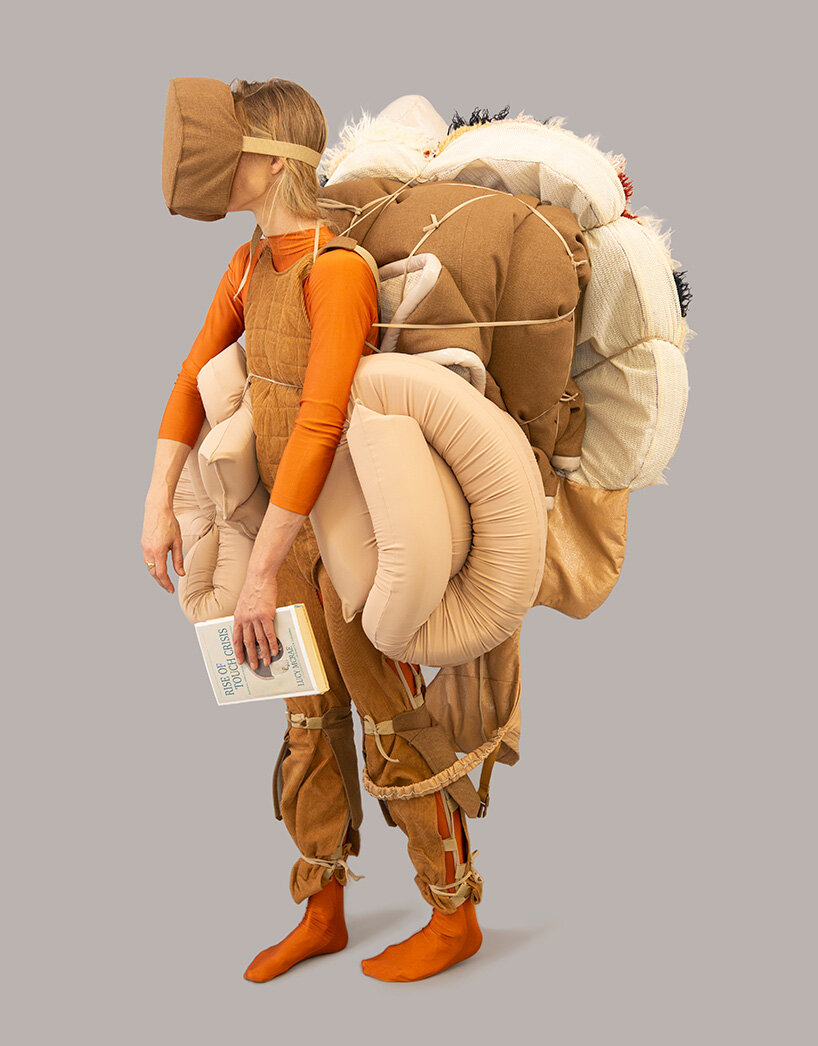
‘I think objects we wear create architectures, but they’re invisible,’ Lucy McRae explains. ‘They’re fields of feeling, or of psyche.’ The effect, she suggests, can be subtle but consequential. Wearing a particular outfit may change how someone carries themselves or how they are perceived by others, creating a temporary social space without any physical construction. McRae is testing her forthcoming collection in public, where the clothes become a way of projecting an identity that might otherwise remain unspoken. ‘It says “I am cooler than you think,” or really, “I am cooler than I think.” It pumps up identity without words,’ she tells designboom.
Lucy McRae’s work shows how clothing can shape the way we see ourselves and how others see us. For the body architect, what we wear can change how we feel and how we interact with people around us, an interest that comes from her own experience growing up. McRae recalls feeling like an outsider and making her own clothes to fit in. The desire to belong, she says, is something everyone understands, and it continues to influence her work.‘The estrangement you sense might be a trace of that: a yearning, a trying, a squeezing into something. Wanting to belong is universal,’ she notes.
making futures that can be inhabited
The science fiction artist describes her work as a way of developing possible scenarios, using the physical experience of a project to make its implications more immediate. A future becomes more persuasive when people can imagine themselves inhabiting it, but that immersion should not prevent them from questioning what they encounter. ‘Powerful stories are felt more when you can imagine yourself as the character, lie down in them, and embody a future,’ she highlights. ‘Just as important, you have to be able to refute it, argue with it, or offer alternatives.’
McRae also wants people to take part in her work rather than simply look at it. One idea she hopes to explore is an artwork in a swimming pool, using wearable flotation pieces and activities in water. ‘I dream of designing artwork in a pool: wearable flotation pieces, rituals in water, buoyancy to relax, immerse and transcend. Maybe the whole thing gets filmed, and it becomes the campaign for the fashion launch!’ she adds with a laugh.
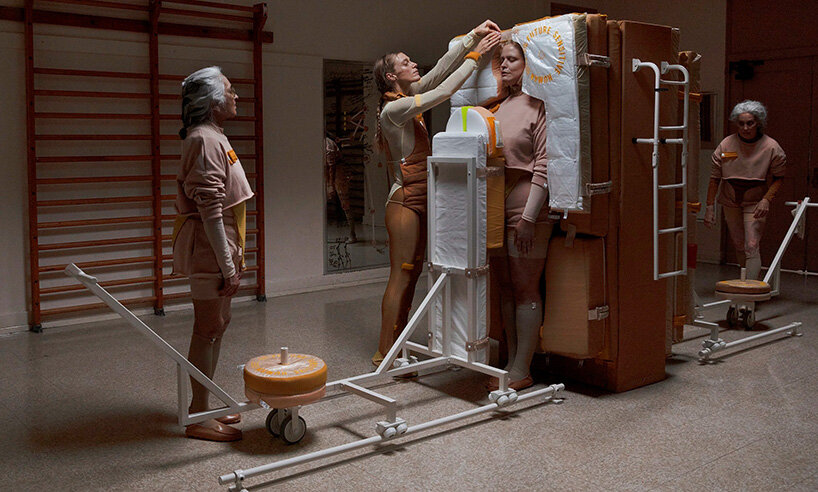
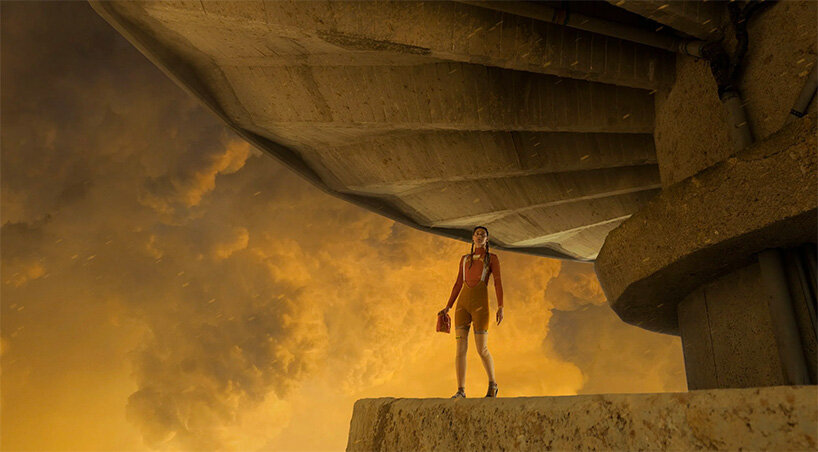
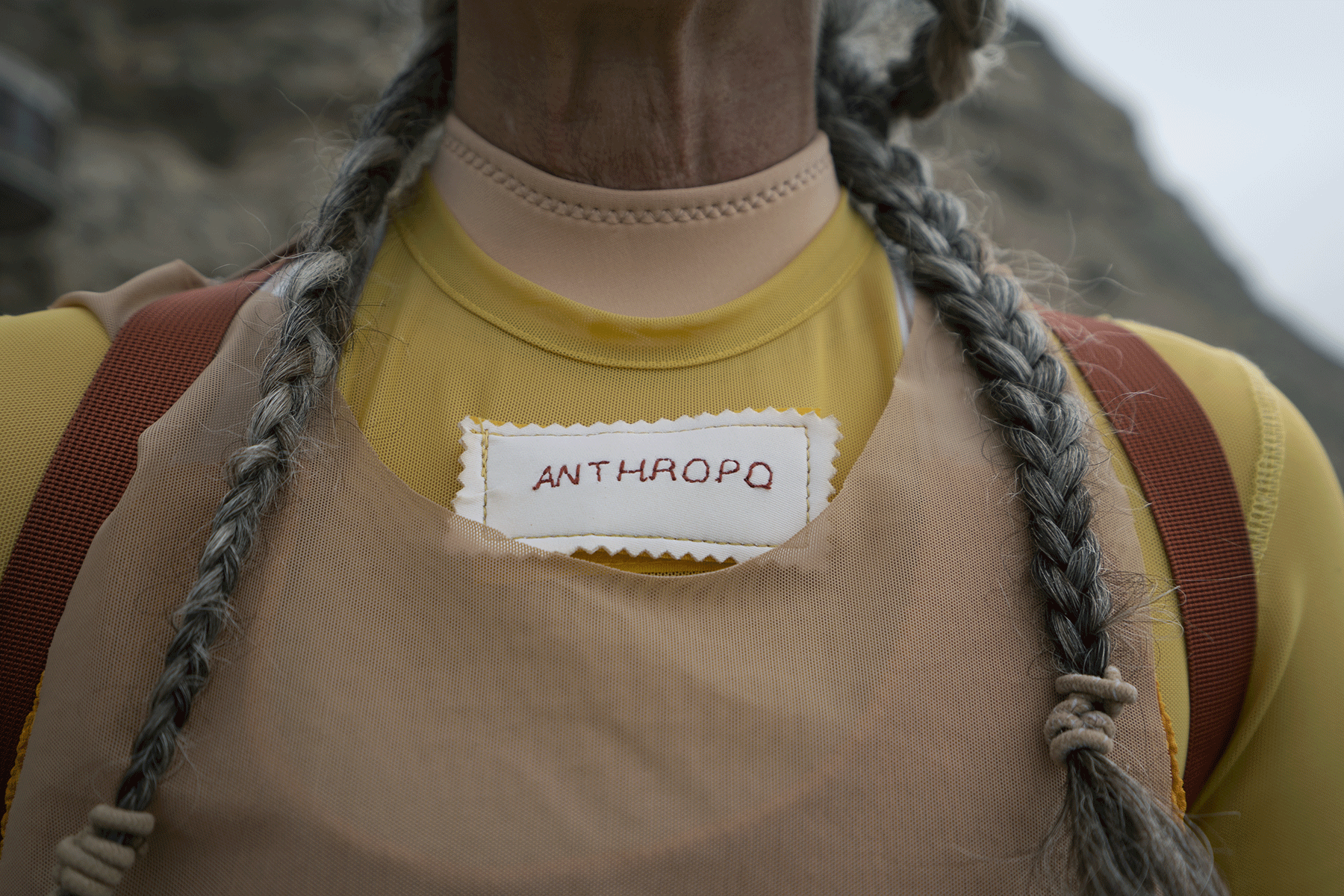
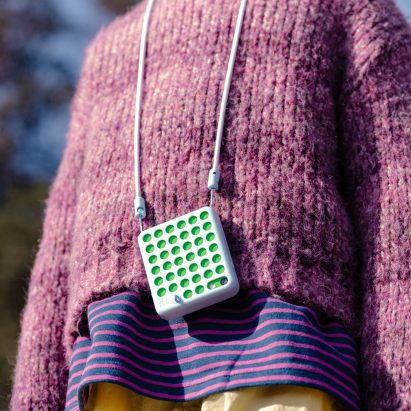
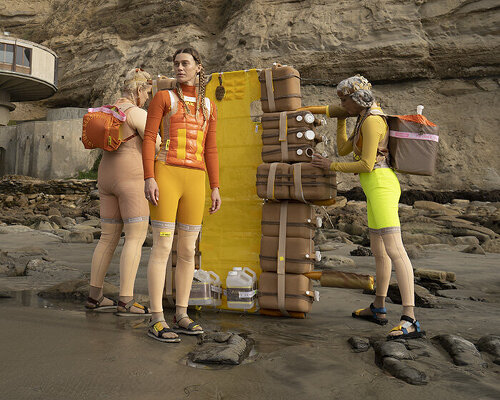
Futurekin (2022) © Lucy McRae | image by May Xiong
project info:
artist: Lucy McRae | @lucymcrae
The post ‘the body is my canvas, tool, and medium’: lucy mcrae discusses identity and the spaces we carry appeared first on designboom | architecture & design magazine.