



















fujifilm’s disposable quicksnap camera gets second life as full-scale LEGO model
FUJIFILM QUICKSNAP REBUILT AT LIFE SIZE
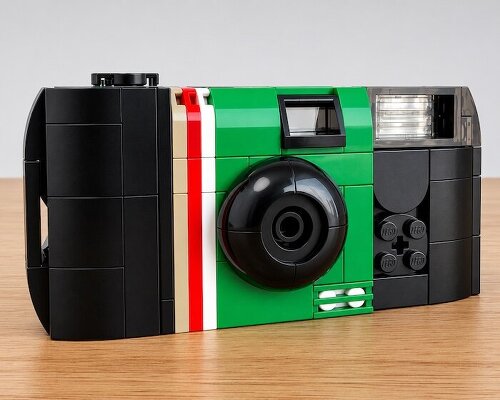
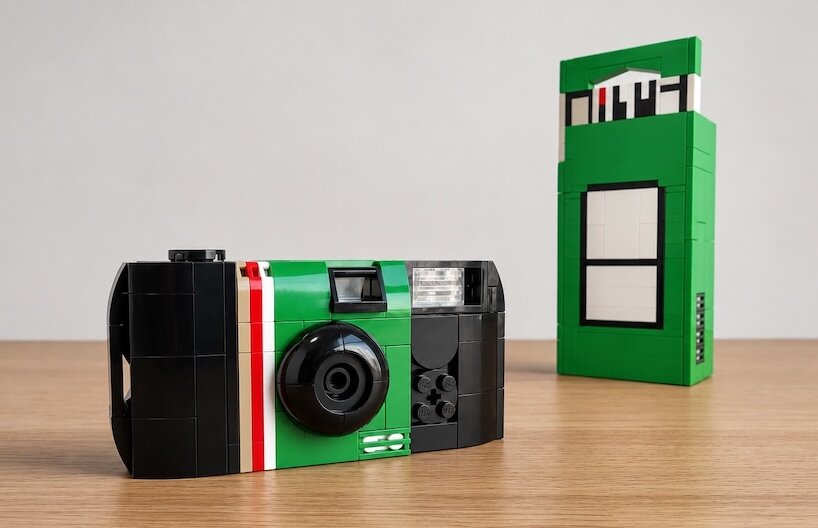
Not every disposable object disappears after use. Some return as small monuments to the era that produced them. The Fujifilm QuickSnap, introduced in 1986, has found an unlikely second life in a LEGO Ideas proposal by fan builder MarshallThrilledLobster. Rather than inventing another camera-inspired toy, the project reconstructs the Japanese Simple Ace version at 1:1 scale, preserving the familiar green body, red and white stripes, and rounded black lens. The result looks ready for a holiday, provided nobody expects actual photographs.
The model is carefully proportioned to match the handheld original, with its outer surfaces smoothed by tiles that conceal most visible studs. Subtle changes in brick orientation reproduce the curves of the lens housing, while a side loop recalls the strap attachment. Much of the appeal lies in how little the design needs to exaggerate: the QuickSnap was already a compact piece of industrial design, with its controls, branding, and plastic shell arranged to be understood almost instantly.
A LEGO CAMERA THAT WINDS BUT DOES NOT TAKE PHOTOS
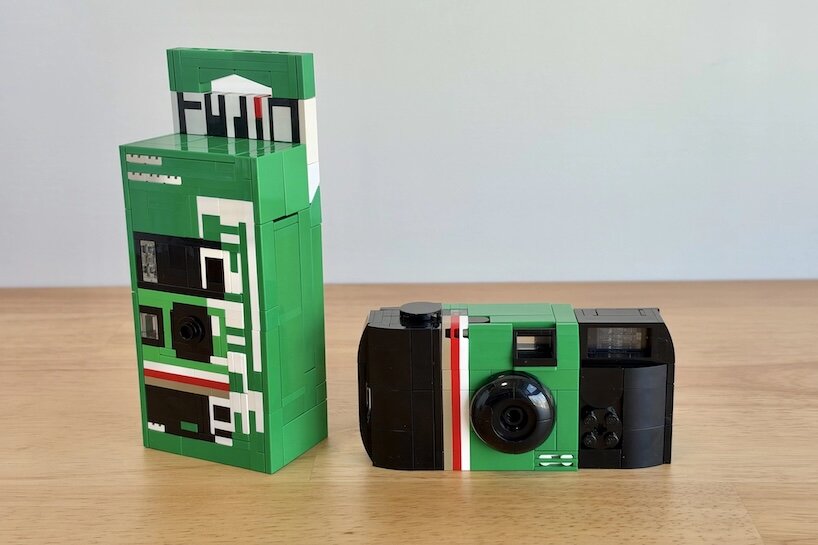
For all its display-ready neatness, the LEGO Ideas, proposal offers a few physical reminders of what made film cameras satisfying to handle. A partly recessed LEGO Technic gear acts as the winding wheel, rotating with a small click that recalls advancing a roll between shots. The transparent viewfinder is aligned from front to back, allowing users to look through it and frame a subject. There is no film or working photographic mechanism inside, but the ritual of preparing a picture survives.
The matching packaging receives nearly as much attention as the camera itself. Built at full scale, the box recreates the Japanese 写ルンです (Utsurundesu) lettering in pixel-like shapes, with even the barcode assembled from bricks. To achieve its flat graphic surfaces, the creator uses sideways building techniques commonly known as SNOT, or Studs Not On Top. It is an unexpectedly affectionate tribute to retail packaging, the part of a disposable camera that usually has an even shorter lifespan than the camera itself.
FROM DISPOSABLE DESIGN TO LEGO IDEAS
Beyond the familiar colors and tactile details, the proposal points to a less obvious chapter in the QuickSnap’s history. Fujifilm developed a system to retrieve used cameras from photo-processing labs, dismantle them, inspect their components, and reuse suitable parts in new units. For a product routinely described as disposable, it represented an early approach to circular design in consumer photography. The creator draws a parallel with LEGO bricks, which can be dismantled and assembled into something entirely different long after the first build.
Submitted to LEGO Ideas, the model remains a fan concept rather than an announced commercial release. It needs 10,000 supporters to qualify for LEGO’s official review process, which does not guarantee production. There is precedent for translating camera nostalgia into an official set, including LEGO’s Polaroid OneStep SX-70 model, but the QuickSnap brings an especially fitting proposition: a replica of a single-use object that can be taken apart and rebuilt indefinitely. This time, the only thing waiting to be developed is the idea itself.
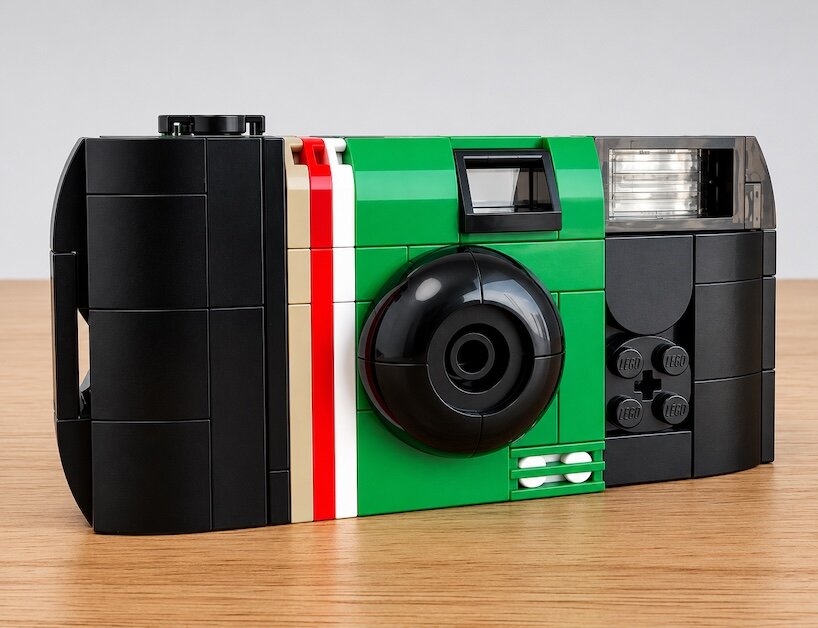
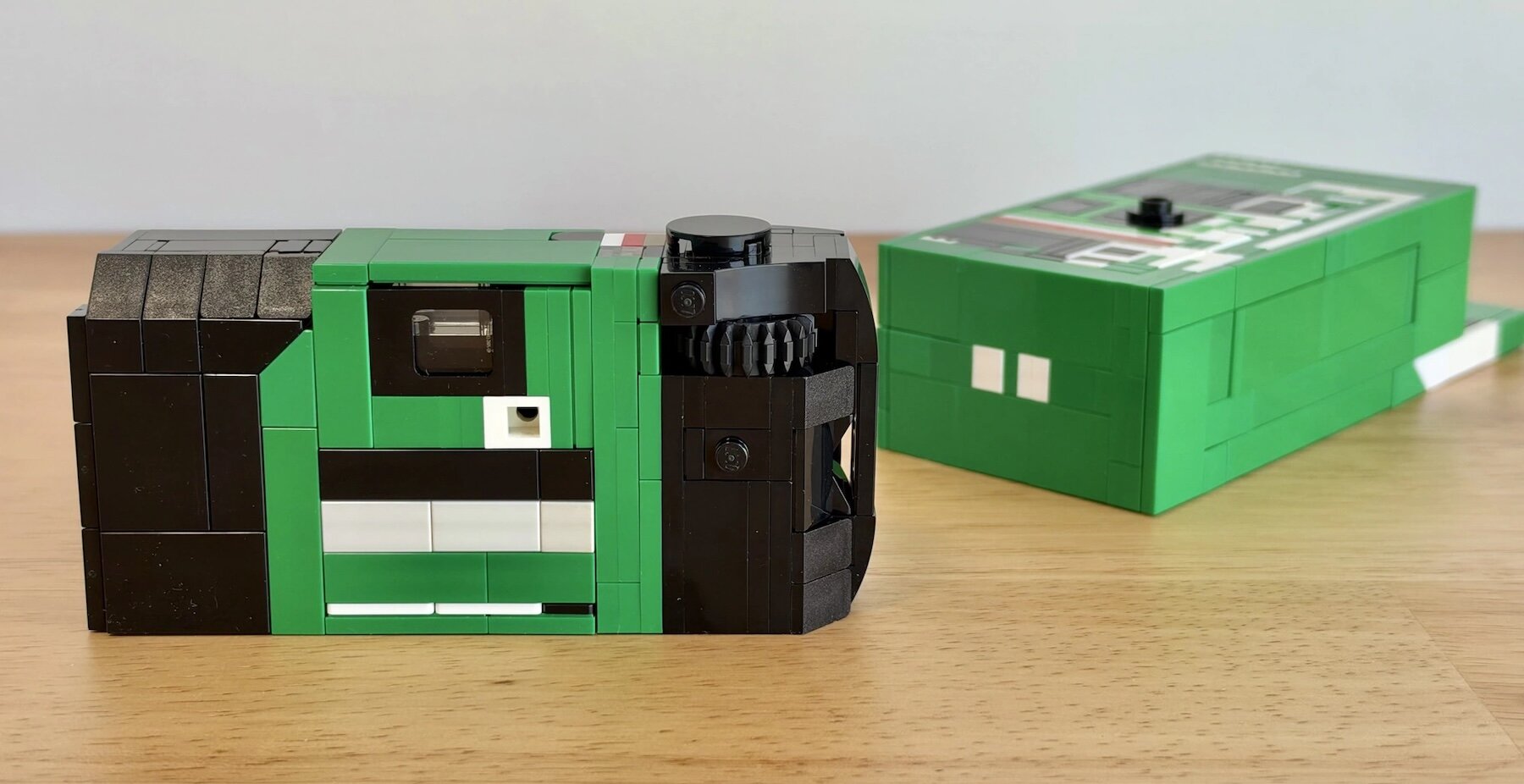
green, white and red bricks recreate the camera’s casing
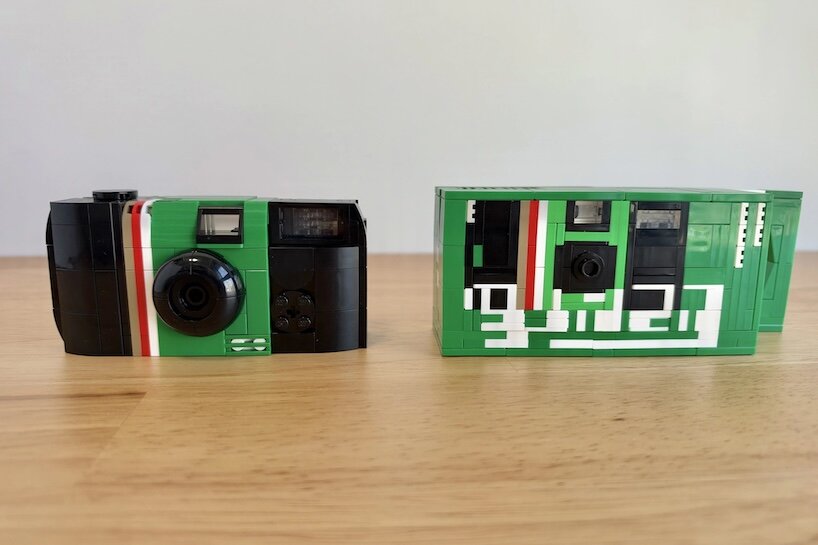
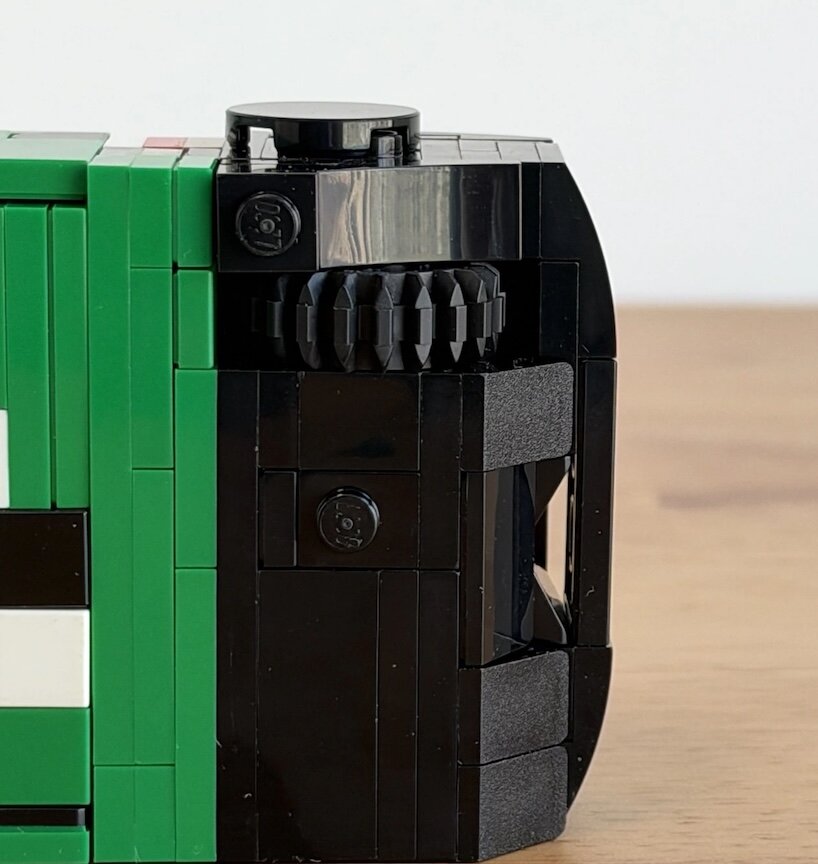
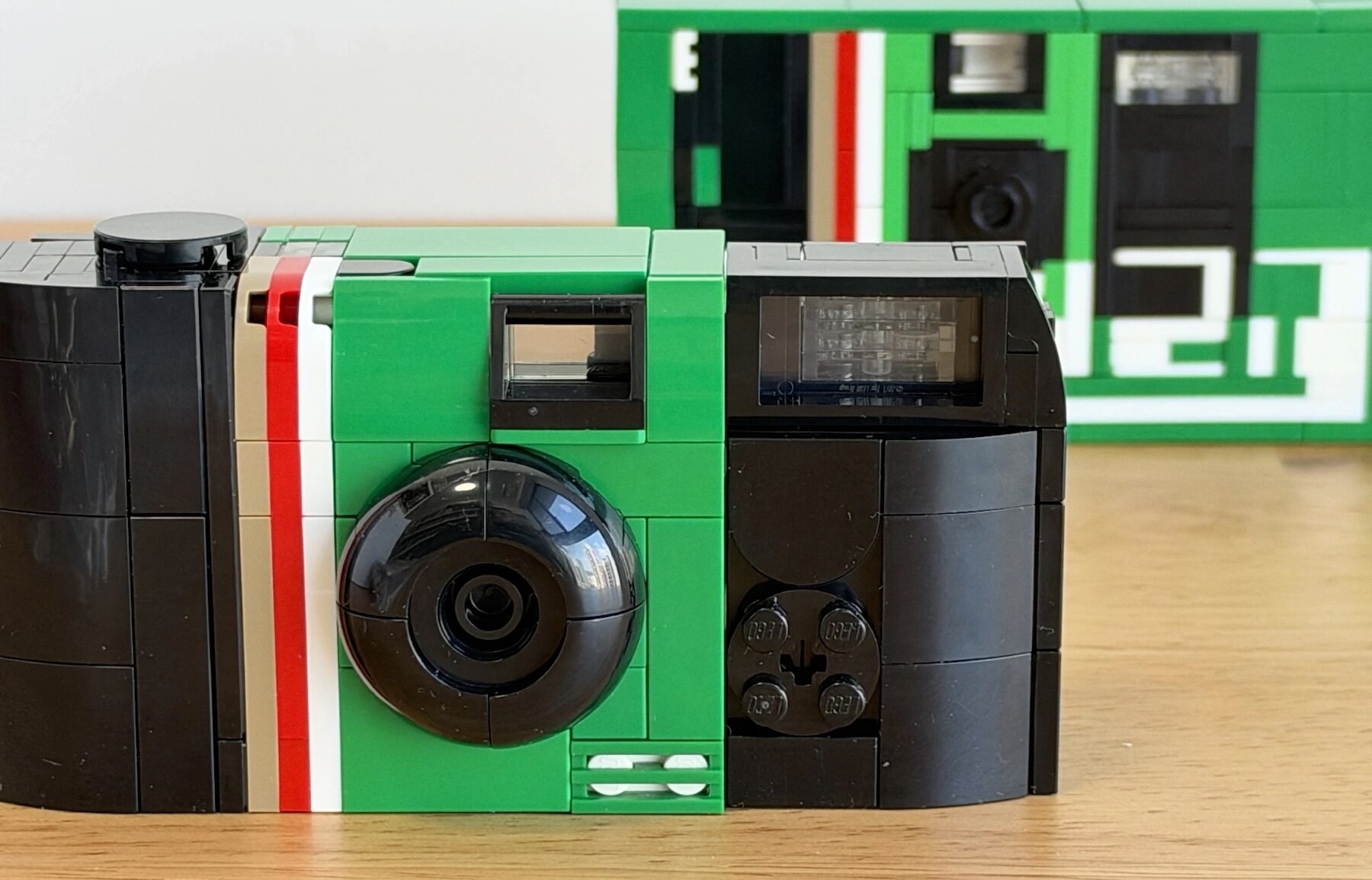
a familiar analog icon takes shape through colorful interlocking bricks
project info:
name: Fujifilm QuickSnap LEGO model
designer: MarshallThrilledLobster
The post fujifilm’s disposable quicksnap camera gets second life as full-scale LEGO model appeared first on designboom | architecture & design magazine.