

















radio ga ga replaces smartphone screens with analog dials and e-ink display for AI audio
AGENTIC AI REIMAGINED AS SHARED HOUSEHOLD RADIO
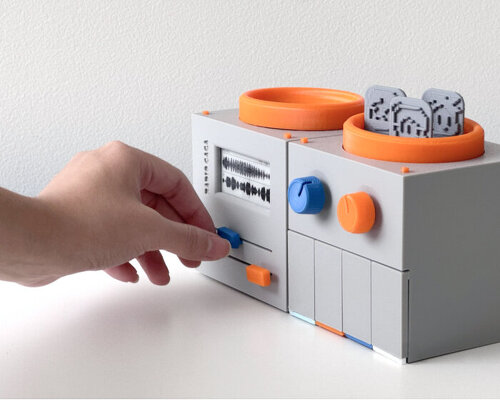
Developed by Lilith Yu, Jiayue Chloe Ni, and Yanchen Shen at the Harvard University Graduate School of Design, Radio Ga Ga reconfigures agentic AI as a shared domestic appliance rather than a personal screen-based device. Housed in a 3D printed PLA enclosure that blends mid-century radio proportions with contemporary hardware detailing, the object replaces apps, touchscreens, and voice wake words with tactile physical controls and a low-power Waveshare e-ink display.
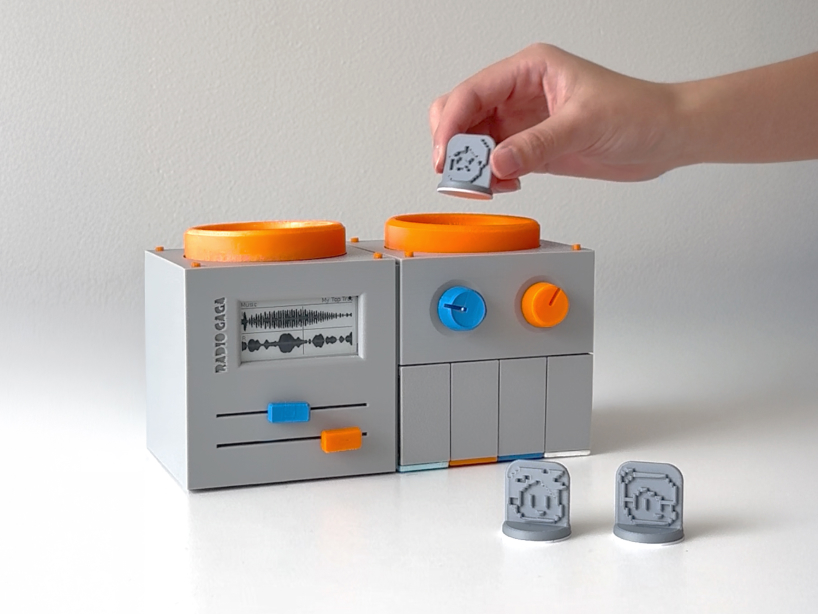
Radio Ga Ga features TACTILE DIALS AND E-INK DISPLAY
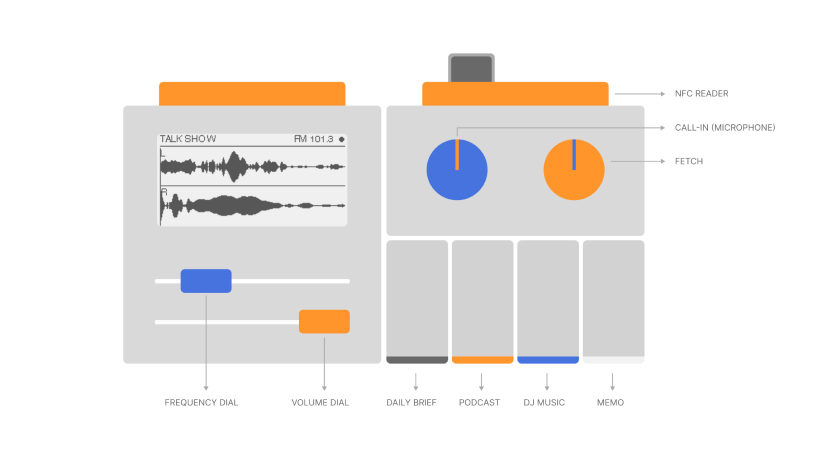
Designed by a Harvard University Graduate School of Design team for kitchens and living rooms, the interface uses a physical potentiometer to adjust a ‘radius of attention,’ moving continuously across private briefings, household channels, and public broadcasts. Four always-on channels deliver real-time audio, including a local news and weather brief, an AI-hosted talk show, a music stream, and a voice memo feed, while holding down a dedicated call-in button lets listeners speak directly into the live broadcast.
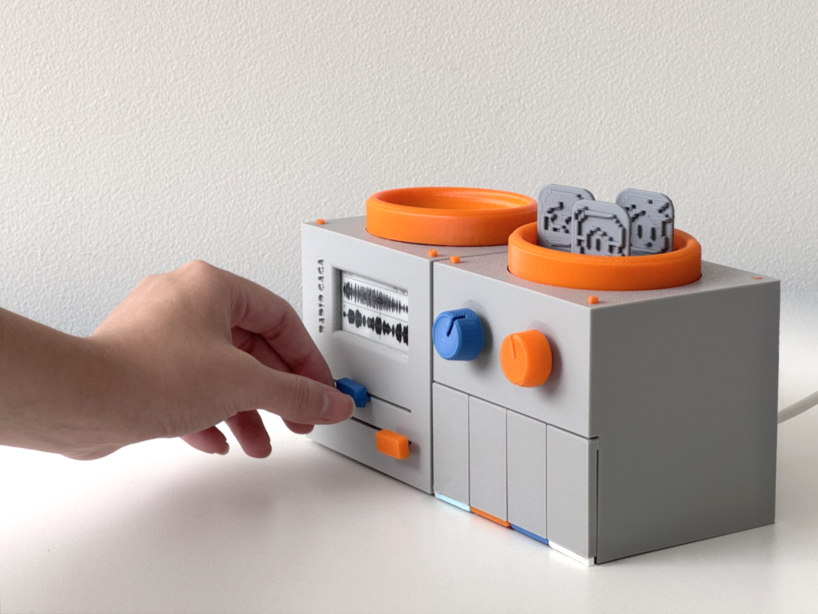
PHYSICAL NFC TOKENS REPLACE DIGITAL PAIRING
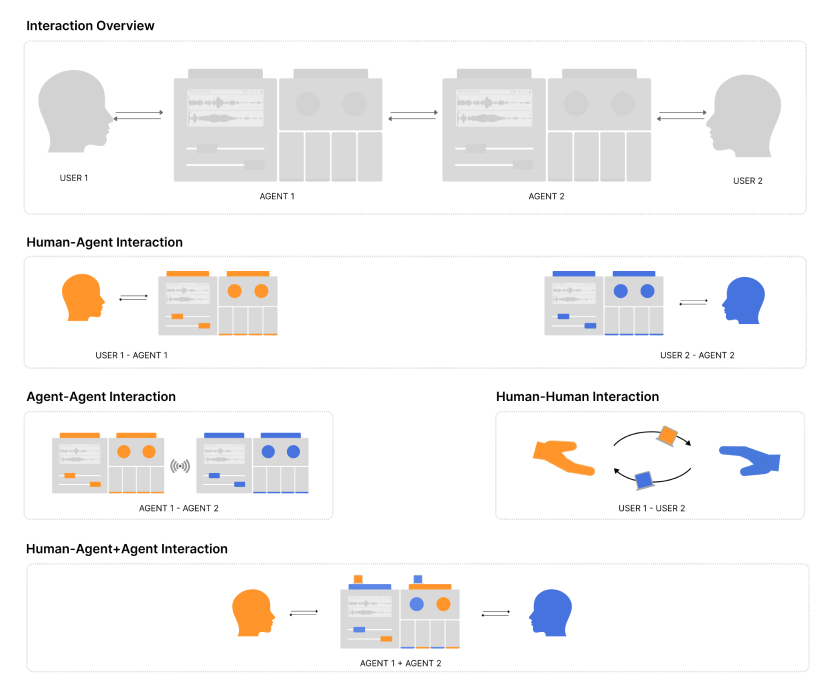
To establish networks between separate households without relying on digital follow requests or software-only protocols, the design team replaces virtual pairing with physical NFC tokens. When two users exchange tokens in person and tap them against the integrated RFID reader, their respective radio agents establish a persistent peer-to-peer WebSocket connection. Once linked, the devices share ambient context, allowing a friend’s AI host to appear as a guest on a talk show or letting another household’s listening habits subtly inform music selection.
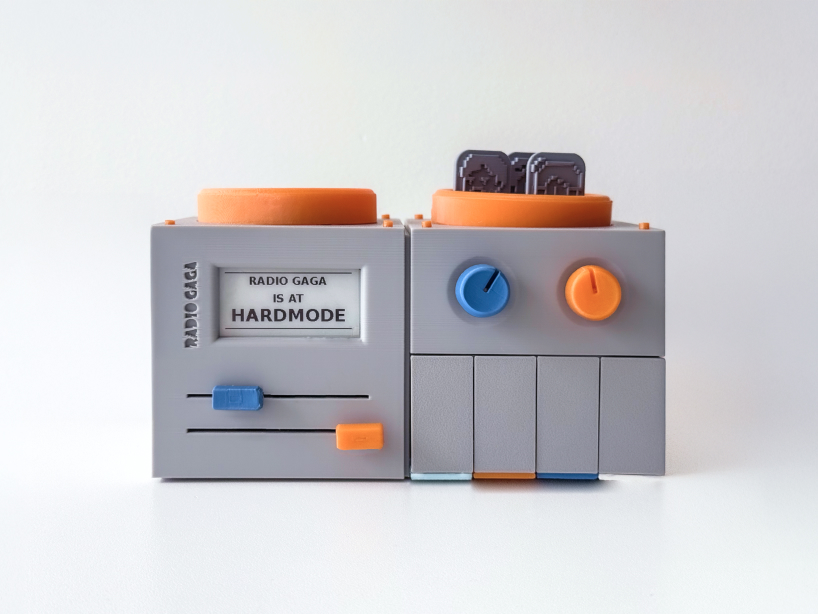
ANALOG CONTROLS pair WITH REAL-TIME VOICE SYNTHESIS
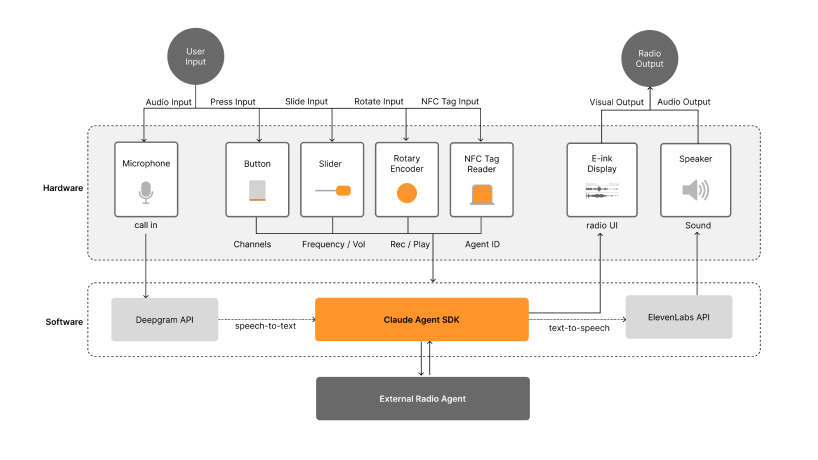
Internally, the hardware runs on a Raspberry Pi 5 outfitted with two rotary encoders, two slide potentiometers, four tactile buttons, and a USB speaker and microphone. An asynchronous Python architecture coordinates real-time data streams from weather, news, and music APIs with Anthropic’s Claude SDK to generate editorialized scripts, while ElevenLabs synthesizes distinct host voices and Deepgram transcribes live listener call-ins. By pre-generating upcoming segments in the background, the system maintains instantaneous channel switching reminiscent of analog tuning.
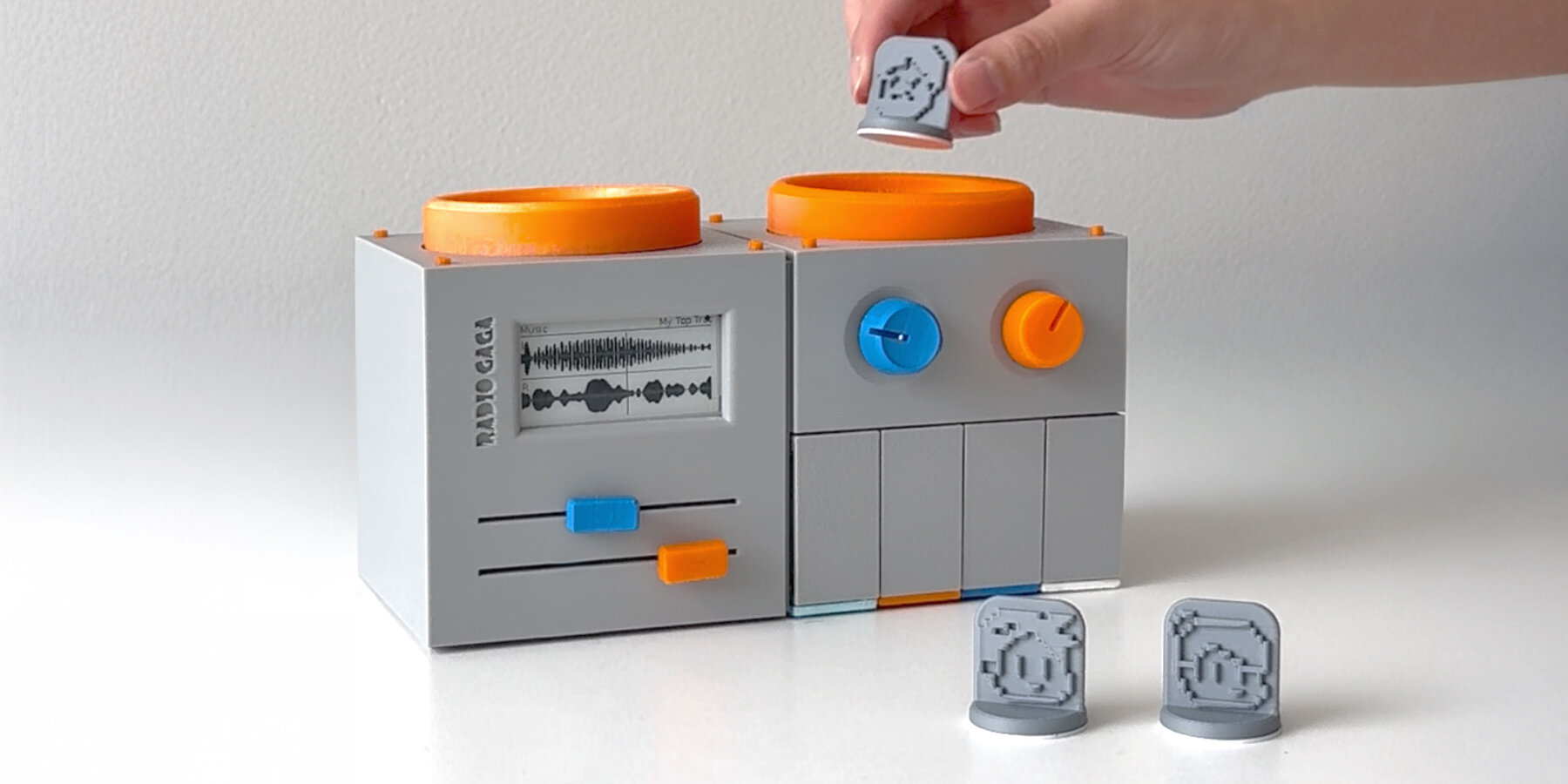
audio channels generate live local news, an AI-hosted talk show, a context-aware music stream, and voice memos
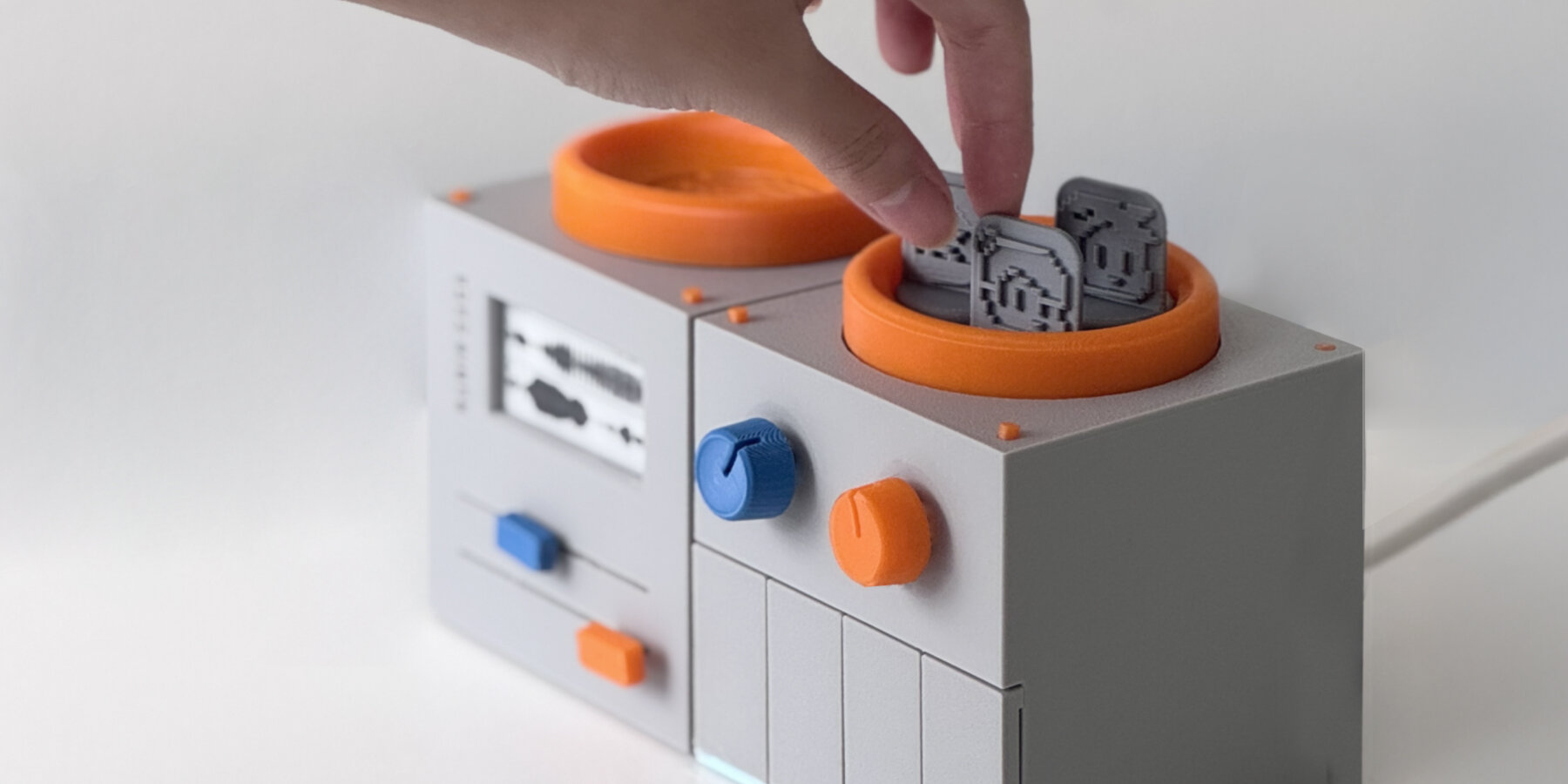
the internal hardware integrates rotary encoders, slide potentiometers, tactile switches, and a USB audio array
project info:
name: Radio Ga Ga
design team: Lilith Yu, Jiayue Chloe Ni, Yanchen Shen
institution: Harvard University Graduate School of Design (GSD)
designboom has received this project from our DIY submissions feature, where we welcome our readers to submit their own work for publication. See more project submissions from our readers here.
edited by: Christina Vergopoulou | designboom
The post radio ga ga replaces smartphone screens with analog dials and e-ink display for AI audio appeared first on designboom | architecture & design magazine.