

















how sound, fungi, and material experimentation shape thomas feriero’s music project
thomas feriero on how music and mycelium grow and transform
‘Sometimes it’s only once the original sound starts to break down that you can hear something new taking shape,’ says Thomas Feriero, describing the thinking behind Will You Still Love Me When I’m A System In The Ground? The Milan-based composer, working under his new solo alias Challenging Conditions, has developed three experimental compositions that explore decay, distortion, and the unpredictable behavior of creative systems. In collaboration with Paris-based material design studio Aléa Work and designer Oscar Morgan, these sonic experiments extend into the physical world through a series of objects grown from mycelium.
The project brings together musical composition and biological growth, two processes that might initially appear unrelated. Yet, both involve interconnected elements that respond to one another, changing the structure and identity of the whole. ‘There is a shared language between sound and fungi – networks, waves, growth, decomposition and transformation,’ explain Miriam Josi and Stella Lee Prowse, co-founders of Aléa Work. ‘Both can appear chaotic while still generating new forms of order.’ For Feriero, the connection offered an opportunity to step outside familiar compositional routines. ‘The project began as a deliberate break with my own methods, because I wanted to step outside the routines I’d built over years of composing and see what would happen if I put both the music and myself in unfamiliar circumstances,’ he tells designboom. ‘Three experiments, or “systems,” came out of that, all developed in parallel and each a new way of making sound for me.’
What connects these experiments is an interest in things going slightly wrong. ‘I’ve always been drawn to those imperfections, but this time I wanted to give them more room,’ he explains. A friendship with someone developing a project about fungi and what grows out of decay had introduced Feriero to the subject years earlier. Although that original collaboration never materialized, the idea stayed with him. When Morgan later heard his musical experiments and connected them to Aléa Work’s research into mycelium, the relationship between the two practices began to take shape.
three systems built around erosion
The structure of the project was shaped through conversation. Initially, Feriero considered the three musical experiments independent works, each governed by its own rules. ‘I didn’t design the structure in advance, and until Oscar heard the material, I’d treated each experiment as self-contained, with its own rules and logic,’ he shares with us. Morgan’s observation that Feriero seemed to be making music as difficult as possible to create became a turning point. ‘Each Condition is a set of obstacles I built for myself, both a method and a problem to solve, and the name also describes what the music is subjected to,’ Thomas Feriero explains. ‘To be completely honest, I was more interested in the process than the destination, and I think it was exploratory from beginning to end for everyone involved.’ The three Conditions each investigate a different form of sonic erosion: behavioral, physical, and structural. Their accompanying mycelium objects follow the same logic, translating the processes of the recordings into experiments with the material.
a simulated jazz ensemble shares a room with growing mycelium
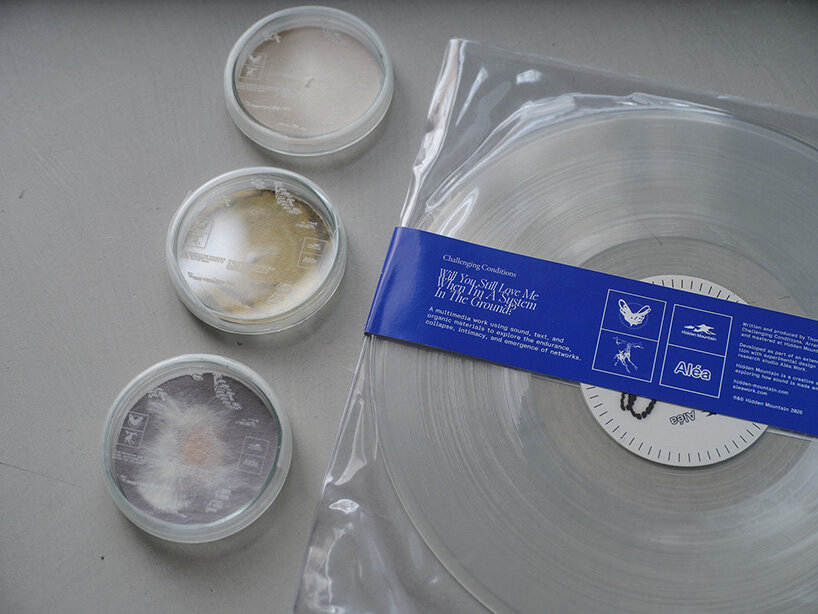
The first, Condition 01, uses physical modeling to simulate a jazz ensemble. Feriero builds digital instruments by simulating the physical behavior of their components, such as a vibrating string or the air moving inside a tube. Each instrument continuously adjusts to the others, producing a performance in which the sounds shift away from their original identities. ‘Every parameter is in motion and each player adjusts to the others, so a saxophone might slowly become a double bass before collapsing into something like a kick drum,’ he notes. The composition develops through these exchanges, with the ensemble gradually losing its cohesion while generating unexpected musical relationships.
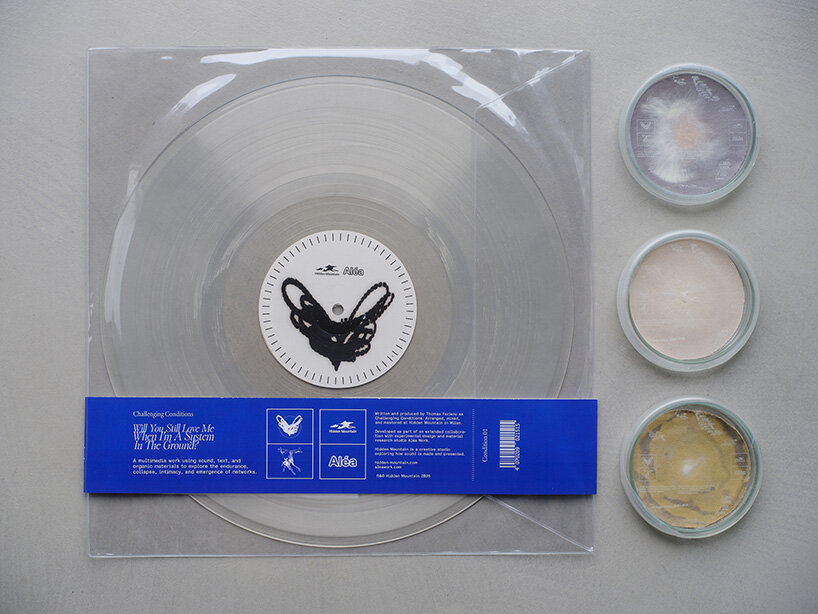
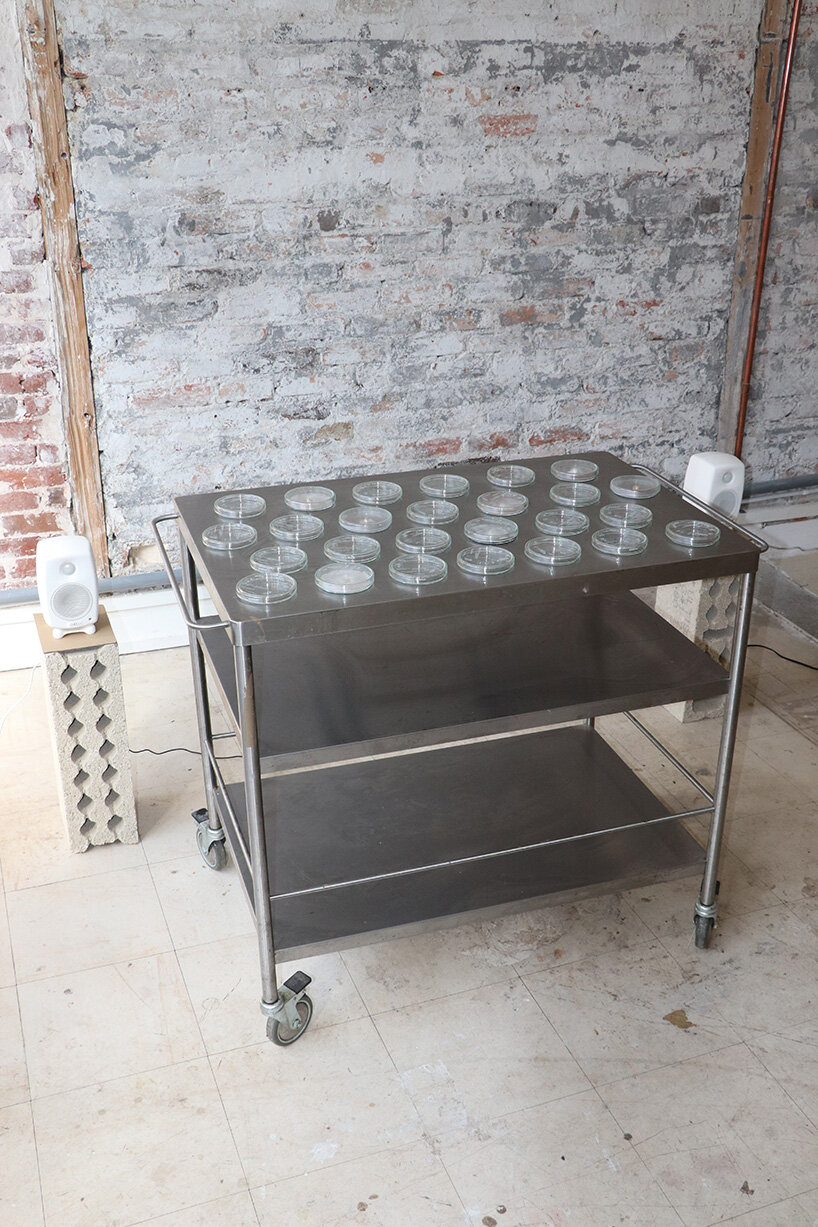
Its material counterpart is a series of glass Petri dishes containing Pleurotus ostreatus, commonly known as oyster mushroom, mycelium grown on cotton fabric. During a two-week period in Paris, the dishes were placed in a room where the composition played continuously, allowing sound to become part of the growing environment. ‘For Condition 01 we wanted the music and the mycelium to actually share a space, so we rented a room in Paris where the piece played continuously while the mycelium grew,’ Feriero tells designboom. ‘The Petri dishes preserve that growth, now inert.’
Interestingly, the experiment did not influence the composition itself, which was already complete before the mycelium was introduced. What interested Feriero was the idea that the piece, already built around listening and interaction, could enter into a different kind of relationship with another living system. ‘The simulated players follow one another the way a pianist follows a bass player, and as they adjust to each other, the whole performance keeps shifting in a way that feels both broken and natural,’ the composer says. ‘I liked the idea of the mycelium as one more listener in the room, whose response, if it had one, would be in the way it grew.’ The Petri dishes preserve the physical outcome of a growing process that took place in its presence. The mycelium is dormant rather than dead and can be reactivated under the right conditions. The vinyl edition is limited to 100 copies, with 18 additional Bandcamp-only bundles pairing the record with an individual Petri dish.
breaking down the original composition
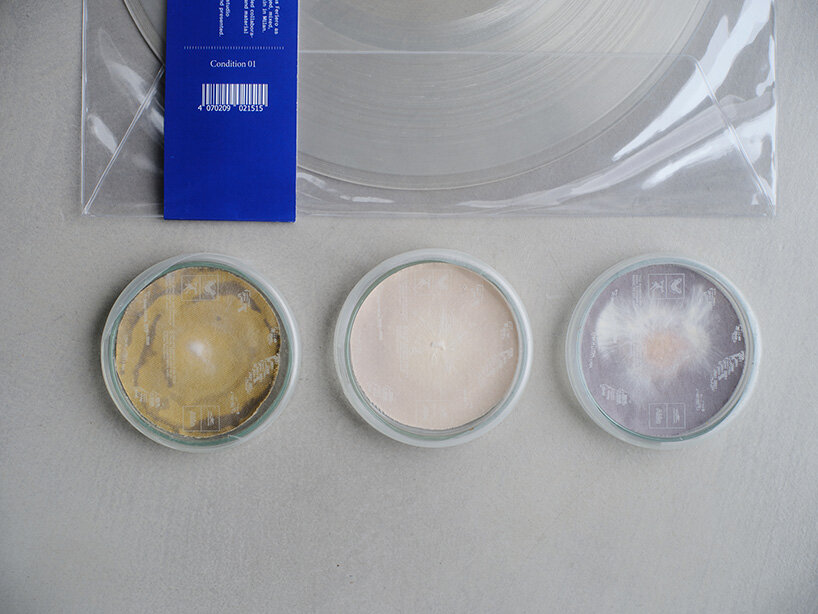
Where the first Condition explores erosion through the behavior of simulated instruments, Condition 02 approaches it through physical degradation. ‘I took compositional sketches I’d discarded, recorded them onto cassette and put them through guitar pedals and increasingly absurd processing until all that was left was texture, a residue of the original music,’ Thomas Feriero explains.
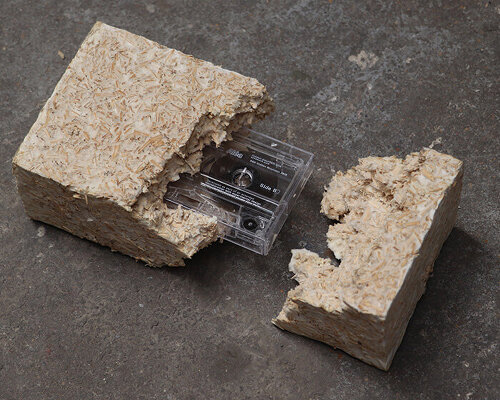
Partly inspired by James Leyland Kirby’s work as The Caretaker, the recordings gradually lose their original structures, resulting in an extended collection of atmospheric drone, ambient passages, and percussive abstraction, in which the original compositions become difficult to recognize. The accompanying cassette is encased inside a composite mycelium brick that must be physically broken open to access the recording. Feriero sees this as an extension of the relationship between the recording and its physical presentation. ‘With Condition 02 it works the other way round, because the object has a say in how you get to the music,’ he describes. ‘We wanted the brick to feel like part of the piece, and for me that comes down to the choice you have to make when you’re holding one.’
‘There are only a few of them and no two are alike, so hearing the recording inside yours means breaking it open and giving up that particular object in its original form,’ the composer adds. The debris can subsequently be planted or used to display the cassette.
writing a system that does not settle
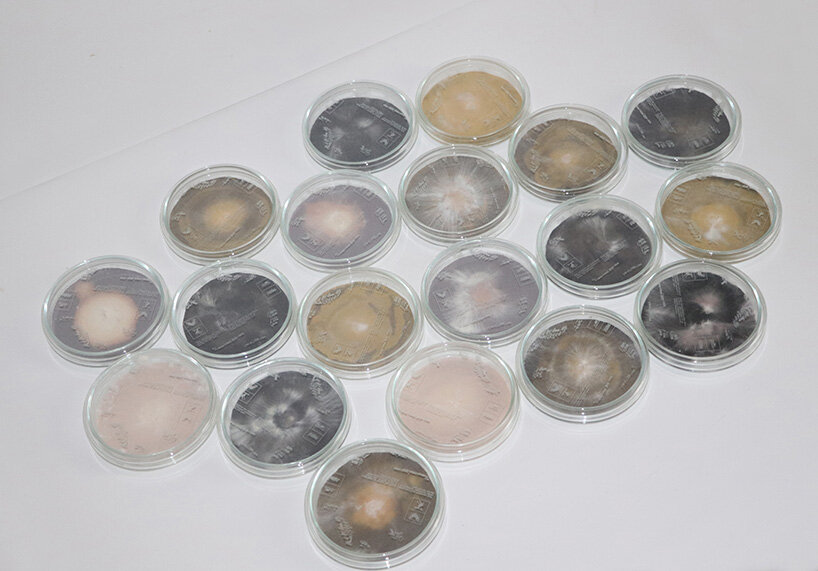
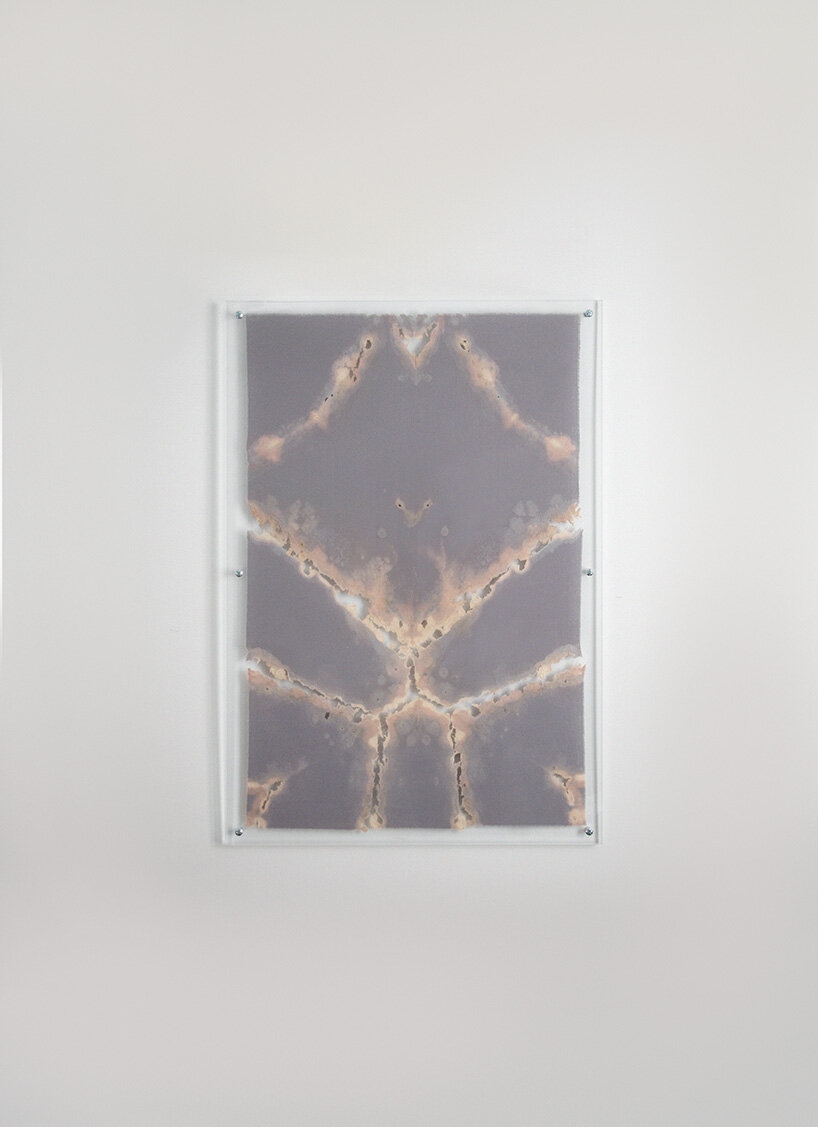
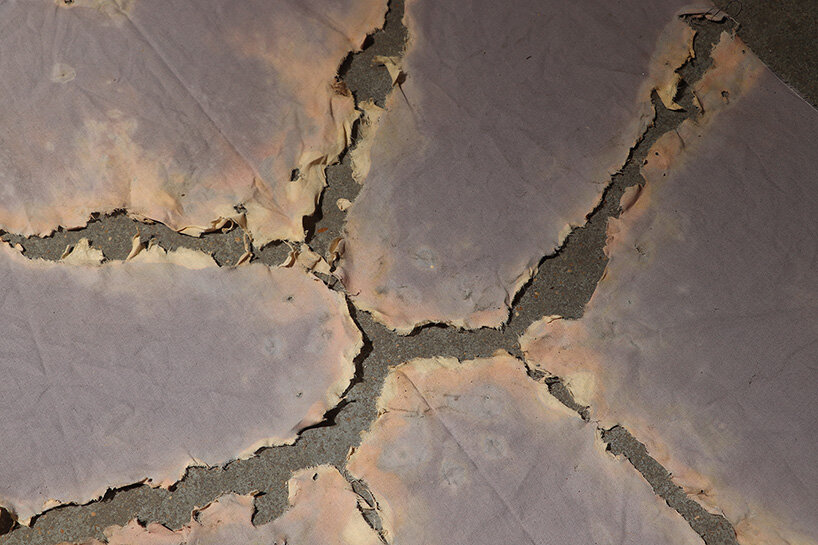
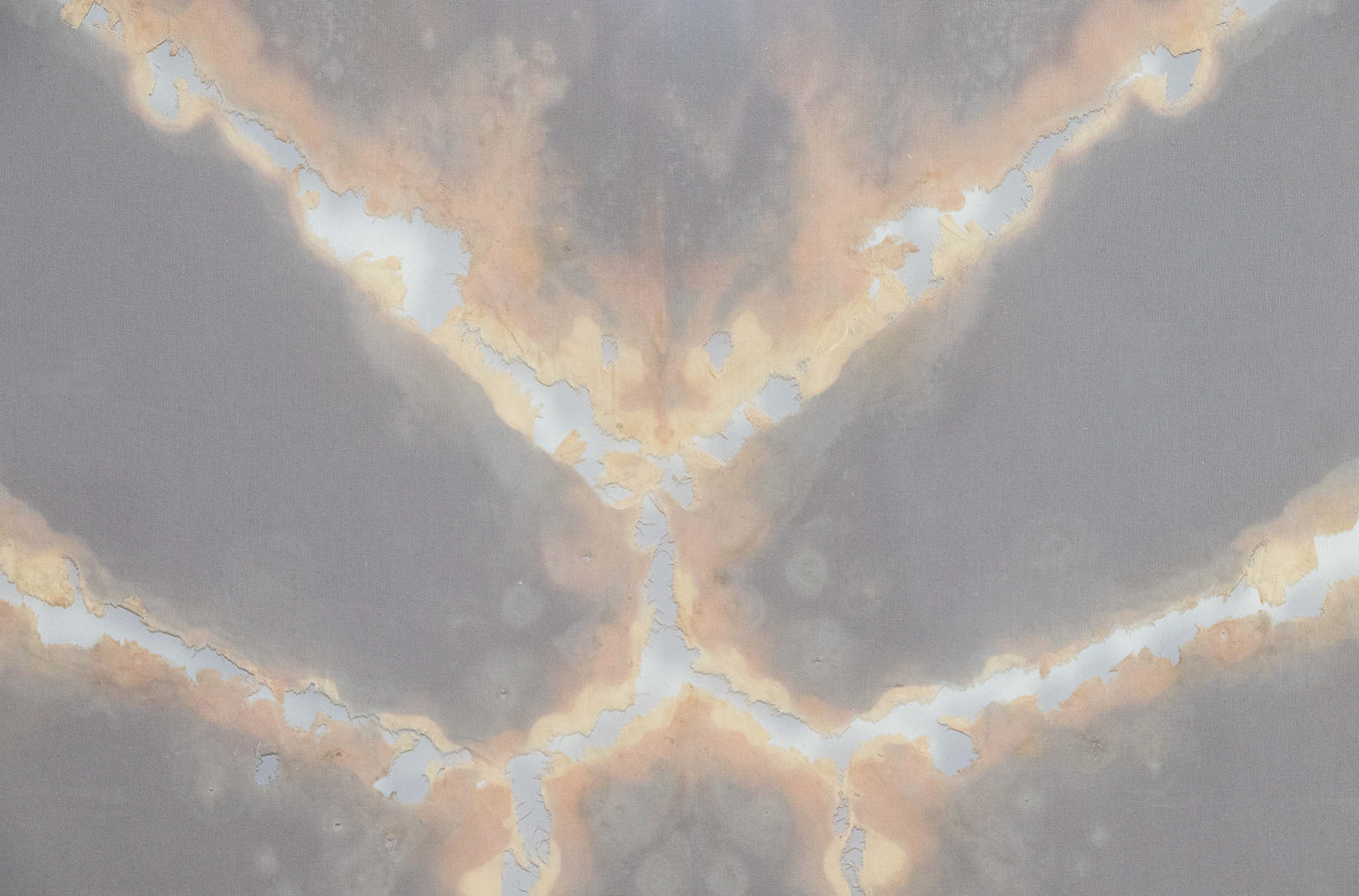
The final release, Condition 03, investigates erosion at a structural level. For this experiment, Feriero develops a small programming language to generate musical compositions entirely through rules before disrupting them. ‘In Condition 03 it’s structural, in that I wrote a small programming language to generate pieces entirely from rules, then quietly disrupted the pieces before the system could settle,’ he recalls. The digital composition is paired with a textile artwork exposed to mycelium growth.
Over time, the organism begins to strip away the color of the fabric and partially decompose its surface. As with the music, the process begins with an established framework but allows for outcomes that cannot be completely anticipated. Across the three Conditions, the material is never treated as fixed. Both sound and objects become records of processes that alter their original forms.
sound beyond the recording
Feriero has worked across composition, sound design, installations, and software, often taking music into other contexts. ‘Most of my recent work involves making sound as part of something else, whether that’s a film, a space or a video game, and I think the collaborative side of that is part of what’s kept it interesting for me for over 20 years,’ he says. He points to an installation created for Milan Design Week, in which a choir was assembled from recordings of more than 65 friends’ voices. The work involved recording participants, developing the software, and deciding where the voices would play back, making the technical and collaborative framework as important as the composition itself.
‘I’ve spent a lot of time trying to make electronic sounds feel organic, so what was new for me here was thinking about what a piece could do once I’d finished writing it,’ the composer highlights. ‘What I like about the Petri dishes is that when you hold one, you’re holding something that grew in the presence of that music,’ he adds. The project also marks a new direction for Hidden Mountain, the Milan-based creative studio founded by Feriero, known for producing soundtracks for brands including Loewe, Louis Vuitton, Moncler, Nike, On, and Rimowa. Through Will You Still Love Me When I’m A System In The Ground?, the studio moves towards a more authored cultural program, using music releases, objects, and collaborations to explore alternative ways of presenting sound.
The conceptual framework and creative direction of the project come from Oscar Morgan, who developed the packaging concept with Feriero and Aléa Work, alongside packaging consultant Mino Kodama. Morgan’s initial interest in moving away from the digital landscape, combined with the references to mycelial networks in Robert Macfarlane’s Underland, helped establish a shared language for the collaboration.
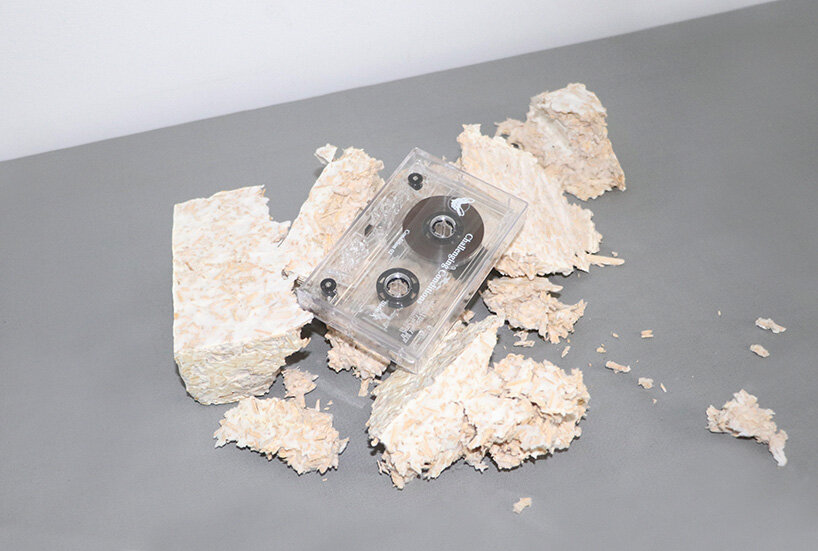
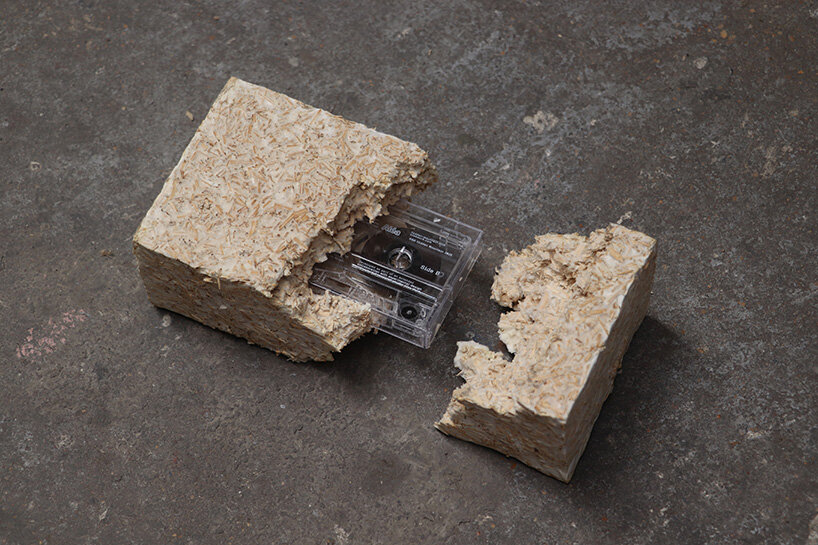
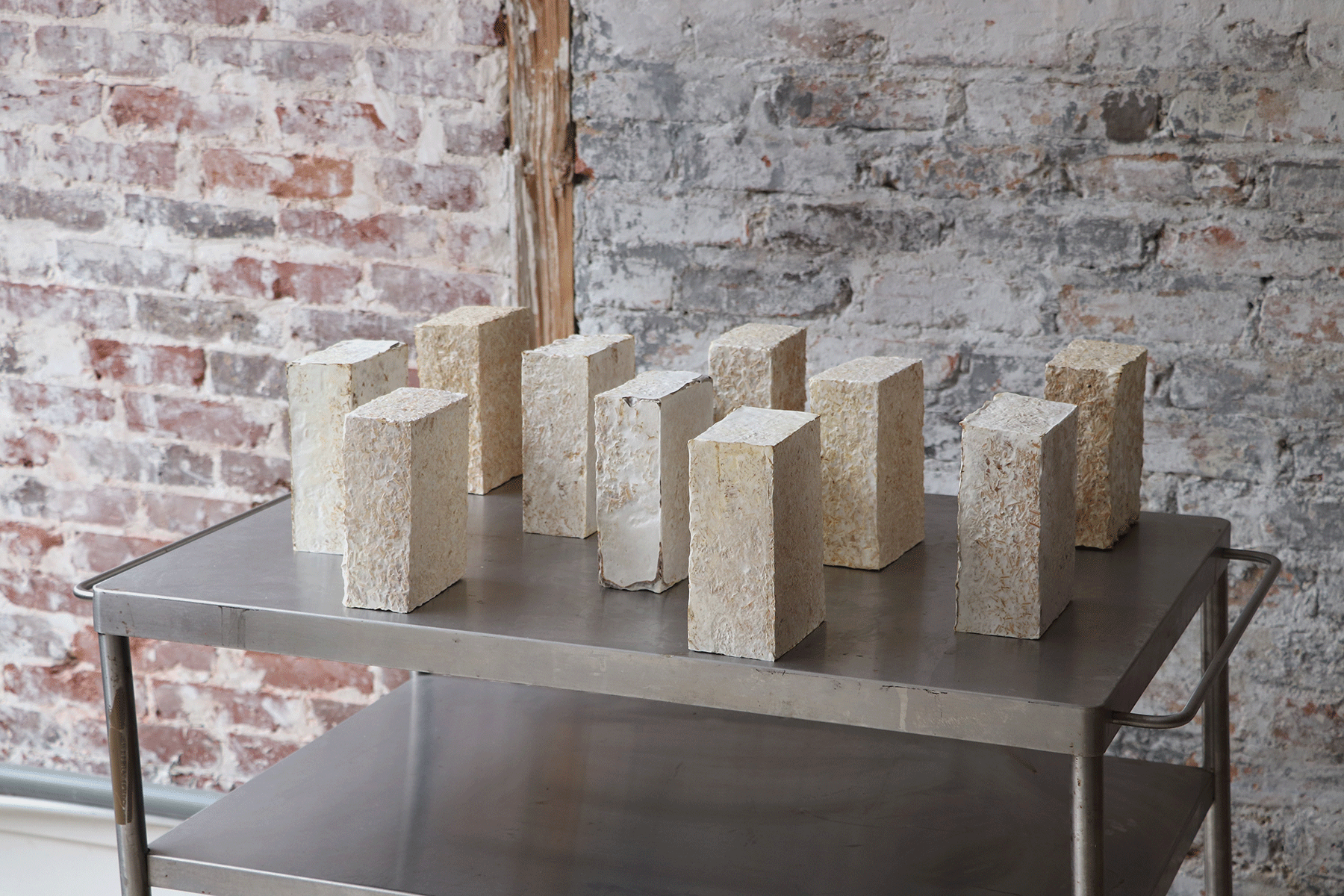
inspired by James Leyland Kirby’s work as The Caretaker | image courtesy of Aléa Work
project info:
name: Will You Still Love Me When I’m A System In The Ground? (Conditions 01–03)
artist: Challenging Conditions (Thomas Feriero) | @thomasferiero
creative studio / publisher: Hidden Mountain | @hidden.mountain
material development and production: Aléa Work | @alea_work (Miriam Josi and Stella Lee Prowse)
concept and creative direction: Oscar Morgan
packaging consultant: Mino Kodama
The post how sound, fungi, and material experimentation shape thomas feriero’s music project appeared first on designboom | architecture & design magazine.