









TOP 10 design objects and materials of 2025
top 10 design Products and material applications of 2025
We continue our annual roundup series with a look back at some of our favourite design projects of 2025. Design objects increasingly prioritized recyclability, sustainability, and sensory assistance, while material experiments shifted toward biology, technology, and innovation. Across disciplines, designers tested how materials could do more than shape form, carrying identity, function, and environmental responsibility. This year, we saw projects like BioHybrid, a biodegradable gaming controller made from living bacteria and yeast, and Yamaha’s digital piano crafted from unused rare wood extending the life of precious materials, to a modular pen, which stimulates the fingertips through 12 grips designed to support focus and idea generation, and a fungi-made prosthetic organ that extracts and breaks down microplastics inside human bodies.
Taken together, these projects point to a growing interest in materials as active participants, responsive, living, and purposeful, shaping how design engages with ecological cycles, human perception, and the future of production. Before we move into 2026, we highlight some of the most inspired projects and material applications featured on designboom, making this year’s top 10 list of design objects and materials.
BIOHYBRID: A GAMING DEVICE GROWN FROM BACTERIA AND YEAST

image courtesy of M. Nicolae and V. Roussel
Kicking off our selection is a project that rethinks how technology is made by merging biological processes with digital interaction. The BioHybrid Device is a video game controller that merges biological growth with digital manufacturing. Designed by Vivien Roussel, Madalina Nicolae, and Marc Teyssier, the device is grown using SCOBY (a symbiotic culture of bacteria and yeast), with conductive elements, sensors, and output components integrated directly into the material during its natural growth process. By applying biofabrication techniques, the project points toward a future of more sustainable interactive technologies, proposing devices that can evolve, adapt, and eventually biodegrade.
Although developed as a gaming interface, the implications of the BioHybrid Device extend beyond play. It serves as a proof of concept for biologically grown interactive objects that could translate to various contexts. Imagine keyboards, wearables, or even architectural components cultivated through biofabrication. The potential to grow technology rather than construct it opens the door to a new era of material innovation.
read more here
FUNGAL PROSTHETIC ORGAN SAFELY DIGESTS MICROPLASTICS
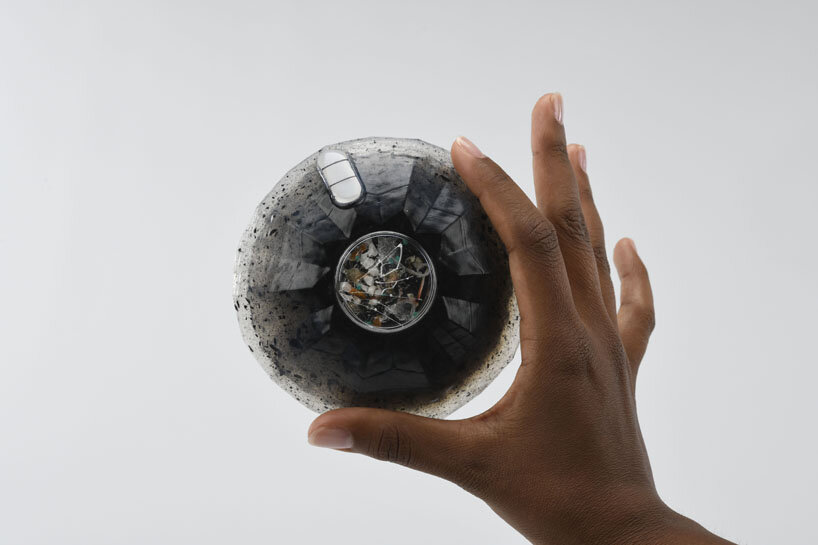
image courtesy of Odette Dierkx
From biofabricating gaming devices to harnessing fungi for human health, these projects highlight how bio-based design can transform both objects and bodies. The fungi-made prosthetic device, 79th Organ, is designed to filter, extract, and break down microplastics inside the human body. The project takes its name from the premise that the human body currently has 78 organs, but in the future, a 79th may become necessary. Designer Odette Dierkx refers to research from 2011 that uncovered plastic-eating mushrooms, envisioning their application in a prosthetic organ that could help humans survive in a plastic-polluted world by 2110. Enters the 79th Organ, which is made from fungi such as the Pleurotus ostreatus (the humble oyster mushroom), bioengineered to make it capable of digesting certain plastics.
At the core of the device is a fungal mycelium structure that releases enzymes capable of degrading plastics through bioremediation, a process in which microorganisms safely digest harmful organic or inorganic materials. The prosthetic organ functions by extracting microplastics from the bloodstream. Once the plastic particles enter the organ, they pass through a filter lined with bioengineered mycelium, where enzymes decompose them into harmless components. This turns the organ into a living detox system, processing material that the body cannot remove on its own.
read more here
MICROALGAE PIGMENTS AS A SUSTAINABLE COLOR SOURCE
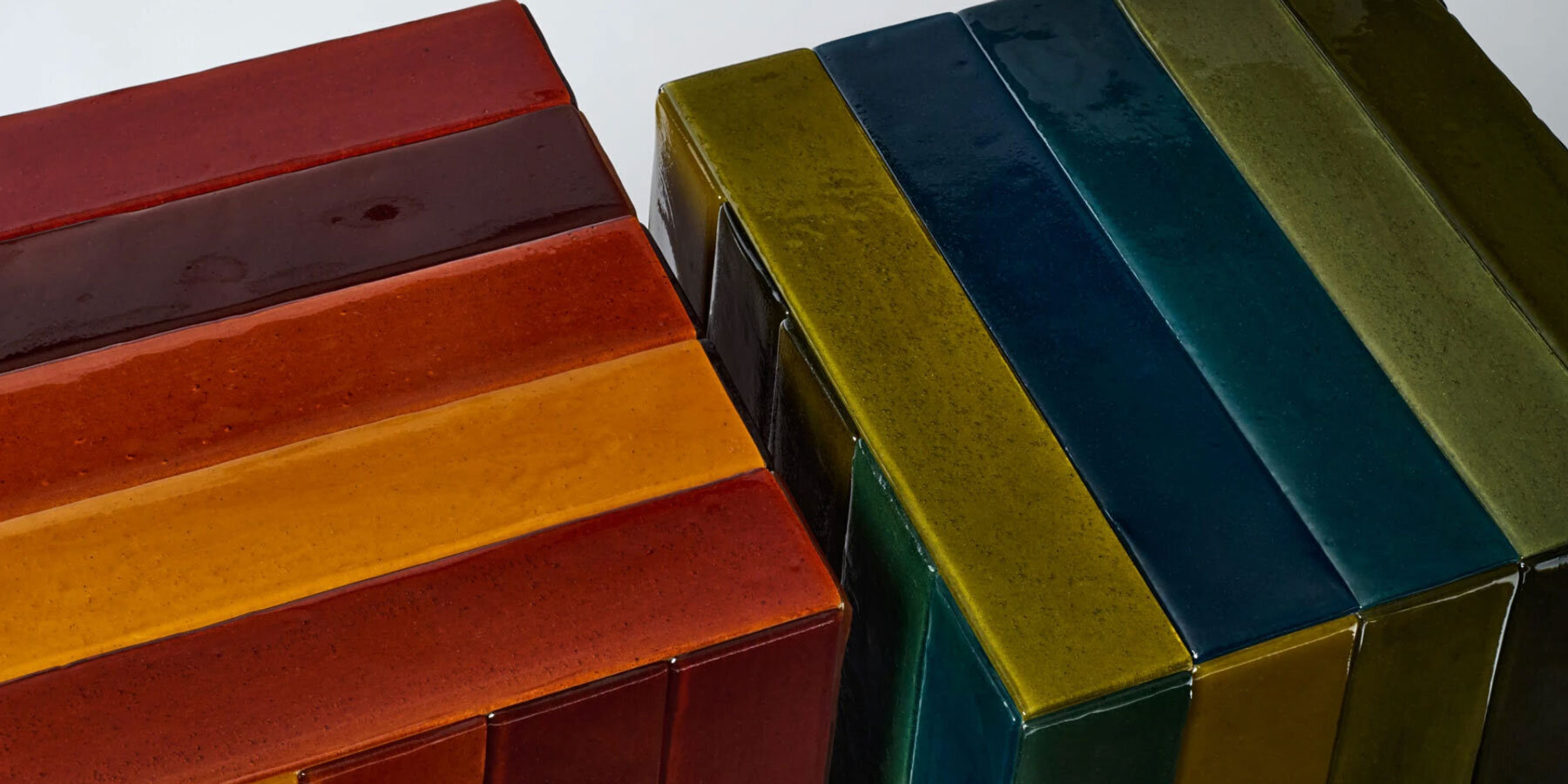
image by Masayuki Hayashi
Beyond fungi that help detoxify the human body, we move to microorganisms that offer sustainable color solutions. SO-Colored, by Tokyo-based design studio we+, is a material-focused research project that investigates the color potential of microalgae. While microalgae have been widely studied for their applications in food production and biofuels, their chromatic characteristics remain underexplored. This project proposes a design-oriented approach to understanding and utilizing microalgae-derived pigments as a sustainable source of color.
Microalgae are microorganisms present across various environments, from water and rocky surfaces to roadsides and indoor spaces. Having emerged approximately 2.7 billion years ago, they are significant to the Earth’s ecological history, particularly for their role in oxygen production and biodiversity development. Contemporary research highlights their potential in fields such as CO2 absorption, pharmaceutical development, alternative energy sources, and functional food.
read more here
YAMAHA’S DIGITAL PIANO AND KEYBOARD MADE OF RARE WOOD
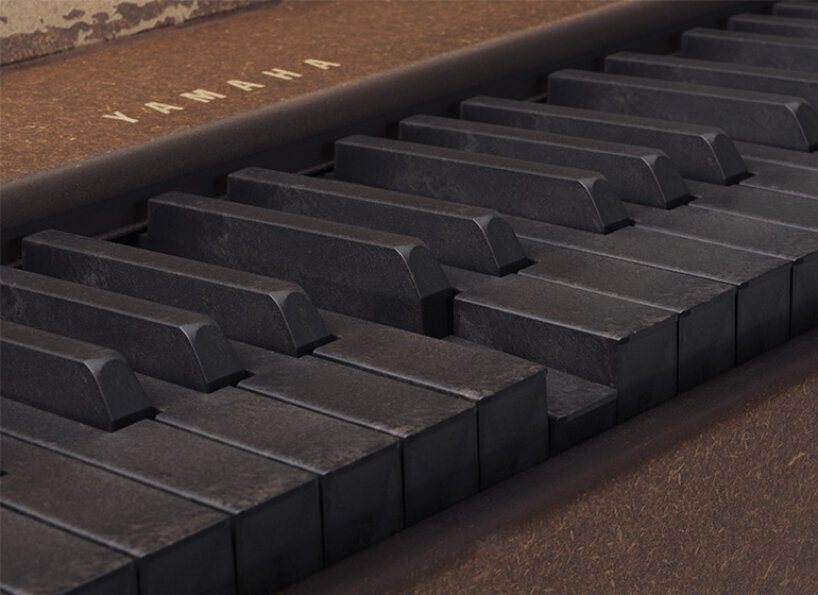
image courtesy of Yamaha
Just as microalgae offer sustainable and naturally derived colors for design, traditional materials like wood can also be thoughtfully repurposed to create rich musical instruments. Yamaha recycles unused rare wood, Grenadilla or African Blackwood, into an all-black keyboard for the digital piano, Torch T01. Around the keyboard, the digital piano features wood boards that are hand-finished with natural oils, highlighting the material’s texture and warmth. The musical instrument’s body, as well as the sides of the accompanying chair, also utilize African Blackwood with distinctive bark patterns. These details are added using laser engraving technology, similar to that employed by car brands for vehicle interiors.
The chair’s seat is crafted from Hinoki cypress and other materials, instead of the usual PVC sheets. The edges of both the body and seat are hand-finished, and the volume knob is also carved from recycled African Blackwood. Because the keyboard is made from natural wood, its color evolves over time, along with the wood used for the piano’s body, responding to temperature, humidity, and other environmental factors. Users can also apply wax to achieve a glossy finish.
read more here
SONIC BENCH TRANSFORMS HUMAN TOUCH INTO SOUND

image courtesy of Can Touch This Studio and Anders Hellsten Nissen
Beyond musical instruments crafted from recycled wood, designers are also exploring how everyday objects and furniture can transform human touch into interactive sound experiences. We take a look at Indikator, a modular, mobile installation designed to convert human touch into sound, enhancing public space interactions. Developed through extensive research and experimentation on interactive sound benches, the project integrates tactile engagement with urban design.
This iteration of Indikator results from a collaboration between Can Touch This Studio and designer Anders Hellsten Nissen. Since 2019, Can Touch This Studio has explored interactive seating, and the Indikator Sonic Bench builds upon these studies. The installation is designed for adaptability, making it suitable for various environments and events. The project is based on Playtronica’s TouchMe device, introduced in 2018, which enables touch-sensitive sound generation.
read more here
PEN’S PROTRUDING SHAPES ACTIVATE USERS’ CREATIVE THINKING
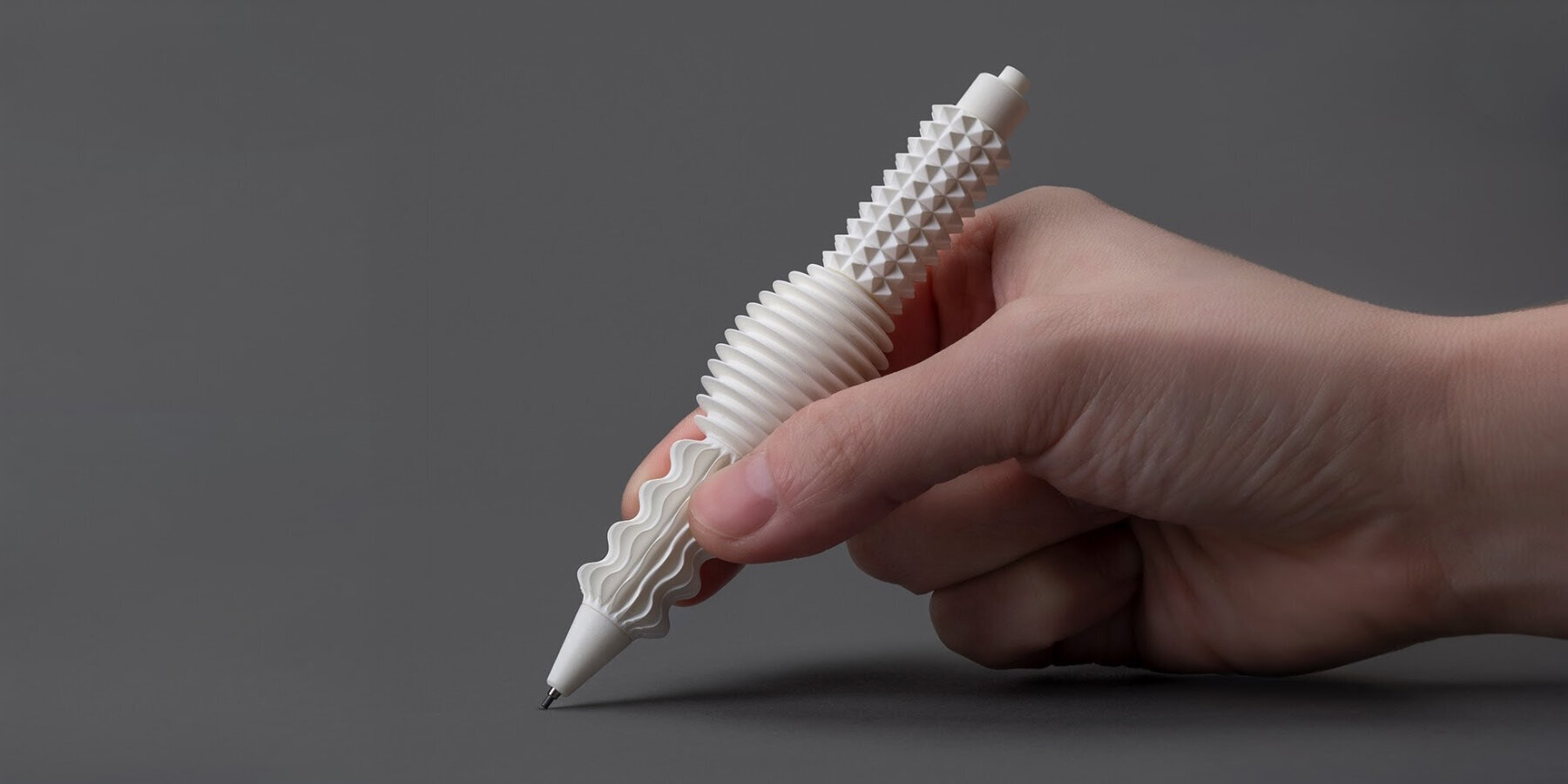
image courtesy of Toshiyuki Kawada
Just as Indikator turns touch into sound, objects like the concept modular pen NEWRON engage users’ fingertips to stimulate creativity and new ideas. The pen, conceived by Toshiyuki Kawada, can make people think of new ideas by stimulating their fingertips with protruding shapes. The object comes in three parts: top, middle, and bottom. Twisting the parts together assembles the full body of the tool. The pen comes in, and at last, the crown at the top seals the object. Once everything is in place, users click the top, allowing them to use the writing tool and begin thinking.
Design-wise, the parts of the instrument are 3D printed. Their shapes range from having multiple stacked discs and a flowy, paper lantern-like exterior to semi-pointed, geometric tips, like the ones used in massage tools. There are 12 grips included in the concept modular pen NEWRON. The grip puts enough pressure on the users’ fingertips as they write and draw. The project aims to help activate the users’ thinking hats for new ideas through this action.
read more here
PORCELAIN TABLEWARE’S FORM ENHANCES TASTE PERCEPTION
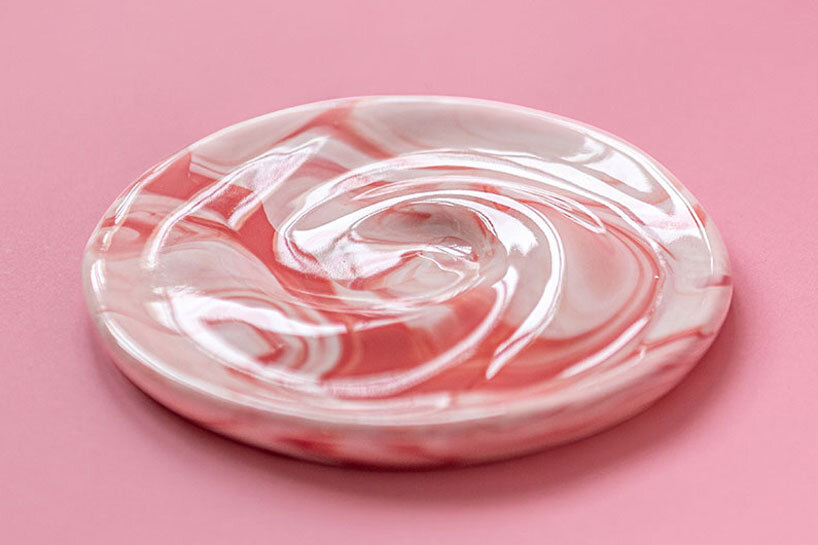
image courtesy of HAK Studio
Extending our focus on sensory-driven design, other objects apply tactile and visual cues to influence perception, shaping how we experience taste. HAK Studio introduces UMA, a tableware collection developed through research in gastrophysics, a field of neuroscience exploring how sensory stimuli shape taste perception. The series includes a swirling porcelain dessert plate and a rough, unglazed, salty bowl. a Designed to support individuals experiencing reduced taste sensitivity, such as older adults or those who have lost their sense of taste following COVID-19, UMA uses color, texture, and form to enhance the perception of flavor. Studies by Professor Charles Spence at the University of Oxford demonstrate that the brain forms taste expectations before food reaches the mouth. Elements such as color, texture, and shape can intensify or alter taste experiences, enabling healthier eating by reducing the need for sugar, salt, or other additives.
read more here
SWISS PASSPORT REIMAGINES CARTOGRAPHIC TRADITIONS
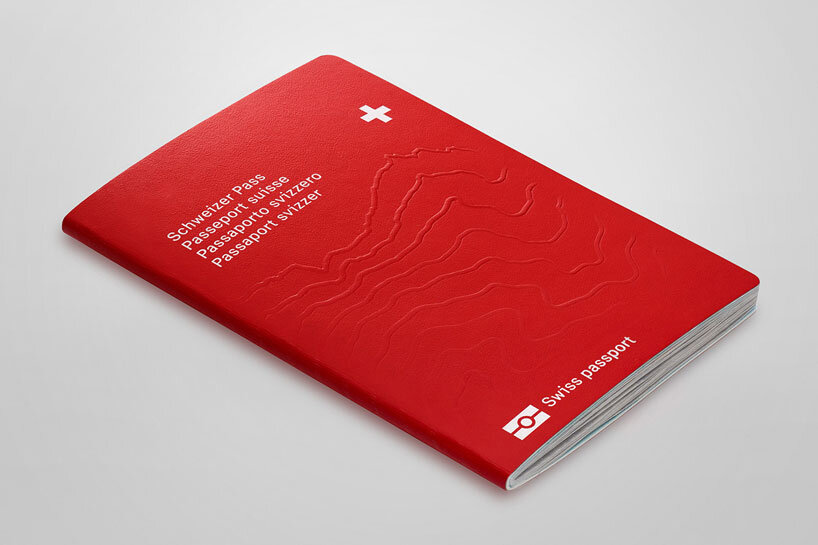
image courtesy of RETINAA
Tactile design is also used to guide perception and meaning in everyday documents, where touch reinforces identity, and navigation. Designed by RETINAA, Switzerland’s next-generation passport, issued in fall 2022 by the Federal Office of Police, continues the country’s legacy of innovation in graphic arts combined with advanced counterfeit protection. In partnership with Thales and Orell Füssli, the Geneva-based studio was commissioned to create a concept that reflects Swiss identity while integrating state-of-the-art security features, revitalizing the red passport that has been regarded as one of the world’s most sophisticated and secure travel documents since 1959.
The concept reinterprets cartographic traditions, honoring the country’s natural and built landmarks through 3D-modeled landscapes. The pages depict an imagined journey along Switzerland’s waterways, from the Alpine peaks down to the valleys, through the 26 cantons, and out to the world beyond. The first page features Pizzo Rotondo, a summit in the Saint-Gotthard Massif, located at the crossroads of the country’s linguistic regions. Under ultraviolet light, contour lines emerge to reveal the topography, enhanced with architectural landmarks that reflect cultural heritage and history.
read more here
TURBO MOKA’S SPIRAL DESIGN REINVENTS THE ICONIC COFFEE POT

image courtesy of Turbo Moka
Designers are also reworking iconic, everyday objects, preserving their familiar identities while reinterpreting them through contemporary technologies and performance-driven innovation. Turbo Moka, designed by Matteo Frontini, reinterprets the moka pot, originally invented in 1933 by Alfonso Bialetti and Luigi De Ponti. While maintaining the recognizable form and function of the classic design, the project introduces significant technical and material innovations aimed at improving energy efficiency and performance.
At the core of Turbo Moka’s redesign is its helical spiral base, inspired by aircraft turbine geometry. Engineered according to principles of fluid dynamics and thermodynamics, the spiral structure increases the surface area in contact with the flame by 93% compared to a traditional moka pot. This enhancement allows for greater heat capture and more uniform energy distribution during coffee brewing. The configuration also prolongs the contact time between the flame and the boiler, improving thermal efficiency and reducing energy consumption by up to 50%.
read more here
FOOD SELF-SUFFICIENCY THROUGH CLAY 3D PRINTED HYDROPONICS
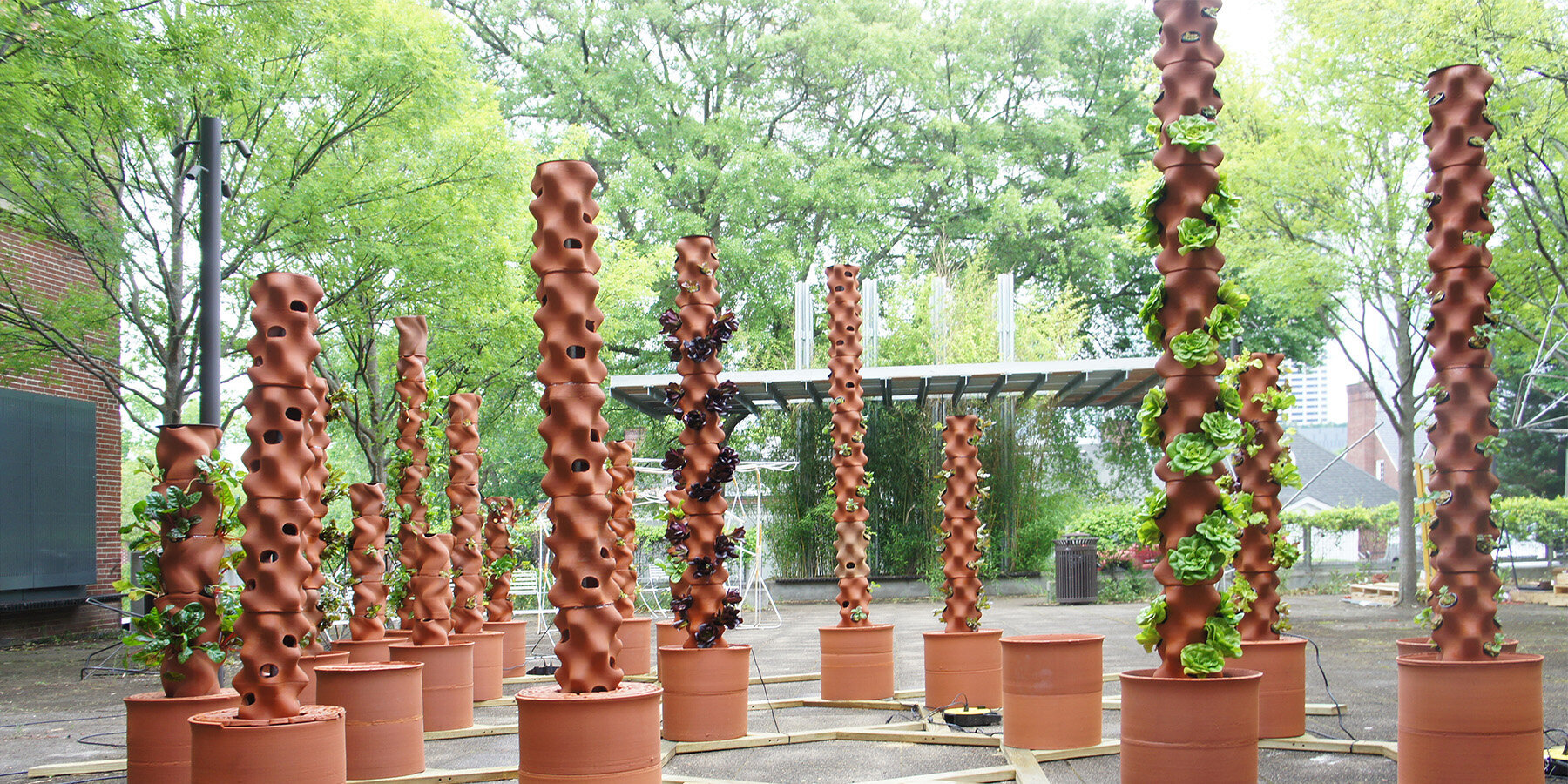
image courtesy of Logman Arja
Finally, this project explores how emerging technologies and natural materials can reshape urban food systems through sustainable design. EcoTech Lab, led by architect Logman Arja, introduces ClayPonic V1, a sustainable, deployable urban farming system that rethinks food production. Designed to address climate change, soil degradation, and water scarcity, the clay 3D printed hydroponics system saves up space with a vertical setup while creating a multisensory, immersive experience. By combining ceramics and 3D printing, it supports food self-sufficiency and transforms urban farming into a therapeutic and educational practice.
read more here
see designboom’s TOP 10 stories archive:
2024 — 2023 — 2022 — 2021 — 2020 — 2019 — 2018 — 2017 — 2016 — 2015 — 2014 — 2013
The post TOP 10 design objects and materials of 2025 appeared first on designboom | architecture & design magazine.