





wittman estes perches modern cabin among the trees along washington’s wenatchee river
built after A decade of camping along the Wenatchee River
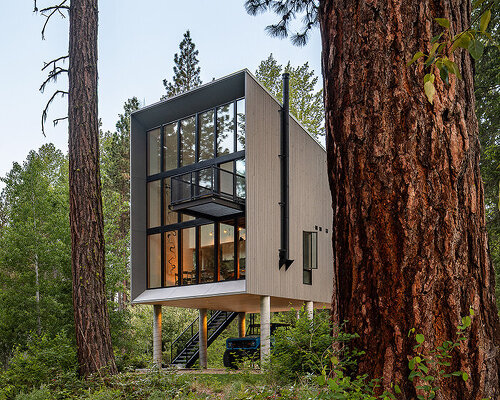
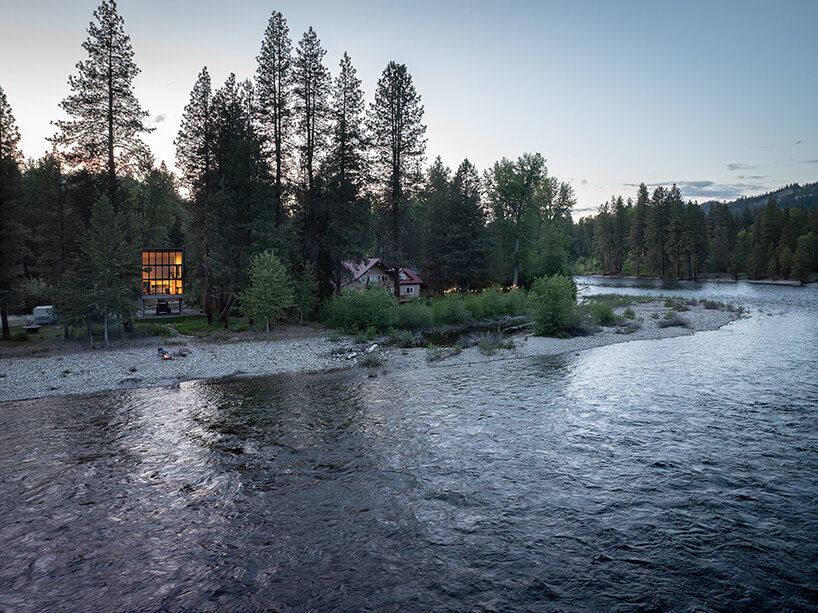
Wittman Estes completes its Wenatchee River Cabin as a compact, one-bedroom home hidden among the forests of Plain, Washington. Perched atop an array of stilts, the home overlooks a bend of the Wenatchee River within the Okanogan-Wenatchee National Forest.
The cabin occupies a nearly half-acre parcel shaped by river movement, floodplain limits, and forest cover. The owner spent a decade camping on the site, returning seasonally and often with friends, developing a close familiarity with water levels and shifting sunlight. That extended period of use informed the placement and scale of the building, which sits back from the river edge and rises above the ground plane.
As construction began just before the pandemic, the role of the property shifted. Time spent on site increased steadily, eventually transitioning from weekend use to full-time residence once the cabin was complete. The Wenatchee River Cabin measures.
images © Andrew Pogue
wittman estes responds to the shifting river
The architects at Wittman Estes elevates its Wenatchee River Cabin ten feet above the ground due to the site’s position within the river’s floodplain. Six concrete columns support the structure, lifting the volume above seasonal water flow and ground moisture. The underside remains open, forming a sheltered zone beneath the cabin that accommodates parking and workspace. A vintage Bronco lives here, with enough clearance to allow mechanical work through winter months.
Material selection centers on durability and exposure. Concrete and steel form the structural core, intended to weather over time. Architect Matt Wittman describes the approach simply: ‘We wanted tough, durable materials that weather naturally.’ The restrained palette reflects both environmental conditions and the owner’s direct involvement in construction, which favored straightforward assemblies and legible detailing.
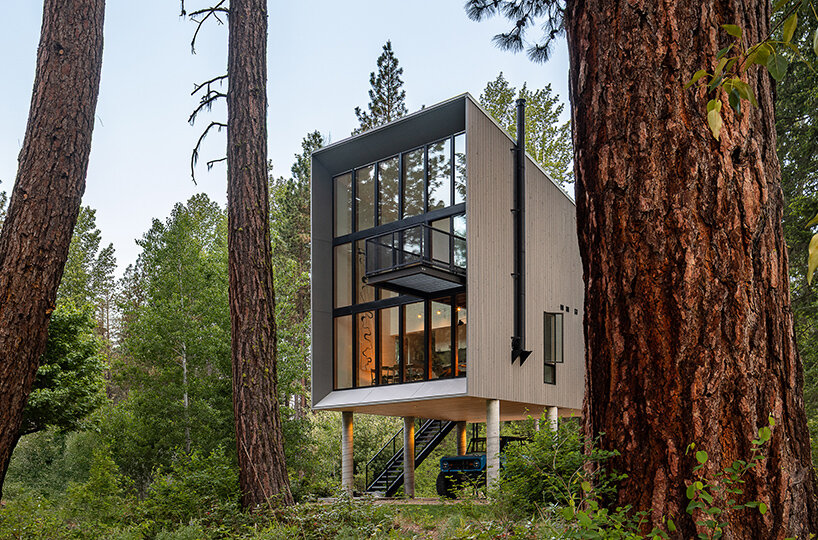
the cabin stands on six concrete columns above the Wenatchee River floodplain
the three-level cabin
Wittman Estes’ Wenatchee River Cabin is stacked three levels vertically. The ground plane functions as covered outdoor space. Above, the main living level is organized as a single volume containing kitchen, dining, and living areas, along with a full bathroom. The upper level holds the bedroom, a compact office area, a half-bath, and a loft that extends outward to a cantilevered steel deck.
A twenty-foot-wide by twenty-four-foot-high window wall spans the living space, directing views toward the river while limiting sightlines from neighboring properties. From the bedroom, a framed opening looks down into the living area and outward to the water. The owner, a lifelong metalworker, fabricated several interior elements by hand, including raw steel kitchen surfaces, a hemlock and steel dining table, and metal mesh guardrails formed from tube steel.
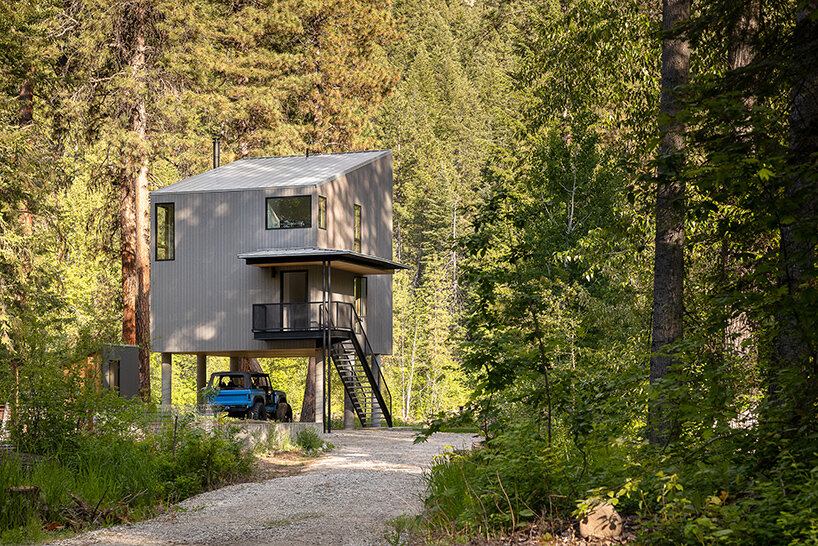
a decade of camping informed the siting and scale of the building
Interior finishes remain pared back. A wood-burning fireplace sits beneath a fir-framed loft, providing heat during colder months and occupying a tight zone along the interior wall. Surfaces remain largely unadorned, placing emphasis on changing light and seasonal color beyond the glass. ‘The tiny footprint supports experiences over possessions,’ says Wittman.
For the client, material choice carried personal weight. ‘Materials were chosen for durability, longevity and low maintenance,’ he explains. ‘Growing up in the Pacific Northwest in a wet climate, I became accustomed to everything rotting and decaying quickly, so using steel and concrete helps with feeling like my house will soon return itself to the earth.’
The cabin’s small size reflects zoning constraints from riparian and wetland buffers, along with an intention to limit accumulation. ‘The small size of the cabin was a result of limited space on the lot and a desire to have less stuff and live a simpler life.’
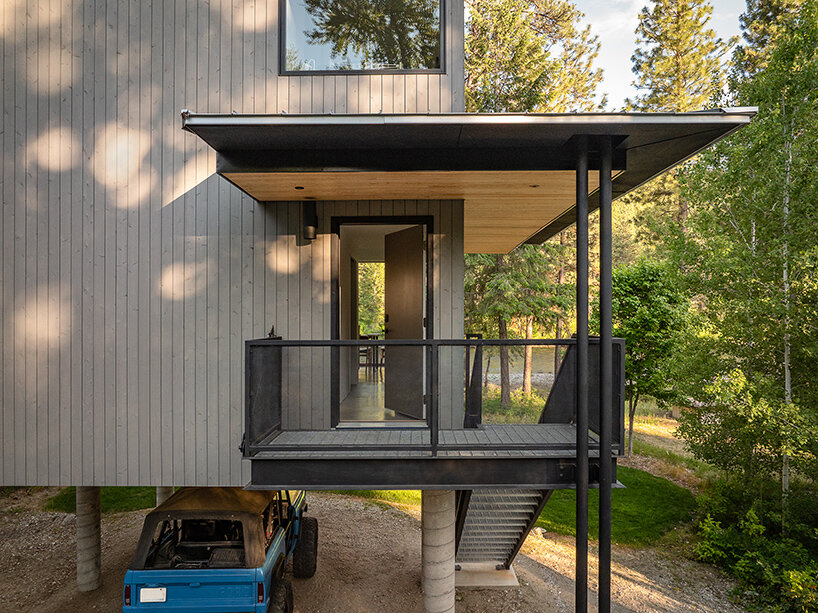
the free space beneath the cabin shelters a vintage Bronco
From the river, the façade presents a narrow profile marked by the vertical window wall and a sharp knife-edge roofline. ‘My favorite features are the three-story window wall and knife edge,’ the owner notes. ‘The facade is unique and iconic when viewed from the river, and inside looking out with the enormous view both up and down and left and right.’ The section draws the eye upward through stacked spaces rather than across a broad footprint.
As a completed work, Wenatchee River Cabin functions as a full-time residence shaped by long-term observation and direct making. ‘The cabin supports living well, by living small,’ Wittman continues, pointing to a project defined by measured decisions, exposed structure, and sustained engagement with place.
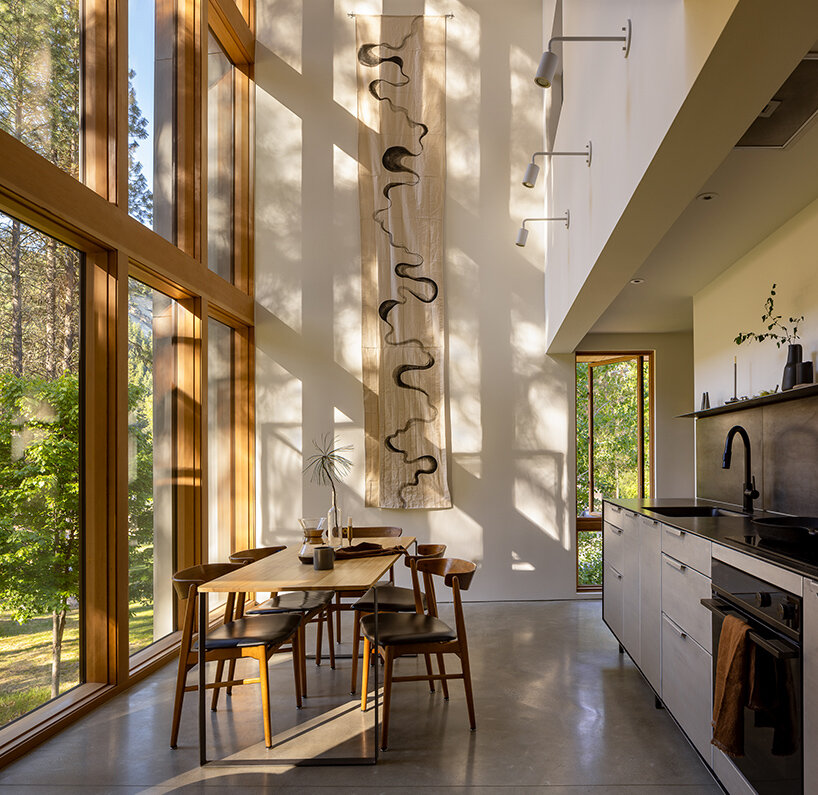
a full height window wall frames the river and filters nearby views
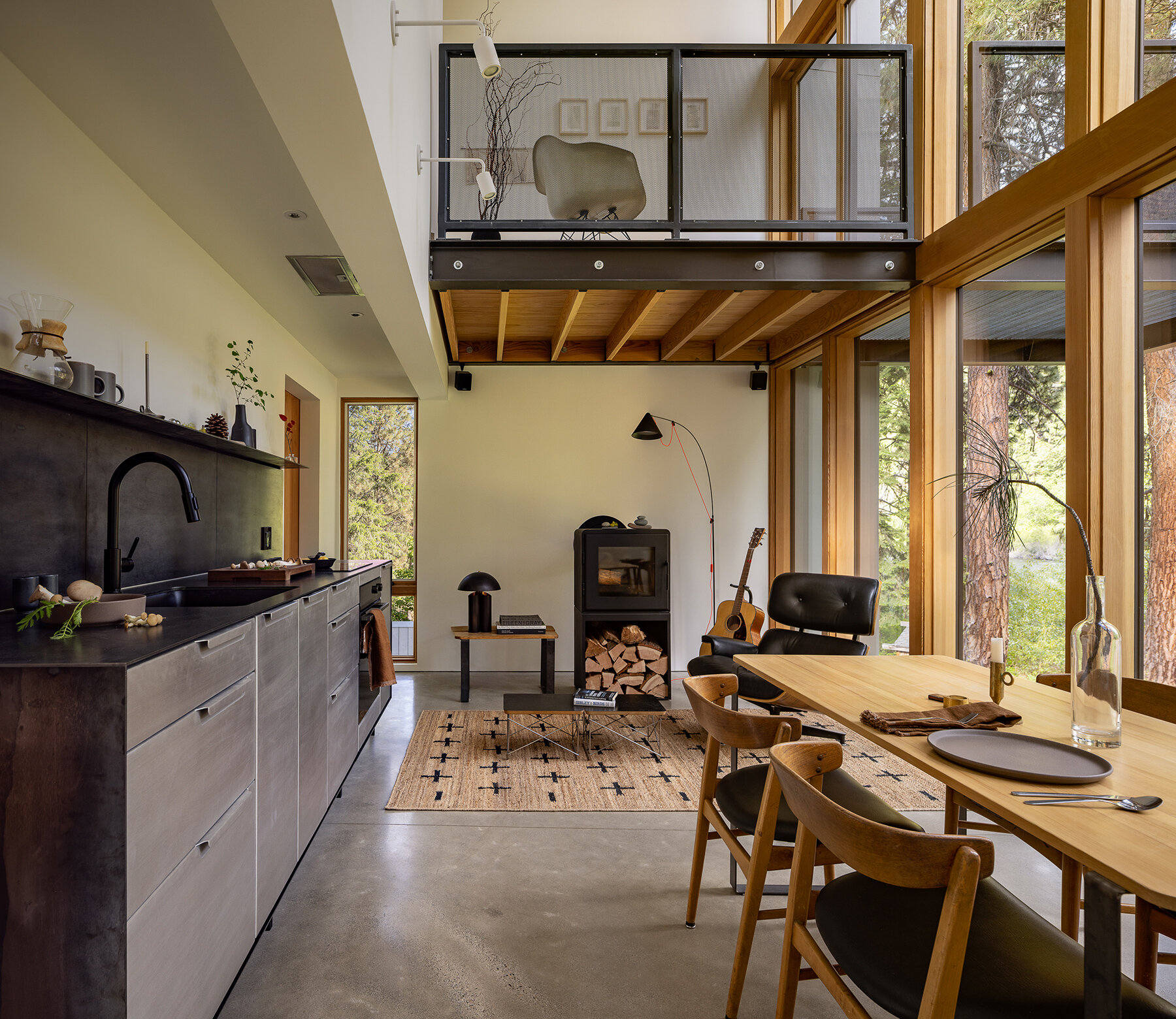
concrete and steel define the primary structure and exposed surfaces
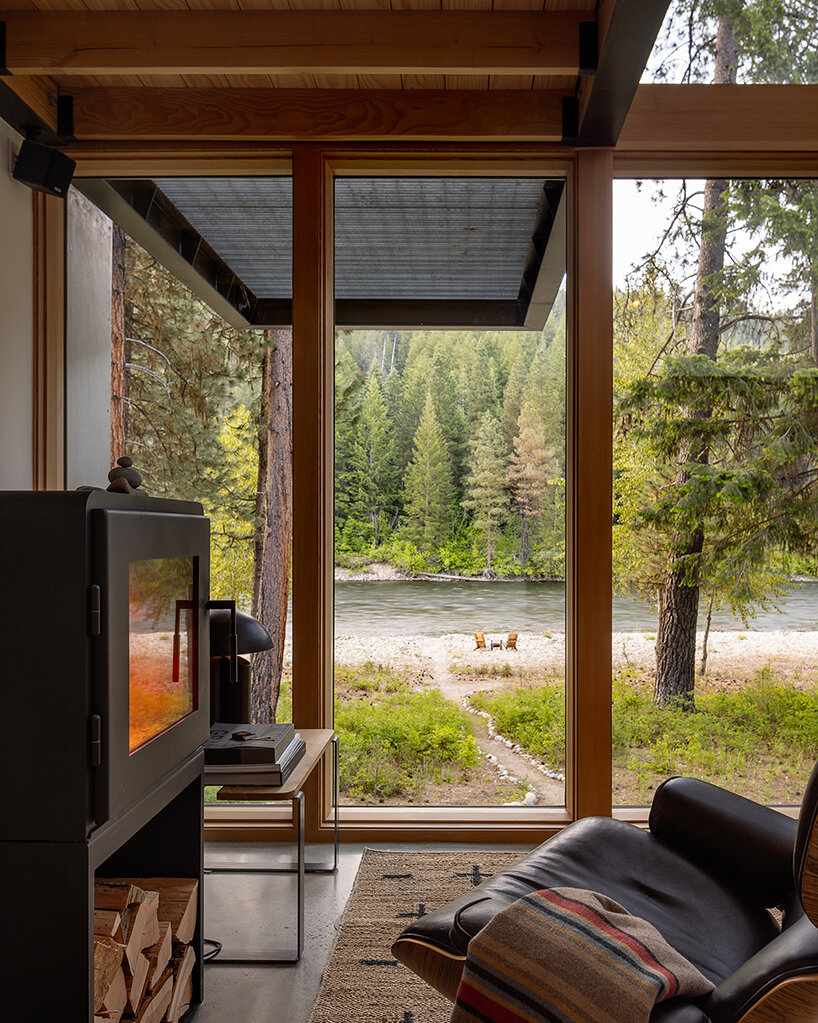
interior elements were fabricated by the owner using raw steel and hemlock
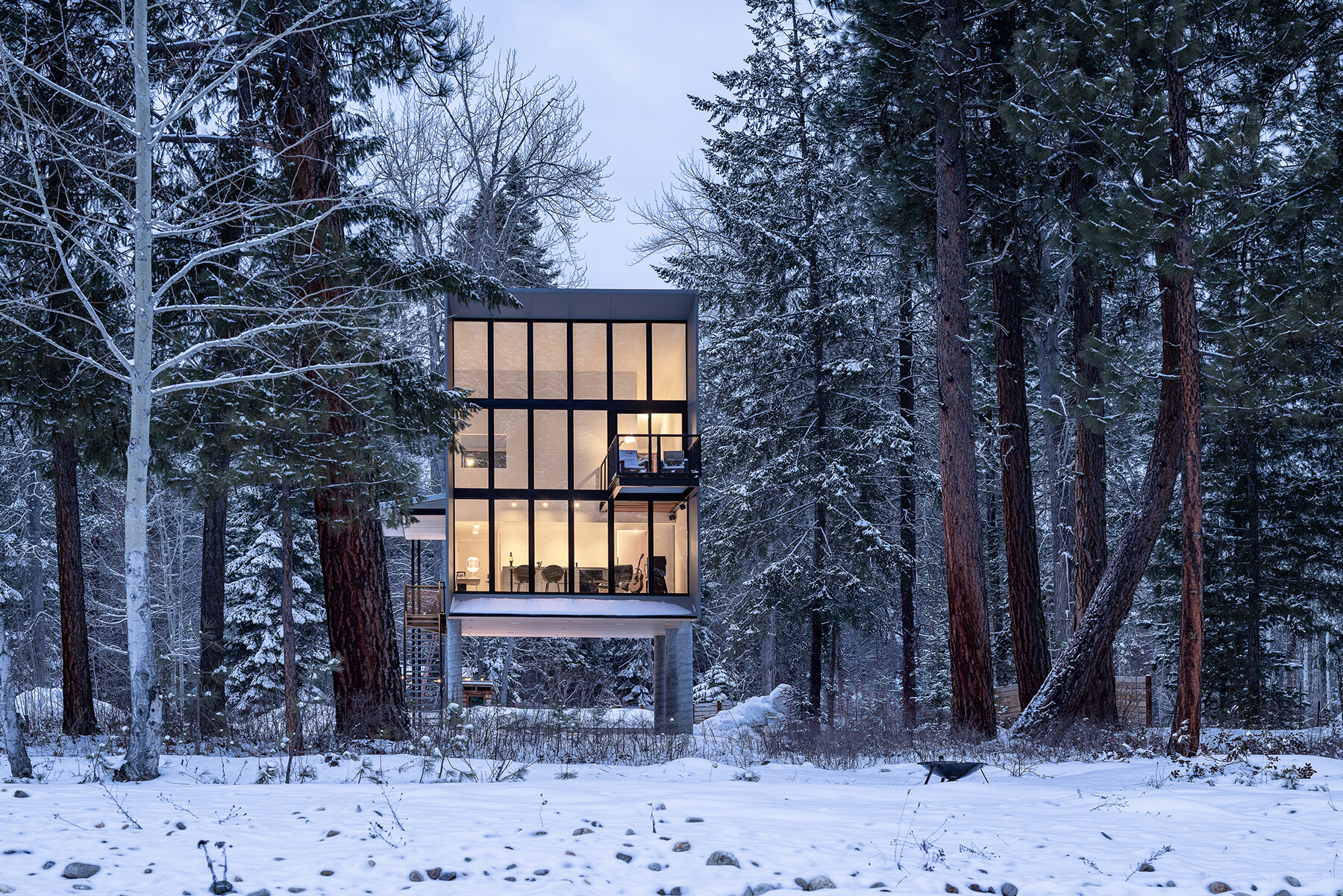
the cabin supports full time living within a small footprint
project info:
name: Wenatchee River Cabin
architect: Wittman Estes | @wittman_estes
location: Plain, Washington, USA
area: 746 square feet
photography: © Andrew Pogue | @poguephoto
design principal: Matt Wittman
project team: Julia Frost (design development)
structural engineer: JWE Engineering
builder: Steve Strode Construction and Dan Wheeler
The post wittman estes perches modern cabin among the trees along washington’s wenatchee river appeared first on designboom | architecture & design magazine.