
















Doug Self on grit, creativity and building JDouglas | Portrait

JDouglas celebrates its 25th anniversary this year. The representative showroom is based in Atlanta, also operates showrooms in Dallas and High Point, and carries many higher-end brands: Arteriors, Villa & House, Worlds Away, Loloi, Noir and CFC, E. Lawrence Limited, Peacock Alley and Charter Street, its own upholstery company. We spoke with founder Doug Self about how he balances creativity and business, what he looks for in a salesperson, and how he keeps his showroom assortment fresh and interesting.
How did you get your start in the home furnishings business?
From my earliest memories, I knew I was equally analytical and creative. I hoped I would be able to find someplace where I could use both skills effectively. When I went to college, I decided to study accounting because I felt at some point, I would start my own business and accounting would be a great base for business ownership.
I worked in accounting for a few years and then started to do creative things on the side. I was working as a controller for a manufacturing company. But I needed something that fed my soul more than sitting at a desk dealing with numbers all day. I began to think about merchandising jobs. A woman I knew in one Atlanta showroom told me about a sales position at Southern Accessories Today and introduced me to the boss, Steve Papevies. Honestly, the idea of a traveling salesperson sounded horrible. But I had the conversation with him; I followed up with a handwritten note to say I wasn’t interested and thanked him for his time. He pursued me for the next two and a half months.
My parents and my mentor encouraged me to try it. Two weeks later, I went to High Point. I had no idea what that was about. I just got thrown into the fire.
On the first day or two of market, I had to work the showroom all day. It was pure torture, but I did it. Ultimately, I was the #1 salesperson. I stayed nine years and worked my way through the ranks. The guy I worked for was a great mentor and always tried to give me additional responsibilities. The year before I left, I said I needed a bigger challenge. I left in January 2001. My assistant came with me. We literally sat on my living room floor and made lists of people to call to try to represent. I tried to keep it as clean as possible, not approaching brands that I had represented at my previous job. I went to High Point in April, had meetings with potential brands we were hoping to represent, and tried to hire a salesforce without having the whole package together. I hoped to open in July.
We worked out a rep agreement for some of Match’s [the pewter company] showroom space. The week before we opened, another space down the hall opened, and we literally made that happen in two days. We would start our meetings in the Match showroom and then walk down the hall to finish our meetings. Now, we have both sides of the hall, all the way down.
We opened in July 2001. Two months later was 9/11. When everyone was trying to figure out what to do, I decided to keep my head down and keep working. In my mind, once I committed to doing this business, it never entered my mind that it would not work.
What is your strategy for building a sales team? What do you look for in people?

There’s not a specific set of characteristics I’m looking for, but there has to be some strong traits that I think will help contribute to the overall success of the group. They are not all the same. A lot of people came with no sales experience. To me, it’s the sum of the parts, rather than everyone being the same.
There are some basic things that are important, like organization and ambition and the idea that you’re not afraid to go out and make sales calls to existing accounts while developing new business. I really look for someone who is entrepreneurial. I want someone who wants to have their own business under my umbrella, and I will give them all the tools to be successful and empower them in that process to hopefully expedite it. Being a brand ambassador requires a lot of time management, drive and grit. I find that if they’re entrepreneurial, they are best suited to do this.
The best salespeople I have are very creative. I think that’s what made me a strong salesperson. We have always tried to help our clients do their job, and they view us as a resource, and we are the first people they come to when looking for something.
Do you have a different game plan for every market, or a tried-and-true strategy that works every time?
There’s some consistency in our markets. I think people come to market to see what’s new, so we are intentional about creating a new experience every time they come. We basically gut the showroom every three months. We do a deep dive into what is selling and what’s not. That determines what we are going to keep. Then we look at new collections — and this is a judgment on my part — on what we think will work in our area. It’s not as simple as taking a list from our brands; it’s a much deeper dive into what’s actually selling and what actually works.
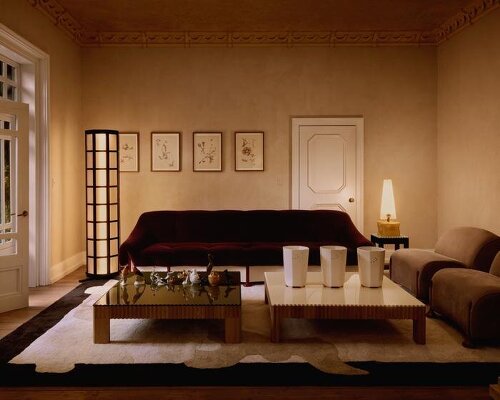
Each brand has a dedicated area, but we also cross-merchandise in vignettes. That tells the story of who we are as a company. But each brand has its own point of view.
Market set-up must be intense. Any behind-the-scenes stories you can share?
Every show has its own lifecycle. We are good at this point in how we plan. We send out a very detailed brief on what all the major dates are that the brand partners need to hit to have us ready for market on opening day … and yet, as organized as that all is and as great as they are in proving information and making shipments, there’s always things that happen that you can’t anticipate. When they happen, you have to say, “Ok, this is how we will resolve it.”

Shipments get lost. Things come in damaged. We were getting ready for one market, and a lamp broke in my hand, and I had to go to hospital to get my hand sewn up. I did the show with one hand.
You’ve hired unhoused people to work in your showroom. Tell me about that.
We have worked closely with a local shelter (a friend, Bill, used to run it). As you can imagine, we have to employ a lot of extra hands when setting up a 30,000 square-foot showroom. It’s also hard to go out and hire people who can work three to four weeks every six months. We’ve supplemented with college students home for break, local people looking for part-time work and who enjoy the process. But there’s never enough. Through Bill, I was able to start bringing in some guys from the shelter. The shelter would give them food and a place to sleep, but they had to go out and work every day. We started bringing them in. We know each other so well, they are like family. They have watched me set spaces for so long that they look at each other and say, ‘He’s not going to leave that there. And they’re right.’
The greatest success story is watching some come out of homelessness and get full-time jobs [elsewhere after working with us]. One guy has worked for me for about 15 years, and I first [met] him through the shelter. He lives on his own, has another job, but has an arrangement that he can still come and help us.
You’ve introduced pop-up displays of lesser-known companies in your showroom. What prompted you to do that?
Some of our best successes early on were taking on small companies, bringing them to market and exposing them and helping them put their business together. A lot of those companies have gone on to have their own showrooms — which I am immensely proud of — and we’ve had the same brand package for a number of years. We’re very fortunate.

There is consistency in our line package, but at same time, I need the stimulation of new and fresh and different. The last two to three years have been more challenging than what we are accustomed to. So, I asked myself, ‘What have I done over the years that has worked? What are some new things we have not tried?’ So, I started these pop-ups. These are things we are getting in and out of, exposing people to market, so our clients can see something in addition to what they are accustomed to seeing from us. Yet another reason to see us as their first stop.
Tell me about Charter Street.
Charter Street is a business that I conceived in 2019. I took a minute for it to get its bearings. We had repped upholstery brands and were at a point where we didn’t have one anymore. I knew we needed it. I started to travel to different factories to see who might take this one. It was important that they be domestic. I wanted something that could ship fast and be between Texas and the East Coast, with a heavy emphasis on North Carolina. I met several people. The people we work with now initially said no but then reconsidered.
We have about 18-24 different chair silhouettes, about 10 sofa silhouettes, and then a build-your-own program, where you can choose everything. We offer 120 different fabrics as well as COM. It’s sold primarily through JDouglas, but we also have representation in the Southwest and New England. It’s all handcrafted in North Carolina.
What’s one question you wish retailers or designers would ask when they come to your showroom at market?
I want them to say, “How can you help me be more successful? How can you help me evolve my business in a world that is ever evolving and changing?” It’s astounding to think about how business is now compared to when we started 25 years ago. It sounds cliché, but we truly want to be partners with our clients. We are only successful if they are.
We are very design-driven. That’s a difference we established when opening it. We weren’t going to be afraid to meet with designers. At that time, that seemed like a reach. People asked, ‘Why deal with those women coming in with their bags of fabrics?’ I thought it was fun. Who knew that the business would evolve, and this is our client, the interior designer.
I understand that you are an art collector. How did you get into collecting? Do you look for a particular period or style?
I’ve always loved art. For my home, I like to introduce color through art more so than through furnishings. I got to a point where I didn’t need more art, but I love collecting it, so I started accumulating and taking them out and framing them the way I think they should be framed. I started creating gallery walls in showrooms, and it’s picked up momentum. Some designers come in and buy the entire wall.
Do you have creative hobbies?
I love running — I’m a marathon runner— and I enjoy Pilates. I do a lot of yoga retreats. I love to travel. I never get tired of it. I love to read. I love architecture. I’m a huge sports fan — all college sports, especially football, basketball and lacrosse.
Who’s your team?
Ole Miss is my football team and Duke in my basketball team. I have season tickets to both. That’s my escape, honestly. When I’m at a sporting event, I do not think about work. That’s the only time.
Just for fun:
Favorite travel destination no one else seems to know about
That’s an easy answer, since I recently went hiking in Bhutan for 7 days. People are so dear; they love their country so much. It’s a naturally beautiful place.
Favorite thing to do in January in your free time
Go for a run. I prefer running in cold weather. Or going to a basketball game. I also do a lot of journaling. I start with three things I am grateful for. The start of the year is a good time to reset that — how I want to approach the year differently, do I need to shift my focus? A lot of that clarity comes from being outside running.
What are you reading?
The book I’m reading right now is from a friend, All the Colors of the Dark, by Chris Whitaker.
But I just read They All Came to Barneys: A Personal History of the World’s Greatest Store by Gene Pressman. It has always been my favorite store. For years, I would land in New York, put my bags down, and go straight to Barneys. It was so stimulating. The windows were fabulous. I could find things there no one at home would have. I literally built my wardrobe around trips to Barneys. I bought my first tuxedo there.