








LANZA atelier reveals curving brick design for the 2026 serpentine pavilion
LANZA atelier to design Serpentine Pavilion 2026
Mexican architecture studio LANZA atelier, founded by Isabel Abascal and Alessandro Arienzo, is appointed to design the Serpentine Pavilion 2026. Titled ‘a serpentine’, the pavilion will open to the public on June 6th, 2026, at Serpentine South in London’s Kensington Gardens. The announcement coincides with the Pavilion’s 25th edition, which Serpentine will mark through a special collaboration with the Zaha Hadid Foundation, reflecting on the legacy of the inaugural pavilion designed by Hadid in 2000.
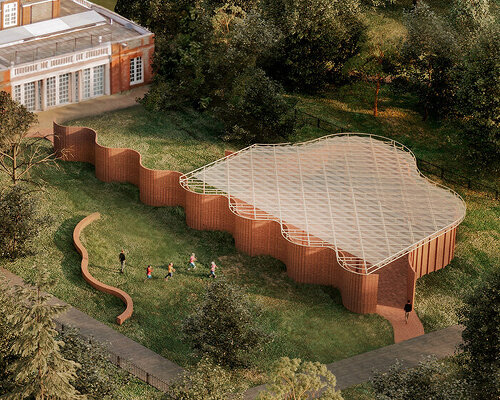
LANZA atelier’s proposal draws from the serpentine, or crinkle-crankle, wall, a historic English architectural feature composed of alternating curves. Originally developed in ancient Egypt and later introduced to England by Dutch engineers, the serpentine wall gains its structural stability from its geometry, allowing it to be only one brick thick while maintaining strength.
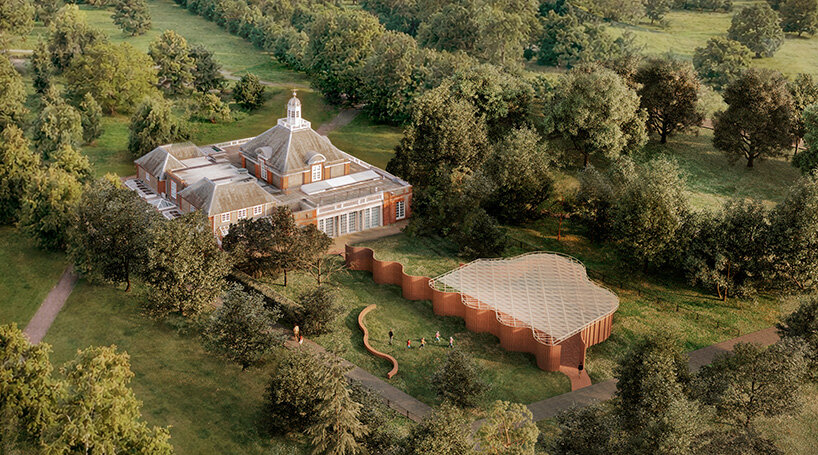
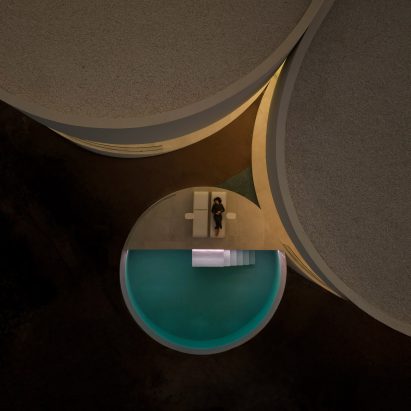
Serpentine Pavilion 2026 a serpentine, designed by Isabel Abascal and Alessandro Arienzo, LANZA atelier | design renders © LANZA atelier. courtesy Serpentine
a serpentine is shaped by curves, climate, and movement
The pavilion is positioned on the northern side of the site and structured through two main walls. One traces the serpentine geometry, while the other aligns with the existing tree canopy. A translucent roof rests lightly on brick columns, evoking a grove of trees and allowing light and air to move freely through the structure.
Brick is used as the primary material, referencing both the English garden tradition and the existing brick facade of the Serpentine South Gallery, which was originally a tea pavilion itself. Through rhythmic repetition, the brick columns transition from opaque to permeable, creating a gradient of openness. LANZA atelier frames this material strategy as a metaphorical bridge between Europe and the Americas, linking vernacular traditions through shared construction logics rather than symbolic gestures. According to the architectural duo, the project is conceived as ‘a device that both reveals and withholds,’ shaping how people move through space. They draw parallels with England’s fruit walls, which historically moderated climate and created sheltered micro-environments. From this lineage emerges a Pavilion built from simple clay brick, foregrounding what the architects describe as ‘the elemental capacity of architecture to bring people together.’
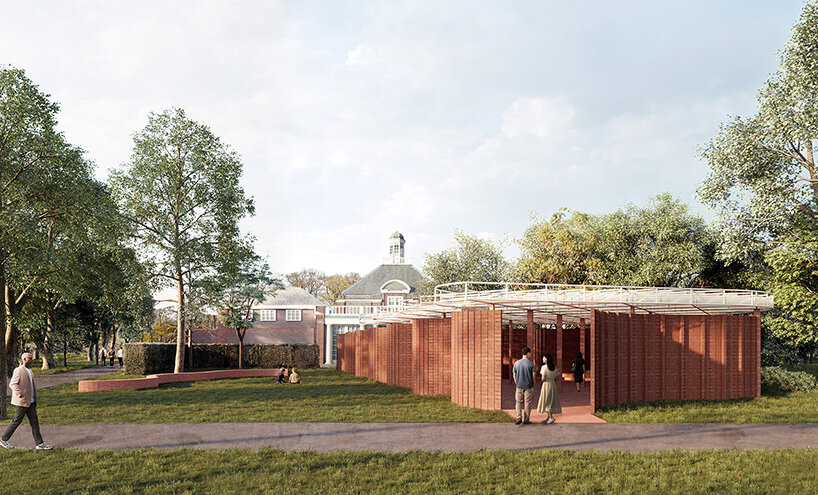
LANZA atelier’s proposal draws a historic English architectural feature composed of alternating curves
a platform for cultural exchange and experimentation
Since its inception, the Serpentine Pavilion has served as a platform for architectural experimentation, offering architects a rare opportunity to test ideas in a public, open-access context. Over time, the commission has evolved from a one-off structure into a broader cultural infrastructure, hosting lectures, performances, screenings, and interdisciplinary events.
Serpentine CEO Bettina Korek frames the Pavilion as a structure that extends beyond its physical form, connecting people, landscape, and ideas. Artistic director Hans Ulrich Obrist emphasizes the institution’s increasing focus on younger practices over the past decade, describing LANZA atelier’s work as deeply embedded in material, context, and lived experience. Their pavilion, he notes, will function as a ‘content machine,’ hosting live events across disciplines throughout the summer and autumn.
The 2026 edition will also include a dedicated architectural program developed in collaboration with the Zaha Hadid Foundation. This initiative aims to reflect on Hadid’s legacy while fostering transnational and transgenerational dialogue around contemporary architectural questions. Former Pavilion architects will be invited to contribute, linking the Pavilion’s history to its future trajectories.
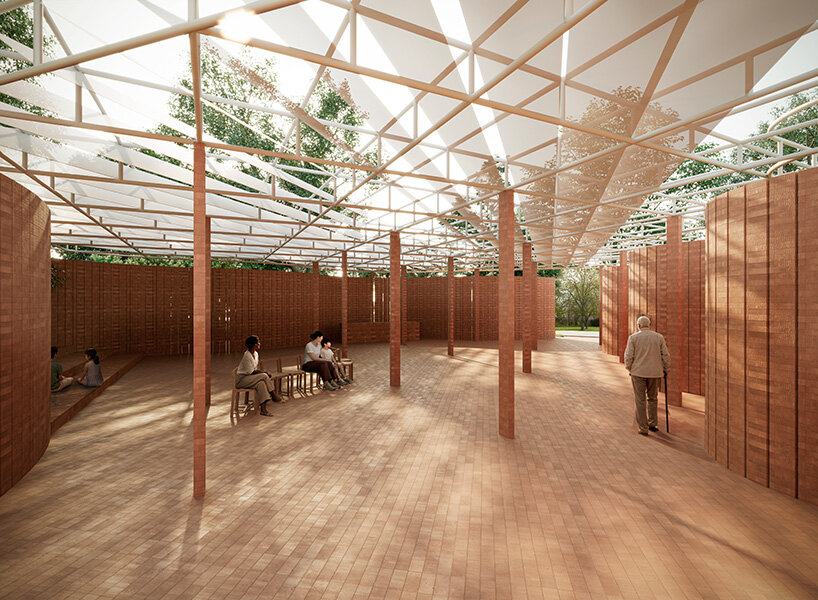
the serpentine wall gains its structural stability from its geometry
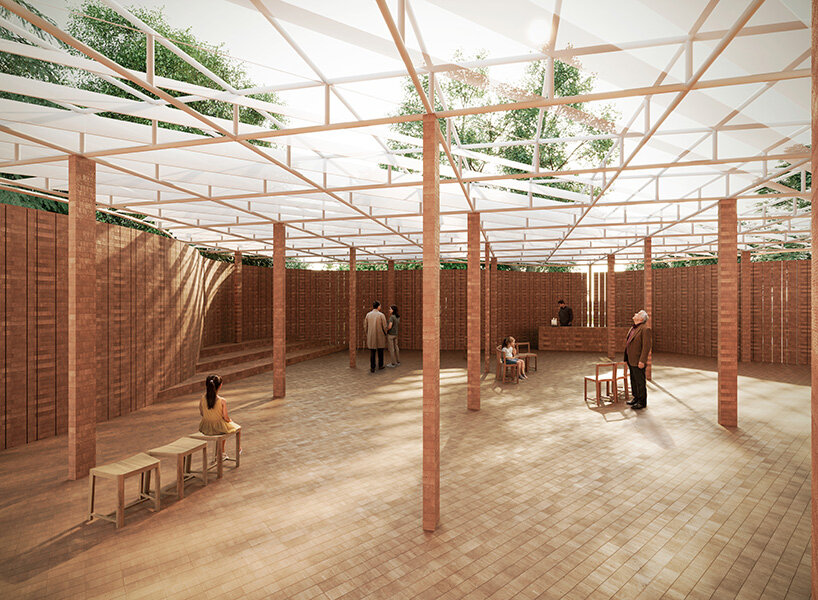
the pavilion is positioned on the northern side of the site and structured through two main walls

Isabel Abascal and Alessandro Arienzo of LANZA atelier | image © Pia Riverola
project info:
name: a serpentine
architect: LANZA atelier | @lanzaatelier
lead architects: Isabel Abascal, Alessandro Arienzo
location: Serpentine South, Kensington Gardens, London, UK
event: Serpentine Pavilion | @serpentineuk
opening date: June 6th, 2026
The post LANZA atelier reveals curving brick design for the 2026 serpentine pavilion appeared first on designboom | architecture & design magazine.