








snøhetta’s prairie-roofed roosevelt library honors the landscapes america chose to protect

a presidential library opens in the North Dakota Badlands
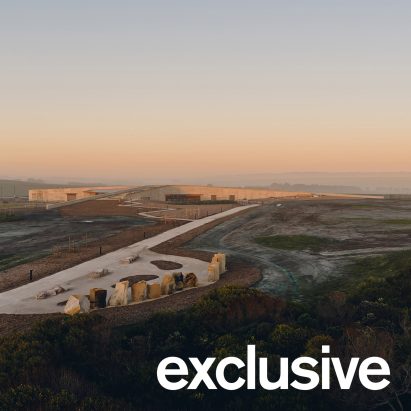
Taking shape as a grassy extension of the vast and rugged Badlands of North Dakota, Snøhetta’s Theodore Roosevelt Presidential Library opens on July 4th, 2026. The new 95,000-square-foot library sits alongside Theodore Roosevelt National Park, and rises subtly from the clay, grass, and open sky of a landscape tied closely to the making of America’s public lands.
Its opening is scheduled in time for the 250th anniversary of the United States, and celebrates the memory of a president who helped turn conservation into a national responsibility.
Roosevelt came to the Dakota Territory in the 1880s, where he spent years ranching, hunting, writing, and living among the plains. That encounter with the West shaped his presidency. He went on to protect roughly 230 million acres of public land, and established national forests and wildlife refuges.
As president, he codified the idea that these wild landscapes should be protected and conserved. The library — with its mass timber structure, rammed earth walls, and sweeping green rooftop — takes that legacy as its starting point, and invites visitors to discover his story through the land that changed him.

images © Nic Lehoux
snøhetta builds into the terrain
Set on a 93-acre site adjacent to Theodore Roosevelt National Park, the library is expected to welcome more than 200,000 visitors each year. The architects at Snøhetta served as design architect, landscape architect, and interior designer, shaping the building, interiors, and surrounding prairie through the guiding principle that ‘The Library is the Landscape.’
The architecture rises from a butte and carries a 121,000-square-foot living prairie across its roof. A nearly mile-long elevated boardwalk moves across the restored site at shifting elevations, at times opening to long views across the Badlands and elsewhere bringing visitors closer to the ground. Outdoor classrooms, reflective spaces, and a suspended netted overlook extend the visit into the open air.

Snøhetta’s Theodore Roosevelt Presidential Library opens in Medora, North Dakota
walking the roof, prairie, and sky
Craig Dykers, founding partner of Snøhetta, describes the project as a way to bring visitors into contact with the same landscape that shaped Roosevelt’s conservation ethic. ‘Every path, every view, and every material decision is designed to deepen the connection between people and place,’ he says, adding that the library becomes an invitation to engage with stewardship, civic responsibility, and wonder.
The building is also the first presidential library accessible by hiking trail, mountain bike, horseback, and car. That detail says a lot about the project’s attitude toward arrival. Visitors can approach through the terrain before entering the institution, making the journey across prairie part of the architectural experience.

the building rises from a butte beside Theodore Roosevelt National Park
Roosevelt’s story in light and earth
Inside, the route moves through darker passages and sunlit rooms, loosely following Roosevelt’s own passage through grief, reinvention, and public life. Large windows frame historically significant landscapes, including views toward Elkhorn Ranch, while skylights bring daylight deep into the galleries.
The program includes climate-controlled galleries, digital collections infrastructure, and an auditorium capable of hosting presidential debates. These functions sit within a building that keeps looking outward, toward the horizon and the weather, instead of turning the archive into a sealed interior world.

a 121,000-square-foot living prairie roof extends across the architecture
made from the Badlands
Building in this remote landscape called for a design strategy shaped by material limits and local knowledge. ‘Do what you can, with what you have, where you are,’ says Snøhetta project director Matt McMahon. ‘The project elevates local materials and relies upon North Dakota know-how to craft a building and landscape made from the Badlands.’
Mass timber, reclaimed regional wood, low-carbon concrete, and rammed-earth walls define the material palette. The rammed earth is made with locally sourced soil, carrying bands of color that recall the surrounding formations. Assemblies are detailed for disassembly and long-term use, while selected materials eliminate harmful Red List chemicals as part of the project’s Living Building Challenge goals.

a nearly mile-long boardwalk moves through the restored Badlands site
conservation as a lived experience
Across the site, restoration becomes part of the visit. The library is pursuing full Living Building certification, along with high levels of LEED and SITES, through a ‘Four Zeros’ framework focused on zero energy, zero water, zero emissions, and zero waste. Aaron Dorf, director at Snøhetta, says the team followed Roosevelt’s call for ‘honesty and efficiency’ to create ‘a library that works with the land, draws on local wisdom, and will sustain itself for generations to come.’
The Native Plant Project, developed with Resource Environmental Solutions and North Dakota State University, has cultivated more than 200 native species across the living roof and restored grounds. Michelle Delk, partner and landscape discipline director at Snøhetta, describes visitors as ‘participants in an evolving ecosystem,’ as grazing, haying, controlled burns, and native species management become part of the public program.

the structure is shaped by mass timber, reclaimed regional wood, low-carbon concrete
a library for the land that shaped a legacy
Upon certification, the Theodore Roosevelt Presidential Library will become the only Living Certified presidential library and the largest Living Certified cultural institution in the world. Its remote setting makes that ambition feel less like a technical badge and closer to a test of what cultural architecture can ask of itself, especially when it is built in a landscape defined by distance, weather, and ecological time.
Presidential libraries often gather a life through documents and artifacts. Here, beneath a prairie rooftop, Snøhetta’s architecture returns Roosevelt’s legacy to the land that helped shape it, and points to the enduring national idea that some landscapes should remain shared and protected.

rammed-earth walls use locally sourced soil from the surrounding region

the library is accessible by hiking trail, mountain bike, horseback, and car
project info:
name: Theodore Roosevelt Presidential Library
architect: Snøhetta | @snohetta
location: Medora, North Dakota, USA
client: Theodore Roosevelt Presidential Library Foundation (TRPLF) | @trlibrary
previous coverage: January 2026, September 2020
completion: July 4th, 2026
photography: © Nic Lehoux | @nic.lehoux
architect of record: JLG Architects
landscape architect of record: Confluence
contractor: JE Dunn
project lead: Snøhetta
lead architects/designers: Craig Dykers, Michelle Delk, Matthew McMahon, Aaron Dorf, Kurt Marsh, Dan Marty, Prince Langley
The post snøhetta’s prairie-roofed roosevelt library honors the landscapes america chose to protect appeared first on designboom | architecture & design magazine.