
















Handmade Filipino design gains traction at High Point
HIGH POINT – Last year, 11 companies from the Philippines, under the auspices of the government’s trade arm, went on a scouting mission at High Point Market. After years of focusing on their local market, they were ready to dip their toe back into the American market, primarily as a sourcing partner, and were there to size things up.
They were guided by two Americans, industry veterans Patti Carpenter and Carol Campbell, who challenged them to think deeply about the buyers they were targeting and how small tweaks to their product line-up, such as a change of color or size, could make them more desirable business partners to American manufacturers and interior designers, with a better understanding of the American market.
Some of the companies are generations-old, others are decades-old, but all of them operate well-established businesses capable of significant international trade, said Carpenter, an outside consultant who advises on product development for CITEM (The Philippines’ Center for International Trade and Mission).
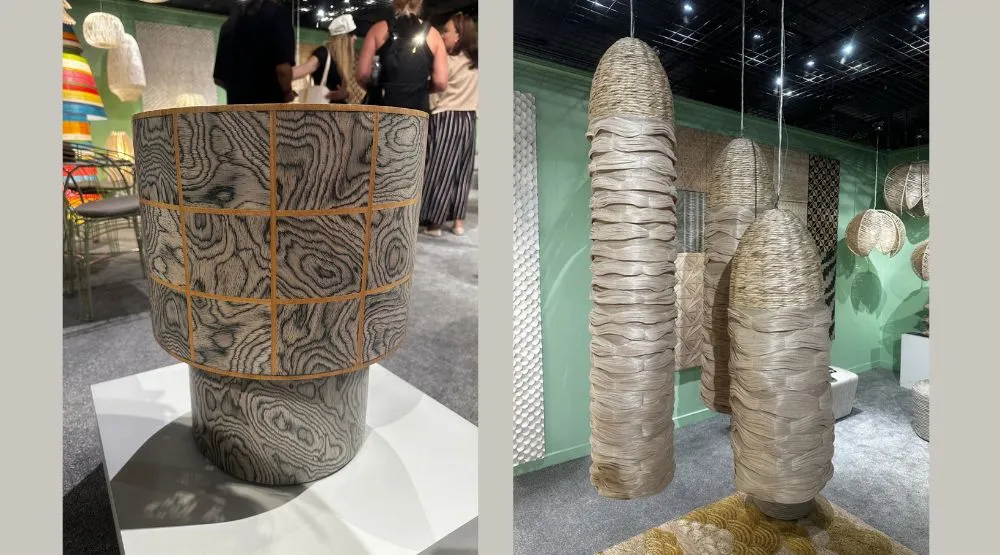
The companies showcased their products and their design capability in a Design Philippines showroom in Interhall during High Point Market last month.
Everything these companies offer is handmade, but what distinguishes Filipino artisans is their knowledge of high design, their use of natural materials (many of them sustainable) and their reputation for great quality, Carpenter said.
“The Philippines has a good design education in-country,” said Campbell, a former Baker Furniture executive and Phillips Collection executive who now serves as an international marketing, product and business development consultant. “That makes all the difference in the world.”

In the Philippines, materials like abaca (a fibrous plant indigenous to the Philippines that is water- and fire-resistant), Capiz shells, cocoa leaves, coconut shells, rattan and various species of wood are reimagined and used in unique ways in a range of home products, from pendant lights to rugs. Capiz shells are a well-known material often shaped into disks, for example, but in the Design Philippines showroom, they were shaped into three-dimensional flowers that were highly decorative.
“They can do almost anything,” said Campbell of the artisans.
“There’s a breadth of skills that bring it to a more contemporary space,” added Carpenter.
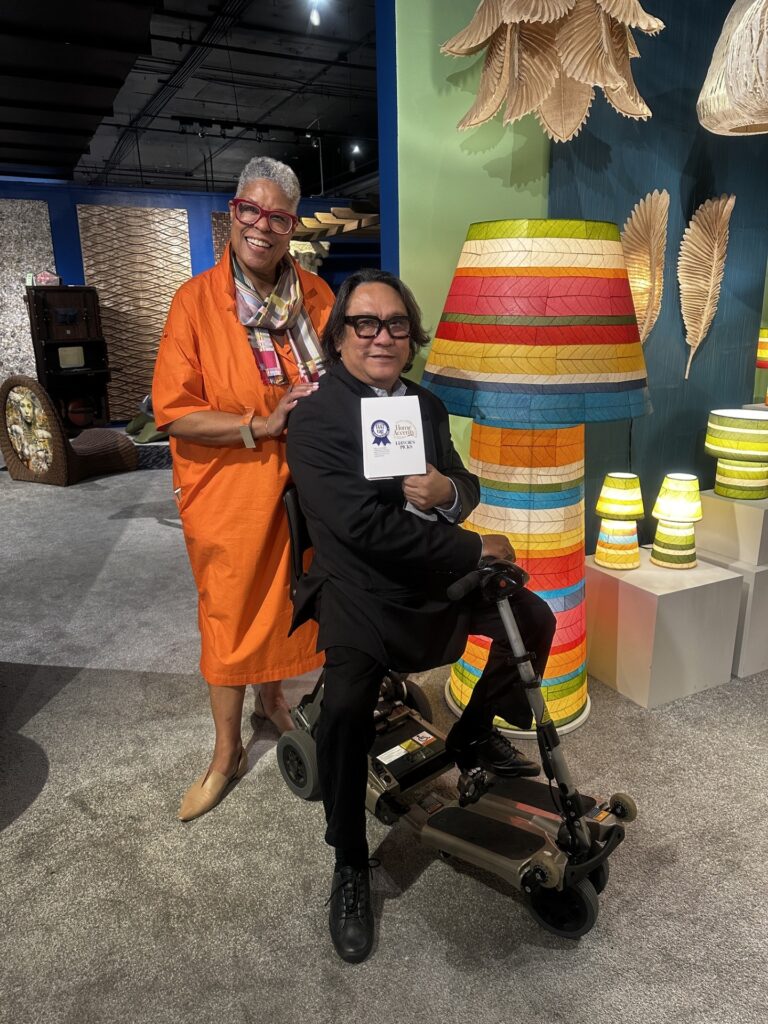
Filipino designer Tony Gonzales was hired by CITEM to design its booth for Manila Fame, an international design fair that draws visitors from all over the world. Last year, Gonzales created the entire booth from all-white, recycled pineapple fiber. Gonzales’ Folio floor lamp, constructed from colored bands of dried cocoa leaves, was featured in the Design Philippines showroom in High Point and was singled out for a HAT tag, or editor’s pick, at market.
The American government’s up -and-down tariffs on imports have been “horrible,” Carpenter said, but for the Philippines, have been held fairly consistent at around 20%.
“With small businesses, you can’t afford to be margin-negative,” noted Campbell.
The cost of shipping and the availability of containers are also obstacles, though once companies start doing more business in the U.S., that should ease, Campbell said. The most natural port of entry is Los Angeles, but Campbell believes American interest in Filipino design lies east of the Mississippi. Many U.S. manufacturers have agents in the Philippines.
Katrena Griggs, who formerly worked for Codarus and managed the Atlanta showroom for Southern Accessories Today, is the sales executive for Design Philippines, which works under the umbrella of CITEM.
In High Point last month, Carpenter was satisfied with the reception at Design Philippines. “People love what they’re seeing,” she said, noting that the handmade aspect of all the products was a big selling point.
“It’s the way people are voicing their values … That’s what the customer really wants.”